Owner’s manual
 Error Codes



What is the average lifespan of a Kenmore Elite refrigerator?
Most Kenmore Elite refrigerators, including model 79579042312, typically last 10 to 15 years with normal household use. With consistent maintenance and prompt repairs, it’s common to reach the upper end of that range before major sealed-system issues become cost-driving.
What affects lifespan the most
- Condenser coil cleanliness (dirty coils make the compressor work harder)
- Door seal condition (air leaks increase run time and frost)
- Stable temperatures (refrigerator about 37°F, freezer about 0°F)
- Ice maker and water system upkeep (clogs and leaks create secondary damage)
- Airflow management (don’t block vents; avoid overpacking)
Maintenance checklist (best return for the effort)
Use the 79579042312 owner's manual for model-specific care intervals and access points.
- Vacuum and brush the condenser area regularly
- Keep door gaskets clean and check for gaps
- Replace water filters on schedule and flush the dispenser after changes
- Confirm the evaporator fan is running and vents are clear
- Level the refrigerator so doors close fully on their own
When repairs start to outweigh replacement
Big-ticket failures usually involve cooling components or controls. Here’s a practical way to think about it:
| Situation | What it often points to | Typical next step |
|---|---|---|
| Warm fridge and freezer, unit runs a lot | Sealed system or compressor issue | Professional diagnosis; compare repair cost vs. age |
| Clicking, then no cooling | Start device/overload or compressor | Check compressor start components; service if needed |
| Frost buildup, weak airflow | Defrost or fan problem | Inspect defrost system and evaporator fan |
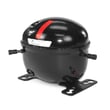
If cooling performance drops and you suspect a sealed-system problem, the refrigerator compressor is one of the highest-cost repairs; for this model, that’s the refrigerator compressor TCA38091801.
Why it matters
A refrigerator near the 10 to 15-year mark can still be a great candidate for maintenance-based fixes (seals, fans, sensors). But once sealed-system repairs enter the picture, the cost can rise quickly, so age and condition should guide the decision.
Last updated: January 2026
Why is my refrigerator not getting cold at the bottom?
If your Kenmore Elite refrigerator model 79579042312 is warm at the bottom, the most common causes are restricted airflow (blocked vents or overpacked shelves), dirty condenser coils, or a weak evaporator fan that is not circulating cold air. Start with cleaning and airflow checks before replacing parts.
Quick checks we recommend first
- Set temperatures to typical targets: 37°F fresh food, 0°F freezer.
- Make sure air vents inside the refrigerator are not blocked by food containers.
- Leave space between items so air can circulate from top vents down to lower shelves.
- Clean dust and pet hair from the condenser area (usually underneath or behind the unit).
- Confirm the doors close fully and the gaskets seal all the way around.
What usually causes “warm bottom” in a bottom-mount refrigerator
| Likely cause | What you notice | What to do |
|---|---|---|
| Airflow blocked in fresh food section | Top feels cooler than bottom | Unblock vents, reduce overpacking |
| Dirty condenser coils | Overall cooling slowly worsens | Clean coils and grille area |
| Evaporator fan not moving enough air | Freezer may be cold but fridge warms | Check fan noise and airflow; consider replacing the fan motor |
| Defrost problem causing frost buildup | Temps swing, airflow weak | Inspect for frost on rear freezer panel; check defrost sensor |
Parts that commonly relate to this symptom (for model 79579042312)
If cleaning and airflow do not fix it, these model-matched parts are often involved:
- Lg refrigerator evaporator fan motor 4681JB1027C (moves cold air from the evaporator through the compartments)
- Refrigerator defrost sensor assembly 6615JB2005N (helps control defrost cycles and prevent frost blockage)
- Refrigerator temperature sensor 6500JB2002X (reports temperature to the control system)
Why it matters
When the bottom stays warm, food safety becomes a concern and the compressor can run longer than normal. Fixing airflow restrictions and keeping the condenser clean often restores normal cooling and reduces energy use.
For model-specific vent locations, cleaning guidance, and temperature settings, use the 79579042312 owner's manual.
Last updated: January 2026
What are the common problems with Kenmore Elite refrigerators?
Common problems we see on the Kenmore Elite 79579042312 bottom-mount refrigerator include warm temperatures (airflow or sealed-system issues), frost buildup (defrost or door-seal issues), water leaks (drain or water-supply issues), and ice maker or dispenser trouble. Use the 79579042312 owner's manual to confirm control settings and model-specific checks.
Most common symptoms and what usually causes them
- Not cooling or weak cooling: dirty condenser coil, failed evaporator fan, temperature sensor issue, or compressor/start device problem
- Excess frost or ice buildup: door not sealing, frequent door openings, defrost sensor or defrost system problem
- Buzzing, clicking, or humming: compressor overload/start device cycling, fan blade hitting ice, or loose panels
- Water under the refrigerator or in the freezer: clogged defrost drain, cracked drain pan, or water line connection leak
- Ice maker not making ice: water supply shutoff, frozen fill tube, or inlet valve not opening
Quick checks we recommend before replacing parts
- Set refrigerator to 37°F and freezer to 0°F, then wait 24 hours for stabilization.
- Make sure vents inside the fresh food section are not blocked by food packages.
- Clean dust from the condenser area (unplug first) to improve heat removal.
- Check door closing and gasket contact all the way around.
- If you have an ice maker, confirm household water supply is on and the line is not kinked.
Parts that commonly relate to these problems (for this model)
| Symptom | Likely system | Example part for model 79579042312 |
|---|---|---|
| Warm fridge/freezer | Air circulation | Lg refrigerator evaporator fan motor 4681JB1027C |
| No ice or slow ice | Water supply | Lg refrigerator water inlet valve AJU73753101 |
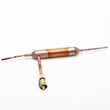
| Clicking, won’t start | Compressor protection | Refrigerator compressor overload protector (part ID 6750CL0001D) |
| Frost/defrost issues | Defrost sensing | Refrigerator defrost sensor assembly (part ID 6615JB2005N) |
Error codes and what they mean
If the display shows an error code, match it to the troubleshooting steps for Kenmore 795 bottom-freezer models in the Kenmore 795 model bottom freezer refrigerator error codes guide.
Why it matters
Cooling, frost, and water issues often start small (restricted airflow, a weak fan, a slow leak) but can quickly lead to spoiled food, ice buildup, or compressor strain. Catching the symptom early helps you avoid bigger repairs.
Last updated: January 2026
Why is my Kenmore Elite refrigerator leaking water out of the bottom?
Water leaking from the bottom of your Kenmore Elite refrigerator model 79579042312 is usually caused by a defrost drain that is clogged or frozen, or by a water supply leak from the dispenser/ice maker plumbing. We use the steps below to pinpoint whether the leak is defrost water or pressurized water.
Quick checks to identify the leak source
- Clear water puddle under the front often points to a defrost drain issue or a water inlet valve leak.
- Leak only when dispensing water or making ice points to the water line, fittings, or valve.
- Water inside the freezer bottom (then dripping out) often indicates a frozen drain trough/drain hole.
- Slow drip that worsens over days can happen when the drain is partially blocked and refreezes.
Step-by-step troubleshooting (what we do first)
- Unplug the refrigerator and pull it out enough to inspect safely.
- Check the water filter area and tubing (if equipped) for drips, kinks, or a loose connection.
- Inspect the water inlet valve for seepage at the fittings and valve body; a weak valve can weep and create a puddle. If you suspect the valve, see lg refrigerator water inlet valve AJU73753101.
- Look for signs of a defrost drain problem:
- Ice buildup on the freezer floor
- Water trails from the rear freezer panel
- Gurgling or intermittent dripping during/after defrost
- Clear the defrost drain (typical method): melt any ice with warm air, then flush the drain with hot water using a turkey baster until it flows freely to the drain pan.
Common causes and what typically fixes them
| Symptom | Most likely cause | Typical fix |
|---|---|---|
| Water appears after defrost cycles | Clogged/frozen defrost drain | Thaw and flush drain; clear debris |
| Leak happens during ice making | Cracked/loose water line to ice maker | Reseat/replace tubing; check fittings |
| Puddle near back/bottom | Seeping valve connection or valve body | Tighten fittings; replace valve |
| Water inside fresh food section | Drain backing up into air duct area | Clear drain; verify drain tube routing |
Why it matters
A clogged defrost drain can refreeze and keep overflowing, leading to recurring puddles and ice buildup. A pressurized water leak (valve or tubing) can waste water continuously and can eventually affect cooling components if it drips into the wrong area.
Model-specific tip
For access points, panel removal notes, and drain-cleaning guidance specific to 79579042312, follow the disassembly and service access details in the 79579042312 owner's manual.
Last updated: January 2026