Installation guide
 Owner’s manual
 Error Codes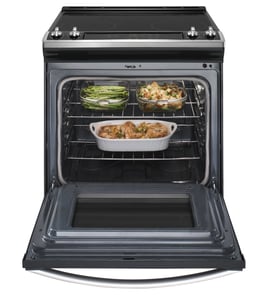


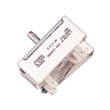
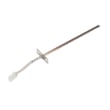
Where can I find my Kenmore electric range model number?
On Kenmore electric range model 79090219012, the model and serial plate is located on the lower right front frame of the appliance; an alternate location is under the cooktop. Use that plate to copy the full model number exactly for parts lookup and service.
- Lower right front frame (most common on this model)
- Under the cooktop (alternate location)
- Behind the oven door frame (door jamb area on many ranges)
- Inside the storage or warmer drawer opening
- Rear panel area (less common, but worth a quick check)
- Make sure all surface elements are off and the oven is cool.
- Pull the storage drawer out and look at the front frame edges.
- Open the oven door and scan the front frame around the opening.
- If needed, lift the cooktop (if your version allows) and look underneath.
- Write down the full model number and serial number exactly as shown.
| Item on the plate | Why it matters |
|---|---|
| Model number (example: 79090219012) | Matches the correct parts diagrams and compatible parts |
| Serial number | Helps identify production details when ordering certain parts |
| Electrical ratings | Useful for installation and power cord/terminal block work |
Using the exact model number prevents ordering the wrong bake element, surface element, control switch, or oven temperature sensor for your range. For model-specific label locations and installation notes, use the installation guide.
Last updated: February 2026
Where is the fuse on a Kenmore oven?
On the Kenmore 79090219012 electric range, the “fuse” most people mean is the thermal fuse or high-limit safety device. It is typically mounted on the back of the range, behind the rear access panel, often near the oven wiring and the bake or broil element circuit connections. See the installation guide for safe access and electrical precautions.
- Unplug the range or switch OFF the double-pole breaker (240V).
- Confirm the oven is fully cool.
- Pull the range forward carefully; avoid stressing the power cord.
- If the range was recently installed or moved, verify it is stable and secured (anti-tip).
On freestanding electric ranges like this Kenmore model, the thermal fuse is commonly located:
- Behind the rear access cover (back of the range)
- On or near the upper rear sheet metal or oven cavity back
- In the wiring path feeding the oven heating circuits (bake/broil)
| What you remove | Where you look | What you’re looking for |
|---|---|---|
| Rear access panel | Upper back area near wiring harness | Small, flat safety device with 2 wires (often in-line) |
| Storage drawer (if equipped) | Lower rear area (varies by design) | Wiring junctions and safety devices |
A blown thermal fuse usually causes no heat (and sometimes a dead display, depending on design). After power is OFF:
- Inspect for burned connectors or melted wiring at the back.
- Test the suspected fuse for continuity with a multimeter.
- If you find heat damage at a connection, also inspect the terminal block area.
The thermal fuse is a safety cutoff. Replacing it without correcting the overheating cause (blocked vents, damaged wiring, loose connections) can lead to repeat failures and unsafe operation.
Last updated: February 2026
How do you reset a Kenmore 79090219012 oven?
To reset your Kenmore 79090219012 electric range oven, we recommend doing a full power reset: turn the range off, cut power at the household breaker for 1 minute, then restore power and set the clock. This clears many control glitches and false error codes.
- Turn the oven controls to OFF.
- Switch OFF the range breaker (or remove the range fuses).
- Wait 60 seconds.
- Switch the breaker ON.
- Set the clock and try Bake again.
If the display comes back but the oven still will not heat, use the troubleshooting steps below.
A reset will not fix a failed heating circuit. Check these common causes:
- Bake element is damaged (blistered, cracked, or has a hole).
- Oven temperature sensor is out of range or has a loose connection.
- Wiring connections are loose or overheated.
- Control is not sending power to the element.
Helpful model-matched parts to consider:
| Action | What it helps | What it will not fix |
|---|---|---|
| 1-minute breaker reset | Frozen keypad, stuck display, some intermittent error codes | Burned-out element, failed sensor, broken wiring |
| Checking parts | Restores heating when a component is open/failed | Programming issues caused by incorrect wiring |
A breaker reset is the fastest safe first step because it restores clean power to the electronic control. If the problem returns quickly, the oven is usually reacting to a real heating or sensing issue, not just a temporary glitch.
If you recently moved the range or worked near the power cord, follow the wiring and terminal block cautions in the installation guide. The guide specifically warns not to loosen factory-installed terminal block nuts because that can cause electrical failure.
Last updated: February 2026
Why is my Kenmore electric oven not heating up properly?
If your Kenmore electric range model 79090219012 oven is not heating to the set temperature, the most common causes are a failed bake element, a bad oven temperature sensor, or a wiring/connection problem. Start with a quick visual check, then test the heating circuit components.
- Confirm the oven is set to Bake (not Delay Start or Keep Warm).
- Make sure the oven door is fully closed.
- Check for a visible break, blister, or hole in the bake element.
- If the oven heats but is consistently off by a small amount, use the temperature calibration steps in the owner's manual.
- If the range was recently moved or installed, confirm the electrical connection and grounding were done correctly per the installation guide.
Two parts on this model are frequent culprits:
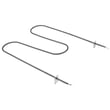
- Bake element: provides most of the heat during Bake. If it is open (no continuity), the oven may not heat or may heat very slowly.
- Oven temperature sensor: tells the control board the oven temperature; if it reads wrong, the oven can underheat or overheat.
Helpful model-matched parts:
Always shut off power at the breaker before accessing internal components.
- Bake element continuity: remove the element leads and test with a multimeter; replace if open.
- Sensor resistance: test the sensor at room temperature; a sensor that is far out of range should be replaced.
- Wiring/connectors: look for burned terminals, loose spade connectors, or heat-damaged insulation at the element and sensor.
| Symptom | Most likely cause | What to do next |
|---|---|---|
| No heat on Bake, Broil works | Bake element | Inspect and test; replace if failed |
| Heats sometimes, takes too long | Weak bake element or poor connection | Check element condition and wiring |
| Temperature is consistently inaccurate | Oven temperature sensor or calibration | Calibrate first; then test/replace sensor |
| Error code appears | Control sensing issue | Use Kenmore 790 self-cleaning range error codes to identify the code |
An oven that underheats causes long cook times and uneven baking; an oven that overheats can burn food and stress components like the wire harness and control.
Last updated: February 2026