Owner’s manual
 Error Codes


What is the capacity of the Whirlpool LGR4634JQ2?
The Whirlpool LGR4634JQ2 gas dryer has a 5.9 cu. ft. drum capacity, which is a full-size capacity for handling everyday family loads like towels, jeans, and mixed laundry. For cycle and loading guidance specific to this model, use the LGR4634JQ2 owner's manual.
What 5.9 cu. ft. means in real use
A 5.9 cu. ft. dryer typically supports these load types without overfilling:
- Mixed load: about 1 full washer load (avoid packing the drum tight)
- Towels: a medium batch (drying improves when items can tumble freely)
- Bedding: one comforter or blanket at a time (size and fill matter)
- Jeans/heavy cotton: smaller loads dry more evenly
Loading tips to get the best drying results
Overloading is one of the most common reasons a dryer takes too long to dry. We recommend:
- Fill the drum no more than about 3/4 full so clothes can tumble
- Separate heavy items (towels, denim) from light items (tees, synthetics)
- Use timed dry for bulky items if auto cycles end too soon
- Clean the lint screen before every load and keep venting clear
- If drying times suddenly increase, inspect airflow and the blower area
Quick capacity guide (common dryer sizes)
| Dryer size class | Typical capacity range | Best for |
|---|---|---|
| Compact | 3.4 to 4.4 cu. ft. | Apartments, small loads |
| Full-size (standard) | 5.0 to 7.0 cu. ft. | Most households |
| Extra-large | 7.1+ cu. ft. | Large/bulky loads |
Why capacity matters
Capacity affects drying performance and fabric care. When the drum is sized correctly for the load, clothes tumble properly, airflow stays consistent, and cycles finish faster with fewer hot spots.
Last updated: January 2026
What is the life expectancy of a Whirlpool dryer?
A Whirlpool dryer typically lasts about 13 years with normal household use and routine maintenance. For your Whirlpool LGR4634JQ2 gas dryer, consistent airflow (clean lint screen and venting) and timely replacement of wear parts are the biggest factors in reaching that lifespan; see the LGR4634JQ2 owner's manual for care and operating guidance.
Typical lifespan and what affects it
Most dryers fail early due to heat and airflow stress, not because the cabinet or drum “wears out.” These factors have the biggest impact:
- Venting condition: crushed, long, or clogged venting overheats the dryer and shortens component life
- Lint control: lint buildup restricts airflow and raises operating temperatures
- Load habits: frequent overloading strains the drum support system and belt
- Heat system cycling (gas models): repeated ignition cycles wear ignition components over time
- Preventive part replacement: replacing common wear items prevents secondary damage
Common wear parts that influence longevity
On the LGR4634JQ2, these parts commonly affect performance as the dryer ages:
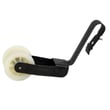
- Drum drive system parts (belt, idler, rollers)
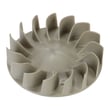
- Blower wheel and airflow path components
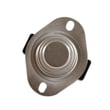
- Thermostats and thermal safety devices
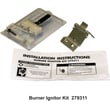
- Gas ignition components (igniter, radiant sensor, valve coils)
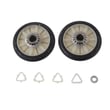
If you are already hearing squealing, thumping, or the drum is not turning smoothly, a maintenance refresh often helps. A common starting point is the dryer repair kit 4392065 because it addresses multiple drum support wear items at once.
Quick maintenance schedule (simple and effective)
| Task | How often | Why it matters |
|---|---|---|
| Clean lint screen | Every load | Keeps airflow strong and drying times normal |
| Check vent airflow at exterior hood | Monthly | Prevents overheating and long dry times |
| Clean lint from blower housing and internal ducting | Yearly | Reduces heat stress on thermostats and motor |
| Inspect belt and idler noise | Yearly | Prevents sudden no-tumble failures |
Why it matters
A dryer that runs hot due to restricted venting can trip safety thermostats, wear out the motor faster, and shorten the life of gas ignition parts. Keeping airflow strong is the most cost-effective way to extend the service life of a Whirlpool gas dryer.
Last updated: January 2026
What is the most common problem with Whirlpool dryers?
The most common Whirlpool dryer complaint, including on model LGR4634JQ2, is that the dryer will not start. In many cases the cause is a simple safety or power issue (door not fully closed, start switch, or a blown thermal safety), but a worn drive system can also stop operation.
Quick checks first (fastest fixes)
- Confirm the door closes firmly and the latch engages.
- Make sure the cycle is selected and the timer knob is not between settings.
- Verify the dryer has power (reset the breaker, check the outlet if applicable).
- Clean the lint screen and confirm strong airflow at the outside vent.
- If the motor hums but the drum will not turn, stop the dryer and inspect the belt and drum support parts.
Most common symptoms and likely parts
| Symptom | What it usually points to | Common related parts for LGR4634JQ2 |
|---|---|---|
| Won’t start (no sound) | Door switch, start switch, timer, thermal safety | Dryer push-to-start switch WP3977456, door switch, timer |
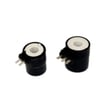
| Runs but won’t heat (gas) | Ignition or gas valve circuit issue | Dryer valve coil kit 279834, igniter, radiant sensor |
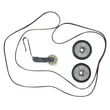
| Drum won’t turn / squeals | Worn belt, idler, rollers | Dryer drum belt 341241, idler pulley, repair kit |
| Takes too long to dry | Restricted venting or weak airflow | Lint buildup, crushed vent, blower wheel |
Why it matters
A “won’t start” or “no heat” problem on a gas dryer is often tied to safety controls and airflow. Keeping venting clear helps prevent overheating, reduces dry times, and protects key components like thermostats and the motor.
Model-specific tip from the manual
Your LGR4634JQ2 manual calls for a heavy 4-inch (10.2 cm) metal exhaust vent. Using proper venting and keeping it clear is one of the most effective ways to prevent common dryer problems. See the LGR4634JQ2 owner’s manual for venting and cycle guidance.
Last updated: January 2026