Installation guide
 Owner’s manual
 Error Codes


Does the KitchenAid dishwasher have a lifetime warranty?
KitchenAid model KUDE60HXSS0 does not have a lifetime warranty; it is covered by a one-year full warranty from the purchase date for replacement parts and repair labor to correct defects in materials or workmanship when operated and maintained as instructed in the KUDE60HXSS0 owner's manual.
- Coverage period: 1 year from the date of purchase
- Covered items: replacement parts and repair labor
- Covered issue type: defects in materials or workmanship
- Condition: dishwasher must be operated and maintained according to instructions
A lifetime warranty typically applies to a specific component (for example, a tub or rack) for as long as you own the product. For the KUDE60HXSS0, the standard expectation is one year of full coverage, so planning for maintenance and normal wear items (filters, racks, seals) matters.
If performance problems show up after the first year, they are often caused by maintenance or wear rather than a manufacturing defect:
- Poor cleaning from a clogged filter or blocked spray arm
- Not draining due to a restriction in the drain path
- Not filling from a supply issue or a sticking inlet valve
- Leaks from a worn door seal or installation leveling issues
| Symptom | Common part to check | Model-matched example |
|---|---|---|
| Not cleaning well | Filter, spray arm | Dishwasher filter W10872845, dishwasher spray arm WPW10491331 |
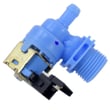
| Not filling | Water inlet valve | Dishwasher water inlet valve W11175771 |
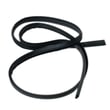
| Leaking at door | Door seal | Seal WPW10497235 |
Warranty wording can vary by purchase channel and documentation version. We recommend matching your coverage details to your unit’s documentation and care instructions in the KUDE60HXSS0 owner's manual.
Last updated: February 2026
What is the most common problem with a KitchenAid dishwasher?
The most common problems we see with KitchenAid dishwashers like model KUDE60HXSS0 are poor cleaning (food left on dishes) and draining trouble (water left in the tub). In most cases, the root cause is a clogged filter or spray arm, or a restriction in the drain path.
- Dishes come out dirty or gritty: filter needs cleaning, spray arm holes are plugged, or loading blocks spray
- Standing water in the bottom: drain hose restriction, drain pump issue, or sink/disposer connection blockage
- Not drying well: heater circuit issue, rinse aid problem, or cycle selection (heated dry off)
- Leaking at the door: lower door seal wear, door not closing squarely, or rack interference
- Won’t start or stops mid-cycle: door not latching, power supply issue, or control-related fault
Use the steps in the KUDE60HXSS0 installation guide to confirm basics like power, water supply, and proper operation checks.
- Make sure the door closes and latches firmly
- Confirm the water supply valve is fully on
- Check the circuit breaker/fuse for the dishwasher circuit
- Run a short cycle; after about 2 minutes, open the door and verify water is in the tub
- Clean the filter area and inspect spray arm holes for debris
If cleaning and basic checks do not help, these model-matched parts are common solutions:
| Problem | Most likely area | Example model-matched part |
|---|---|---|
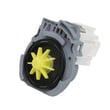
| Not draining, water left in tub | Drain pump or drain path | Dishwasher drain pump WPW10348269 |
| Poor cleaning, weak spray | Spray arm or filter restriction | Dishwasher spray arm WPW10491331 |
| Cloudy results, long cycles | Soil sensing affected by buildup | Dishwasher filter W10872845 |
Poor cleaning and draining issues usually get worse over time: buildup restricts water flow, increases cycle time, and can lead to odors or leaks. Keeping the filter and spray system clear is the simplest way to protect wash performance.
Last updated: February 2026
What's the average lifespan of a KitchenAid dishwasher?
A KitchenAid dishwasher typically lasts 10 to 14 years. For your KitchenAid KUDE60HXSS0, lifespan depends most on water quality, how often you run it, and routine care like cleaning the filter and fixing draining or filling problems early.
- Hard water and mineral buildup (can reduce cleaning and drying performance over time)
- How often it runs (multiple loads daily shortens overall service life)
- Filter and spray arm cleanliness (clogs force the pump and motor to work harder)
- Heating and drying performance (rinse aid use helps reduce deposits and improves drying)
- Drain and fill health (slow draining or weak filling strains components)
Use the care steps in the KUDE60HXSS0 owner’s manual. These habits make the biggest difference:
- Clean the filter regularly; remove debris before it reaches the sump
- Keep the spray arms clear; rinse out food particles from the holes
- Use rinse aid consistently for better drying and to help control hard water deposits
- Run a dishwasher cleaner cycle periodically to reduce odor and buildup
- Fix “won’t drain” or “won’t fill” symptoms quickly to prevent pump or valve wear
| What you notice | Common cause | Typical fix |
|---|---|---|
| Poor cleaning, grit in tub | Clogged filter or spray arm | Clean components; replace if damaged |
| Water left in bottom | Drain restriction or failing pump | Check hose; consider dishwasher drain pump WPW10348269 |
| Spots, poor drying | Low rinse aid, hard water | Refill rinse aid; adjust detergent and loading |
| Long cycles | Normal for efficient models | Expect about 2 to 3 hours per load (options can extend time) |
A dishwasher that is draining, filling, and heating correctly runs with less strain on the pump, motor, and seals. That reduces breakdowns and helps your KUDE60HXSS0 reach its normal service life.
Last updated: February 2026
What are the commonly replaced parts in a dishwasher?
For the KitchenAid KUDE60HXSS0 dishwasher, the most commonly replaced parts are the ones that handle water flow, washing action, heating, and door sealing. In day-to-day repairs, we see the highest replacement rates on pumps, inlet valves, spray arms, filters, rack hardware, and door seals; these wear out, clog, or leak over time.
- Drain and circulation issues: drain pump, pump and motor assembly, sump
- Not filling or filling slowly: water inlet valve
- Poor cleaning: spray arm, filter, manifold, turbidity sensor
- Not drying or water not heating: heater
- Leaks: lower door seal, tub-related seals
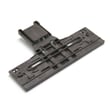
- Rack problems: wheels, tracks, adjusters, clips, dishracks
| Symptom | Likely part category | Example part for this model |
|---|---|---|
| Dishwasher not draining | Drain components | Dishwasher drain pump WPW10348269 |
| Dishwasher not filling | Water supply components | Dishwasher water inlet valve W11175771 |
| Dishes not clean | Wash system components | Dishwasher spray arm WPW10491331 |
| Not drying well | Heating components | Dishwasher heater W10703867 |
| Leaking at bottom of door | Door sealing | Seal WPW10497235 |
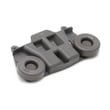
| Rack won’t roll smoothly | Rack hardware | Whirlpool dishwasher dishrack wheel W10195416V |
These components do the most work in a wet, hot, detergent-heavy environment, so they are the first to show problems from buildup and wear.
- Filters and spray arms clog from food soil and hard-water scale
- Pumps wear mechanically and can jam from debris
- Inlet valves can stick or plug with sediment
- Heaters can fail electrically or get coated with mineral deposits
- Door seals flatten, tear, or get nicked, leading to leaks
Use the KUDE60HXSS0 installation guide and your user instructions to confirm safe access and basic setup items (water line routing, drain hose routing, and door behavior).
- Clean the filter and check for debris in the sump area
- Inspect spray arm holes for clogs and cracks
- Verify the sink drain/disposal connection is clear (common drain restriction point)
- Check the door closes evenly and the seal is seated all the way across
- Run hot water at the sink before starting a cycle to improve wash performance
If the door drops open or won’t stay in position, the spring tension may need adjustment. The installation instructions describe moving the tensioner to different holes so both sides match.
Last updated: February 2026