Owner’s manual
 Error Codes



What is the most common problem with a KitchenAid refrigerator?
Temperature inconsistency (warm fridge, soft ice cream, or freezing in the fresh-food section) is one of the most common issues we see on KitchenAid refrigerators, including model KFIS29PBMS00. Ice maker problems and water leaks are also frequent, and they often trace back to airflow, defrost, or water-supply components.
- Fridge too warm or freezer too warm: restricted airflow, dirty condenser area, or a cooling system issue
- Fresh-food section freezing: airflow damper or control/thermistor logic issues
- No ice or small/hollow cubes: water supply restriction, valve issue, or ice maker fault
- Water under the fridge or inside compartments: clogged defrost drain, loose water line, or valve seepage
- Frost buildup on the back wall/freezer: defrost system problem
For model-specific operating tips and control settings, use the KFIS29PBMS00 user manual.
- Confirm the temperature settings and allow 24 hours for changes to stabilize.
- Make sure vents inside the compartments are not blocked by food packages.
- Clean dust from the condenser area (unplug first).
- Verify doors seal fully and close on their own.
- If the issue is ice or water, confirm the household shutoff valve is fully open.
If troubleshooting points to a failed component, these model-compatible parts are commonly involved:
| Problem area | What fails | Example compatible part for this model |
|---|---|---|
| Ice maker not making ice | ice maker module or assembly | Refrigerator ice maker assembly W11577195 |
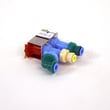
| No water to dispenser/ice | inlet valve not opening fully | Refrigerator water inlet valve assembly WPW10341329 |
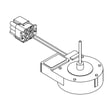
| Warm temps, weak airflow | evaporator fan not running | Refrigerator evaporator fan motor W10633627 |
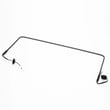
| Frost buildup, warm temps | defrost heater not heating | Refrigerator defrost heater WP12729128 |
Temperature swings and airflow problems can shorten food life and make the compressor run longer than necessary. Catching the root cause early (airflow, defrost, or water supply) helps prevent repeat failures and reduces the chance of secondary issues like ice buildup or leaks.
Last updated: January 2026
Are bottom mount fridges better?
Bottom-mount refrigerators like the KitchenAid KFIS29PBMS00 are often “better” for many kitchens because the fresh-food section sits at eye and waist level, so everyday items are easier to reach. Whether it’s best for you depends on freezer use, mobility, and how you organize groceries; see the KFIS29PBMS00 owner's manual for model-specific features and storage guidance.
- You use fresh foods (produce, dairy, leftovers) more often than frozen foods
- You want less bending for daily refrigerator access
- You prefer wide refrigerator shelves and door bins for beverages and meal prep
- You like freezer drawers that separate baskets and bins for organization
- You want a layout that works well for frequent cooking
Bottom-mount is not automatically “better” for every home. Common considerations include:
- Freezer access requires bending or kneeling more often
- Freezer drawers can feel heavier when fully loaded
- Some people prefer a top-freezer for quick frozen-food access
| Feature | Bottom-mount refrigerator (like KFIS29PBMS00) | Top-freezer refrigerator |
|---|---|---|
| Most-used items | Easier access to fresh food | Easier access to freezer |
| Ergonomics | Less bending for fridge section | More bending for fridge section |
| Freezer organization | Drawer-style bins, often more segmented | Shelf-style, often simpler |
| Best for | Fresh-food focused households | Frozen-food focused households |
Choosing the right configuration affects daily comfort, food visibility (less forgotten produce), and how efficiently you can load and unload groceries. The “best” layout is the one that matches how your household actually eats and cooks.
Last updated: January 2026
Why is my KitchenAid refrigerator leaking at the bottom?
On KitchenAid model KFIS29PBMS00, a leak at the bottom is most often caused by a clogged or frozen defrost drain. When defrost water cannot flow to the drain pan, it can overflow and show up as a puddle under the crisper drawers or on the floor. See the KFIS29PBMS00 user manual for location and access guidance.
- Look for water under the crisper/deli drawers; this strongly points to a defrost drain issue.
- Check the freezer floor for a thin sheet of ice; that can indicate drain water is backing up and refreezing.
- Inspect door gaskets for gaps; warm air leaks can increase frost and defrost water.
- Confirm the refrigerator is level; a forward tilt can encourage water to spill out of the drain trough.
- If the unit has a water line, check for drips at the back lower area and under the cabinet.
| What you see | Most likely cause | What we do next |
|---|---|---|
| Water under crisper drawers | Defrost drain clogged/frozen | Thaw and flush the drain; clear debris in the drain opening |
| Puddle on floor near front | Drain pan overflow or drain backup | Verify drain is flowing; check pan position and cracks |
| Water near back/bottom | Water supply connection or valve seep | Inspect tubing and fittings; check the refrigerator water inlet valve assembly WPW10341329 for seepage |
| Moisture around doors | Door gasket not sealing | Clean and warm the gasket; replace if torn or deformed |
- Unplug the refrigerator.
- Remove items and drawers as needed to access the drain area.
- Melt any visible ice with a hair dryer on low (keep heat moving; do not overheat plastic).
- Flush the drain with warm water (a turkey baster works well) until it flows freely to the drain pan.
- Reassemble and monitor for 24 hours.
A blocked defrost drain can keep returning, create recurring puddles, and lead to ice buildup that affects airflow and cooling performance. Fixing the drain early helps protect flooring and keeps temperatures stable.
Last updated: January 2026
What's the life expectancy of a KitchenAid refrigerator?
We cannot confirm a specific “life expectancy” range for the KitchenAid KFIS29PBMS00 from model-specific documentation because manufacturers typically do not publish an official service-life number. In real-world use, lifespan varies most with maintenance, installation conditions, and how quickly cooling or sealing issues are corrected; see the KFIS29PBMS00 owner's manual for care and operating guidance.
- Condenser airflow and cleanliness: Restricted airflow makes the compressor run hotter and longer.
- Door sealing and alignment: Air leaks increase run time and moisture, which can lead to frost.
- Stable temperatures: Frequent setting changes and overloading can stress the cooling system.
- Ice and water system condition: Leaks or low flow can create secondary damage and mess.
- Defrost performance: Ice buildup can block airflow and cause warm temperatures.
- Keep interior vents clear so cold air can circulate.
- Clean spills promptly to prevent odors and corrosion.
- Replace consumable filters on schedule.
- Address new noises, warming, or frost early instead of waiting.
| Maintenance item | Typical benefit | Example part for this model |
|---|---|---|
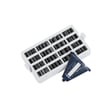
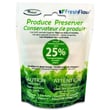
| Air filtration | Helps reduce odors and keeps airflow paths cleaner | Refrigerator air filter W10311524 |
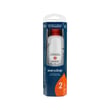
| Water filtration | Helps maintain dispenser and ice maker flow | Refrigerator cartridge wrap assembly EDR2RXD1 |
Because there is no official “years” rating for the KFIS29PBMS00, focusing on the factors above helps you prevent the most common wear accelerators (overheating, air leaks, and restricted airflow) and can reduce the chance of major repairs.
Last updated: January 2026