Owner’s manual
 View engine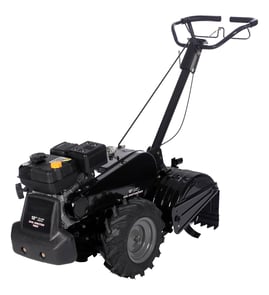



Where is the model number on a Craftsman rear tine tiller?
On the Craftsman rear-tine tiller model 917299020, the model number is printed on the product identification label. On this model, the manual identifies it as “TILLER MODEL NUMBER 917.299020”; use that same number when ordering parts or looking up service information in the 917299020 owner's manual.
Common places to check on the tiller
Look for a sticker or metal tag in these typical locations:
- On the tine shield or tine guard area (near the rear tines)
- On or near the engine or fuel tank area
- On the main frame, usually on the left side rail
- Near the handle/control panel area
- Near the belt guard or transmission/gearcase area
How to confirm you found the right number
The correct model number format for this unit is 917.299020 (often shown without the dot as 917299020). Use the full model number, not a partial.
| What you see on the label | What it means | What to use for parts |
|---|---|---|
| 917.299020 | Full model number (with dot) | 917299020 |
| 917299020 | Full model number (no dot) | 917299020 |
| 917.299 | Incomplete/partial | Keep looking for the full number |
Why it matters
Using the exact model number ensures you get the correct diagrams and compatible parts (for example, the correct belt, clutch cable, or tine hardware) for your Craftsman rear-tine tiller.
Last updated: January 2026
How often should I change the oil in my tiller?
For the Craftsman 917299020 rear-tine tiller, we change the engine oil every 25 hours of operation or at least once a year (whichever comes first). We also check the oil level before starting and after each 5 hours of continuous use; clean oil is critical for engine life.
Recommended oil-change schedule for model 917299020
Use this as your baseline, then shorten intervals if you till in heat, heavy load, or dusty soil.
- Change engine oil every 25 hours of use
- Change engine oil at least once per year even if you do not reach 25 hours
- Check crankcase oil level before each start
- Re-check oil level after each 5 hours of continuous operation
- Change oil more often in high temperatures or heavy load conditions
- Service more often in dirty or dusty conditions
Quick steps to change the oil
Follow the procedure in the 917299020 owner's manual. In general, the process looks like this:
- Park the tiller on a level surface
- Warm the engine briefly so oil drains more freely, then shut it off
- Remove the drain plug and drain oil into a suitable container
- Reinstall and tighten the drain plug securely
- Remove the oil fill plug, refill with the correct oil, then tighten the fill plug
Oil type and viscosity basics
The manual specifies a high-quality detergent oil with API service classification SG-SL, and to choose viscosity by temperature.
| Typical conditions | Common choice | What to watch for |
|---|---|---|
| Warm weather use | SAE 30 | Good protection in heat |
| Mixed temperatures | 10W-30 | Check level more often |
| Cold starts | 5W-30 | Can increase consumption above 32°F |
Why it matters
Fresh oil reduces internal wear, helps control engine temperature, and prevents damage from running low on oil. On a rear-tine tiller, consistent oil checks also help you catch leaks early before they affect performance.
Last updated: January 2026
What tiller is made in the USA?
Mantis tillers are made in the USA; for your Craftsman rear-tine tiller model 917299020, the best way to confirm country of manufacture is to check the product identification label details and documentation in the 917299020 owner's manual.
How to identify where a tiller is made
Use these quick checks on the machine itself:
- Look for a product ID label on the frame near the engine, transmission, or handle support.
- Check for wording such as “Made in …” or “Assembled in …” on the label.
- Record the model and serial number exactly as shown.
- Compare the label information to the specifications and identification sections in the manual.
- If the label is missing or unreadable, replace damaged fasteners or hardware so the label area stays protected.
What we can say for common brands
Here is a practical way to think about it when shopping or comparing:
| Brand | Typical manufacturing note | Best confirmation method |
|---|---|---|
| Mantis | Commonly marketed as made in the USA | Manufacturer documentation and product label |
| Craftsman | Varies by model and production run | Product label plus manual |
Why it matters
Country of manufacture can affect parts sourcing, decals/labels, and which service information applies. For model 917299020, using the manual and the unit’s ID label helps you match the correct parts and maintenance specs (oil type, spark plug, and hardware).
Last updated: January 2026
What are the common problems with lawn tillers?
Common problems on the Craftsman 917299020 rear-tine tiller include no-start or rough running, poor tilling (bouncing or shallow digging), and loss of drive to the wheels or tines. Most causes are stale fuel, spark issues, soil conditions, or worn drive components; use the 917299020 owner's manual for the correct checks and safe procedures.
Most common problems and first checks
- Won’t start: old fuel, choke/throttle set wrong, fouled spark plug
- Runs rough or misfires: contaminated fuel, dirty carburetor, restricted airflow
- Poor tilling or bouncing: soil too dry or too hard, trying to till too deep too fast
- Tines wrapped or stalled: vines and long grass wrapped around the tine shaft
- Wheels or tines won’t drive: slipping/broken belt, clutch cable out of adjustment
- Shear pins breaking: tines jammed by rocks or roots, machine overloaded
Quick symptom-to-cause guide
| Symptom | Likely cause | Best first action |
|---|---|---|
| Won’t start | Fuel or ignition | Replace old fuel; check spark plug and controls |
| Rough running | Fuel/carburetion | Refresh fuel; clean fuel path and air intake |
| Poor tilling | Soil or depth setting | Target 4 to 6 inch depth; adjust depth stake |
| No drive | Belt/cable | Inspect belt condition and clutch cable travel |
Model-specific tips that prevent problems
- Start field use with the throttle in a slower position until you’re comfortable controlling the tiller.
- Best tilling depth is 4 to 6 inches; deeper passes increase bouncing and overload.
- Moisten hard soil before tilling; extremely wet soil can clump and reduce performance.
Parts to check when drive performance drops
- Husqvarna rear-tine tiller drive belt 591372401 (slipping, stretched, cracked)
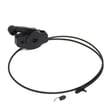
- Tiller clutch cable 532110675 (binding, stretched, out of adjustment)
Why it matters
Catching fuel, control, and drive issues early helps protect the transmission and keeps the tiller stable and effective in the soil.
Last updated: January 2026