Installation guide
 Owner’s manual
 Error Codes


How to hard reset a Kenmore Elite dishwasher?
For the Kenmore Elite 66513413K701 dishwasher, the most reliable “hard reset” is a control reset: press CANCEL/DRAIN twice to reset the control, then reselect a cycle and press START/RESUME. If the controls are locked, unlock them first using the steps in the 66513413K701 owner's manual.
Reset options (what to try first)
- Control reset (recommended): Press CANCEL/DRAIN twice.
- Drain reset behavior: After CANCEL/DRAIN, the dishwasher may run a 2-minute drain (door must be closed).
- Control Lock off: Press and hold HEATED DRY for 3 seconds to toggle Lock off if LOCK ON is lit.
- Cycle restart: Open the door slightly to stop spraying, then close and press START/RESUME after selecting a new cycle.
- Detergent check: If the dispenser opened during the interrupted cycle, refill before restarting.
Step-by-step: hard reset (control reset)
- If LOCK ON is lit, press and hold HEATED DRY for 3 seconds to unlock.
- Press CANCEL/DRAIN.
- Press CANCEL/DRAIN a second time (this resets the control).
- Close the door and let it drain for up to 2 minutes if it starts draining.
- Select your desired cycle and options.
- Press START/RESUME.
Quick reference table
| Situation | What you’ll see | What we recommend |
|---|---|---|
| Buttons don’t respond | LOCK ON lit or lights flash | Hold HEATED DRY 3 seconds (unlock) |
| Need to clear a stuck cycle | Cycle won’t advance | Press CANCEL/DRAIN twice |
| Water left in tub | Drain runs briefly | Close door; allow up to 2 minutes |
Why it matters
A control reset clears a stalled cycle and returns the electronic control to a known state without guessing button combinations. It also forces a drain when needed, which helps prevent standing water and odor.
Last updated: January 2026
How many decibels is a Kenmore Elite dishwasher?
Kenmore Elite dishwashers vary by model, and the exact decibel rating depends on the specific unit. For model 66513413K701, confirm the published sound rating in the 66513413K701 owner's manual; many Kenmore Elite built-in dishwashers are commonly in the low-40 dBA range.
How to find the decibel rating for your exact model
We recommend checking the model-specific literature first because “Kenmore Elite” covers multiple platforms and sound packages.
- Look for “Sound rating,” “dBA,” “decibels,” or “noise level” in the specifications section
- Check the model/serial tag (usually on the tub frame near the door) to ensure you are matching 66513413K701 exactly
- If you have a product listing or EnergyGuide label from purchase time, compare it to the manual specs
- If the dishwasher seems louder than normal, inspect for installation or drain issues that can increase noise
What “dBA” means in real use
Dishwasher sound ratings are measured in A-weighted decibels (dBA). Lower numbers are quieter.
| Sound level (dBA) | What you typically notice | Common causes if it seems louder |
|---|---|---|
| 39 to 44 | Very quiet, mostly water sounds | Normal operation, good insulation |
| 45 to 50 | Noticeable but not disruptive | Loose mounting, spray arm contact |
| 51+ | Clearly loud | Drain/pump noise, vibration, worn components |
If your dishwasher is suddenly louder
Noise changes often point to a mechanical issue or vibration.
- Make sure dishes are not blocking or hitting the spray arms
- Verify the unit is secured and level (mounting and leveling issues can amplify vibration); see the 66513413K701 installation guide
- Check for standing water and slow draining; a struggling drain system can be noisy
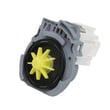
- If draining is weak or loud, the dishwasher drain pump WPW10348269 is a common service part on this model
Why it matters
Knowing the dBA rating helps you compare expected sound performance to what you are hearing now; it also helps narrow down whether the issue is normal wash noise or a developing pump, motor, or installation problem.
Last updated: January 2026
What is the code F2E2 on a Kenmore Elite dishwasher?
On Kenmore Elite model 66513413K701, error code F2E2 points to a keypad or user interface problem, often seen as a communication issue between the console (user interface) and the main electronic control.
What to try first (safe, quick checks)
- Press Cancel/Drain once, then wait about 1 minute to see if the control resets.
- Turn off power at the breaker for 2 minutes, then restore power and try a cycle.
- Make sure no keys are stuck (soap residue or a bowed overlay can hold a key “on”).
- If the dishwasher beeps and will not respond, try a different cycle selection to confirm it is not one button only.
- If the code returns immediately, focus on the console and control connections.
What usually causes F2E2
Most F2E2 situations come down to one of these:
- A stuck key or failed keypad in the control panel
- A loose or oxidized ribbon/connector between the user interface and main control
- A failing main control board
- Moisture intrusion at the console area
Parts that are commonly involved
If basic resets do not help, these model-matched parts are common suspects:
| Symptom pattern | Most likely area | Example part for this model |
|---|---|---|
| Buttons do not respond, random beeping | User interface/control panel | Control panel (black) WPW10083047 |
| Intermittent operation, multiple odd behaviors | Main control | Dishwasher electronic control board WPW10084141 |
| Dead unit or intermittent power to controls | Power feed/safety device | Fuse W10258275 |
Why it matters
F2E2 is more than a nuisance code; when the keypad or control communication is unreliable, the dishwasher can stop mid-cycle, fail to start, or drain unexpectedly. Fixing the control issue restores normal cycle selection and prevents repeat shutdowns.
Where to confirm the exact reset and diagnostics
We recommend following the model-specific steps in the 66513413K701 owner's manual for any keypad tests, diagnostic mode instructions, and control reset procedures.
Last updated: January 2026
What are common problems with Kenmore dishwashers?
Common problems we see with the Kenmore Elite dishwasher model 66513413K701 include the dishwasher not starting or stopping mid-cycle, poor draining, door latch issues, and wash performance problems caused by loading, detergent, or water conditions. The troubleshooting section in the 66513413K701 owner's manual covers several of these symptoms and quick checks.
Most common symptoms and what to check first
- Won’t start or stops during a cycle: confirm the door is fully closed and latched, and the cycle is selected.
- No power symptoms: check the house fuse or circuit breaker; reset if tripped.
- START/RESUME light flashing: this often happens after the door is opened mid-cycle or power is interrupted.
- Not draining or water left in tub: check for a kinked/clogged drain line and a blocked air gap (if installed).
- Poor cleaning or film on dishes: review detergent amount, rinse aid use, and loading so spray can reach items.
- Stains or spots: water chemistry can cause issues (iron, soft water, or high alkalinity).
Quick troubleshooting map
| Symptom | Likely area | Good first action |
|---|---|---|
| Stops mid-cycle | Door latch, power interruption | Re-latch door; press Start/Resume |
| Won’t run | Power, door not latched | Check breaker; close door firmly |
| Water not draining | Drain path, air gap | Inspect hose routing; clean air gap |
| Cloudy glassware | Detergent, water chemistry | Reduce detergent; use rinse aid |
Parts that commonly relate to these problems
If your checks point to a failed component, these are common repair parts for this model:
- Dishwasher drain pump WPW10348269 (drain problems)
- Dishwasher drain hose 8269144A (kinks, leaks, restricted drain path)
- Dishwasher water inlet valve W10648041 (no fill or slow fill)
- Fuse W10258275 (dead unit symptoms)
- Dishwasher electronic control board WPW10084141 (no response, erratic operation)
Why it matters
Catching simple issues early (door not latched, tripped breaker, clogged drain path, incorrect detergent) prevents repeat cycle failures, standing water, and permanent glass etching.
For model-specific cycle behavior, care, and troubleshooting steps, use the 66513413K701 owner's manual.
Last updated: January 2026