Owner’s manual
 Error Codes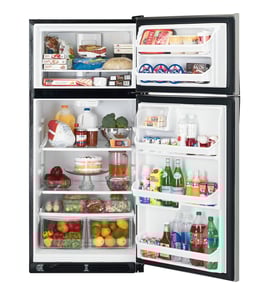


How do I tell what model Kenmore fridge I have?
You can identify your Kenmore refrigerator model by finding the model and serial number label inside the fresh food (refrigerator) compartment. For Kenmore model 10675224400, the owner's manual confirms the label is located on the inside wall of the refrigerator compartment.
Where to look for the model number label
Check these common spots first (starting with the most likely):
- Inside the refrigerator compartment on an interior side wall (most common)
- On the inside wall near the crisper drawer area
- On the inside wall of the freezer compartment (some designs)
- Behind the lower toe grille or kick plate (on some refrigerators)
What to write down (and why)
Record these items exactly as shown on the label:
- Model number (for example: 10675224400)
- Serial number
- Purchase date (if you know it)
Why it matters
The model number is what we use to match the correct Kenmore parts and diagrams. Even small differences in a model number can change which parts fit (ice maker assembly, door gasket, evaporator fan parts, and more).
Quick check: model number vs. serial number
| Item on label | What it tells us | Used for |
|---|---|---|
| Model number | Exact refrigerator design and parts list | Ordering the right replacement parts |
| Serial number | Production identifier | Service history and manufacturing details |
After you find it: common next steps
Once you have the model number, we typically use it to:
- Look up the correct parts diagrams for your refrigerator
- Confirm fit for items like an ice maker, door gasket, or water inlet valve
- Reference operating and care details in the owner's manual
Last updated: February 2026
What's the average lifespan of a Kenmore refrigerator?
Most Kenmore refrigerators average 10 to 15 years of service life. For a Kenmore 10675224400 top-mount refrigerator, lifespan depends most on basic upkeep (airflow, clean seals, and stable temperatures) and fixing small issues early using the 10675224400 owner's manual.
Typical lifespan ranges (what to expect)
- Average: 10 to 15 years
- Common with good maintenance: 15 to 20 years
- Shortened lifespan drivers: dirty condenser area, poor door sealing, frequent overloading, and delayed repairs
| Condition | What you typically see | Likely impact on lifespan |
|---|---|---|
| Coils and airflow kept clean | Steadier temps, fewer long run times | Longer life |
| Door gaskets sealing well | Less frost, less compressor strain | Longer life |
| Repeated warm temps or heavy frost | More run time, more wear | Shorter life |
| Water and ice system leaks | Corrosion, floor damage, icing | Shorter life |
Maintenance that extends life on a top-mount refrigerator
We recommend focusing on the items that most directly reduce compressor run time and moisture problems:
- Keep the refrigerator level and doors aligned so they close consistently.
- Clean and dry door gasket surfaces; if gaskets stick, the manual recommends cleaning and applying a thin coat of paraffin wax.
- Avoid blocking air vents inside the fresh food section and freezer.
- Set stable temperatures and avoid frequent, long door openings.
- Address fan noise or weak airflow quickly (a failing evaporator fan can cause warm temps and heavy frost).
When “it’s time” (repair vs. replace signals)
These symptoms often mean the refrigerator is nearing end-of-life or needs a major repair:
- The compressor runs almost constantly and temperatures still drift warm.
- You see recurring heavy frost buildup after defrosting.
- Cooling is uneven (freezer OK, refrigerator warm) even after airflow checks.
- You have repeated sealed-system type cooling failures.
Why it matters
A refrigerator that runs longer to hold temperature wears out key components faster. Simple steps like keeping seals clean and airflow clear reduce run time, which is the biggest day-to-day factor in how long a Kenmore top-mount refrigerator lasts.
Last updated: February 2026
How old is my Kenmore refrigerator serial number?
Your Kenmore refrigerator model 10675224400 age is determined from the serial number on the model and serial label inside the fresh food compartment. We use that serial number to identify the manufacturing date; your purchase date is often recorded separately in the 10675224400 owner's manual.
Where to find the serial number (and what to write down)
Unplugging is not required just to read the label, but keep the doors open only as long as needed.
- Look on the inside wall of the refrigerator compartment for the model and serial label
- Record the serial number exactly as shown (letters and numbers)
- Record the model number 10675224400 to confirm you are decoding the right unit
- If available, record the purchase date from your receipt or household records
How serial number dating typically works for Kenmore
Kenmore serial numbers commonly include letters and numbers; the letter portion is used to indicate a date code (month and year) and the remaining characters identify the production sequence. Once you match the date code, you can translate it into a manufacturing month and year.
Quick guide
| What you have | What it tells you | What it does not tell you |
|---|---|---|
| Serial number | Manufacturing date (month/year code) | Exact day made |
| Model number 10675224400 | Product design and parts family | Appliance age by itself |
| Purchase date | When it was bought | When it was manufactured |
Why it matters
Knowing the manufacturing date helps us narrow down the correct parts and troubleshooting steps for your top-mount refrigerator, especially for age-related issues like door sealing, cooling airflow, and ice maker performance.
Last updated: February 2026
How many cubic feet is my Kenmore refrigerator by model number?
Your Kenmore top-mount refrigerator model 10675224400 has its exact cubic-foot capacity listed on the model and serial label inside the fresh food compartment, and it may also be shown in the specifications section of the owner's manual. Using the rating label is the fastest, most accurate way to match capacity to your exact build.
Where to find the cubic-foot capacity on model 10675224400
Check these common locations first:
- Inside the refrigerator compartment on a side wall near the top front
- On the ceiling area inside the fresh food section
- Behind the crisper drawers on the side wall (less common)
- On the inside edge of the cabinet near the door opening
The label typically lists model number, serial number, and key specs; capacity is often shown as “cu. ft.” or “total capacity.”
Use the manual to confirm specs
If the label is hard to read, the specifications section in the owner's manual is the next best place to confirm capacity and installation clearances.
What you can usually confirm from the manual
| Item | What you’ll see | Why it helps |
|---|---|---|
| Model identification | Model/serial info guidance | Confirms you are reading the correct label |
| Installation clearances | Side/top and wall clearance guidance | Helps verify you have the right refrigerator type |
| Electrical requirements | 115V, 60 Hz, grounded outlet guidance | Confirms basic setup expectations |
Why it matters
Cubic-foot capacity helps you choose correctly sized replacement shelves, bins, and storage accessories, and it also helps when comparing cooling performance expectations for a top-mount refrigerator.
Quick tip if you are shopping parts
When ordering parts for 10675224400, match parts by model number and the part listing (not by cubic feet). Capacity can vary across similar-looking models, but the model number keeps the match exact.
Last updated: February 2026
What are the most common problems with Kenmore refrigerators?
The most common problems we see on Kenmore refrigerators like model 10675224400 are poor cooling (often airflow or defrost related), water leaks, ice maker issues, and unusual noises. Many of these start with basic maintenance, proper air circulation, and checking a few high-wear parts listed for your refrigerator.
Most common symptoms and what usually causes them
- Not cooling or warm fridge section: blocked vents, poor air circulation, frost buildup from a defrost problem, or a failed evaporator fan.
- Freezer cold but fridge warm: restricted airflow between compartments, iced-over evaporator, or a weak evaporator fan.
- Water leaking or puddles: clogged/iced drain path, loose water line, or a leaking inlet valve.
- Ice maker not making ice: water supply issue, frozen fill tube, or a failing ice maker assembly.
- Noises (buzzing, clicking, rattling): normal operating sounds, fan blade hitting ice, or a worn fan motor.
Quick checks we recommend first (fast, high-impact)
- Confirm airflow: do not pack food tightly against interior vents; the manual stresses ensuring proper air circulation.
- Clean condenser area: dust buildup makes cooling inefficient and can increase noise.
- Check door sealing: look for gaps, torn gasket, or doors that do not close squarely.
- Level the refrigerator: an unlevel cabinet can cause door sealing problems and vibration noise.
- Look for frost patterns: heavy frost on the back freezer panel often points to a defrost or airflow issue.
Parts that commonly solve these problems on 10675224400
| Problem | Common part to check | What it affects |
|---|---|---|
| Warm temps, noisy freezer | Evaporator motor WP2315539 | Moves cold air through the freezer and into the fresh food section |
| Ice maker not working | Ice maker assembly 4317943 | Ice production and harvest cycle |
| Leaks or no water to ice maker | Refrigerator valve WP2188808 | Controls water flow into the refrigerator |
| Door not sealing, moisture/frost | Gasket panel (white) 2159061 | Prevents warm air leaks that cause frost and poor cooling |
Why it matters
Most “big” refrigerator failures start as small issues: restricted airflow, a weak fan, or a door that is not sealing. Fixing those early helps stabilize temperatures, reduces frost buildup, and prevents the compressor from running excessively.
Model-specific tips from the manual
- Allow installation clearance for ventilation (typically 1/2 inch on sides and top, and 2 inches by a wall for door swing on many setups).
- Use the troubleshooting and operating guidance in the 10675224400 owner's manual to match your symptom to the right check.
Last updated: February 2026