 Owner’s manual
 Error Codes




How to tell if a Kenmore refrigerator compressor is bad?
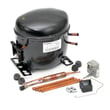
On your Kenmore 59671102101 bottom-mount refrigerator, a “bad compressor” usually shows up as poor cooling with the unit trying to run (humming, clicking, or cycling) but temperatures never recover. First rule out normal operating sounds and basic power or airflow issues before treating the compressor as the cause.
Quick checks before blaming the compressor
We recommend these simple checks first because they commonly mimic compressor failure:
- Confirm the refrigerator is plugged into a working outlet and the control is turned on.
- If lights work but the compressor and fans are off, wait about 40 minutes; the refrigerator may be in a defrost cycle.
- Clean the condenser coil; dirty coils can cause warm temps and long run times.
- Check door gaskets for a tight seal; leaks can prevent proper cooling.
- Make sure airflow is not blocked (avoid overpacking; keep vents clear).
For model-specific operating guidance and care steps, use the 59671102101 owner's manual.
Symptoms that point to a compressor problem
A compressor issue is more likely when you see a combination of these:
- Refrigerator and freezer both warm even though the unit runs a lot
- Repeated clicking every few minutes (start device tries, then trips)
- Compressor is very hot to the touch after attempting to run (use caution)
- Compressor is silent while interior lights work and fans may run
- No improvement after cleaning coils and confirming good door seals
Normal sounds vs. warning signs
Some noises are expected during normal operation.
| Sound | Often normal? | What it can mean |
|---|---|---|
| High-pitched hum or pulsating | Yes | Compressor running and cycling normally |
| Click when starting/stopping | Yes | Control switching compressor on/off |
| Repeated click with no cooling | No | Start device overload tripping; compressor may be struggling |
Why it matters
The compressor is part of the sealed refrigeration system; when it cannot start or pump refrigerant effectively, both compartments typically warm up. Basic issues (defrost cycle, dirty condenser coils, poor gasket seal) can create the same “not cooling” complaint but are much easier to fix.
What we do next if symptoms persist
If the checks above do not restore cooling, the next step is electrical diagnosis (start device, compressor windings, and amperage draw) and a sealed-system evaluation by a service technician.
Last updated: February 2026
What are the most common problems with Kenmore refrigerators?
The most common issues we see on Kenmore refrigerators like model 59671102101 are cooling problems (often airflow or dirty condenser coils), ice maker not making ice, water leaks, frost buildup, and unusual noises. Many are fixed with cleaning, leveling, and control adjustments; sealed-system failures typically need service.
Most common symptoms and what usually causes them
- Not cooling or warm temperatures: dirty condenser coils, blocked vents, doors opened often, controls set incorrectly, or the unit is in a normal defrost cycle (wait about 40 minutes to see if it restarts).
- Runs too often: warm food load, frequent door openings, dirty coils, or door gasket not sealing.
- Water leaks or puddles: commonly a clogged/iced defrost drain or a water supply connection issue (if connected).
- Frost buildup: door left ajar, weak door seal, or defrost system trouble.
- Noisy operation: normal operating sounds, condenser fan noise, or vibration from the cabinet not being level.
Quick checks we recommend first (safe DIY)
- Confirm the refrigerator is plugged into a properly grounded 3-prong outlet and on a dedicated 103 to 126V, 15A, 60 Hz circuit.
- Clean the condenser coils (a top cause of poor cooling and long run times).
- Check door gaskets for a tight seal and clean the sealing surfaces.
- Verify the refrigerator is level to reduce noise and help doors close.
- Adjust the refrigerator and freezer controls, then allow several hours for temperatures to stabilize.
Common problems and best next step
| Problem you notice | What to do next | Why it helps |
|---|---|---|
| Warm fridge or freezer | Clean coils; check controls; reduce door openings | Restores heat transfer and airflow |
| Unit seems “dead” | Check outlet, fuse/breaker; wait through defrost | Power and defrost are common causes |
| Moisture droplets | Limit door openings; check gasket seal | Reduces humid air entering |
| Ice maker not making ice | Confirm water supply; set ice maker to On | Restores water fill and operation |
Why it matters
Most “big” refrigerator complaints start with airflow, heat removal, or door sealing. Fixing those basics first prevents food temperature swings, excess frost, and unnecessary compressor run time.
For model-specific operating and care steps (controls, coil cleaning, leveling, and troubleshooting), use the 59671102101 owner's manual. For dispenser-related issues on Kenmore units, the steps in how to disassemble a Kenmore refrigerator dispenser are also helpful.
Last updated: February 2026
What water filter fits my Kenmore fridge?
For Kenmore bottom-mount refrigerator model 59671102101, the right water filter depends on how your unit is set up: some versions use an internal cartridge, while others use an external inline filter on the water supply line (and some have no filter at all). Use the identification steps below, then match by the filter’s printed part number.
Find the exact filter type used on model 59671102101
Start with what you can physically see on your refrigerator and water line:
- Check inside the fresh food compartment for a filter housing (upper corner or base grille area).
- If there is a twist-in or push-in cartridge, read the part number printed on the cartridge or the housing label.
- If there is no internal housing, pull the refrigerator out and inspect the water line for an external inline filter.
- If an inline filter is installed outside the refrigerator, confirm the flow direction arrow points toward the refrigerator.
- If you have an ice maker but no filter, your home may be filtering water elsewhere (or not filtering at all).
For diagrams and model-specific locations, use the 59671102101 owner's manual.
What to use as your “match” (so you get the correct replacement)
Because Kenmore used multiple filter styles across different production runs and configurations, the most reliable match is the identifier printed on the existing filter or housing label.
| What you find | What to match | What you buy |
|---|---|---|
| Internal cartridge installed | Cartridge part number on the filter | Same cartridge number |
| Inline filter on water line | Inline filter part number and tubing size | Same inline filter number and size |
| No filter present | Your preferred filtration approach | Optional inline filter kit (if desired) |
Why it matters
A wrong or partially clogged filter restricts water flow; that shows up as slow ice production, small cubes, or weak dispenser flow. The manual also notes that an externally installed filter can cause flow problems if it is clogged or installed incorrectly.
Helpful related guide
Use our step-by-step instructions for selecting and swapping the correct style: how to replace the water filter in a Kenmore refrigerator.
Last updated: February 2026
Why is my refrigerator not getting cold at the bottom?
If your Kenmore 59671102101 is warmer at the bottom, the most common causes are restricted airflow (blocked vents, overpacked shelves), dirty condenser coils, or a weak evaporator fan that is not circulating cold air down into the fresh-food section. Use the owner's manual troubleshooting and cleaning steps first.
Quick checks that fix most “warm bottom” complaints
- Set controls to normal (not warm); give temperatures 24 hours to stabilize after changes.
- Make sure food packages are not blocking air vents or return ducts.
- Leave space between items so cold air can circulate to the lower shelves.
- Clean the condenser coil area; the manual specifically calls out keeping the condenser coil clean.
- Confirm the doors close fully and the gaskets seal tightly all the way around.
Step-by-step: what to do next
- Clean the condenser coils: Dust and pet hair reduce heat removal, which hurts cooling performance.
- Check the door seals: A small gap at the bottom of the door can pull in warm, moist air and keep the lower section warm.
- Listen for the evaporator fan: You should typically hear a steady fan sound when the unit is cooling. If airflow feels weak at the vents, the fan or an ice blockage can be the issue.
- Allow for proper ventilation around the cabinet: The manual recommends clearance at the top and notes normal operating temperatures; poor ventilation can raise cabinet temperatures and reduce cooling.
Symptoms and likely causes
| What you notice | Most likely cause | What to check first |
|---|---|---|
| Top shelves cool, bottom warm | Airflow blocked or weak circulation | Vents blocked, overpacking, evaporator fan airflow |
| Whole refrigerator warm | Dirty condenser coils or control setting | Coil cleaning, control setting, door sealing |
| Cooling comes and goes | Defrost cycle or frost buildup affecting airflow | Wait 40 minutes if in defrost; check for heavy frost/ice |
Why it matters
Bottom-of-fridge warming is usually an airflow problem, not a “lack of cold.” Fixing airflow and heat removal (condenser coil cleaning, good door sealing, proper loading) restores even temperatures and helps prevent food spoilage.
Last updated: February 2026





