
Can I use .095 trimmer line in a .080 trimmer?
Yes, .095-inch line can be used in a trimmer that normally runs .080-inch line only if the trimmer head, spool channels, and eyelets are sized for .095. On your Mcculloch ROAD trimmer, confirm the head’s approved line diameter first; thicker line increases load and can cause feed issues.
Check the cutting head and guard for a stamped or printed line-size range; that is the correct spec to follow.
- Look for a marking on the head, spool, or guard that lists supported diameters (for example, “.080” or “.080-.095”)
- Thread a short piece of .095 through each eyelet by hand; it should slide freely
- Inspect spool channels; narrow channels make .095 bind and stop bump-feed
- Wind the line evenly and tightly without crossing wraps
- Test for smooth bump-feed and stable RPM in light grass before heavy trimming
| Line size | Cutting strength | Engine load | Feed reliability |
|---|---|---|---|
| .080 in | Good for light trimming | Lower | Usually smoother |
| .095 in | Better for thicker weeds | Higher | More likely to bind if head is tight |
Use .080 if you notice any of these after installing .095.
- The engine bogs down or stalls when you accelerate
- Bump-feed becomes inconsistent or stops
- The head vibrates because the line is not feeding evenly
- Line repeatedly fuses, kinks, or jams on the spool
Line diameter directly affects cutting-head drag. If the head is designed around .080, .095 can overload the engine and prevent the spool from feeding, which reduces cut quality and increases wear.
For help confirming you have the exact model identification before matching specs, use how to find your appliance model number (and what it means for parts).
Last updated: February 2026
What is the mix ratio for McCulloch strimmer 2 stroke mix?
For the Mcculloch ROAD line trimmer, the standard 2-stroke fuel mix is 50:1 (gasoline to 2-cycle oil). That equals 2.6 fl oz of 2-cycle oil per 1 U.S. gallon of gas; use fresh, ethanol-free fuel when possible for easier starting and smoother running.
| Gasoline amount | 2-cycle oil needed | Metric equivalent |
|---|---|---|
| 1 U.S. gallon | 2.6 fl oz | 76 ml |
| 1/2 U.S. gallon | 1.3 fl oz | 38 ml |
| 1 U.S. quart | 0.64 fl oz | 19 ml |
| 1 liter | 0.68 fl oz | 20 ml |
- Use a clean, approved fuel can (not the trimmer tank) for measuring and mixing.
- Add about half the gasoline first.
- Measure the correct amount of 2-cycle oil and pour it in.
- Add the remaining gasoline, then cap and shake to blend.
- Fill the trimmer and wipe up any spills before starting.
- Too little oil (lean oil mix): overheating, scoring, loss of compression, early engine failure
- Too much oil (rich oil mix): heavy smoke, fouled spark plug, carbon buildup, poor throttle response
- Old fuel: hard starting, surging, stalling at idle
A 2-stroke engine relies on the oil in the fuel for lubrication. Keeping a consistent 50:1 mix helps protect the piston and cylinder, reduces plug fouling, and keeps the carburetor and exhaust from loading up with deposits.
If your trimmer’s tag shows more than one identifier (for example, a product number plus a model family name), match the full identifier before ordering parts or looking up specs. Our guide, how to find your appliance model number (and what it means for parts), shows where to look and what details matter.
Last updated: February 2026
What's the difference between a whipper, snipper, and a line trimmer?
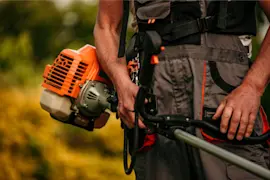
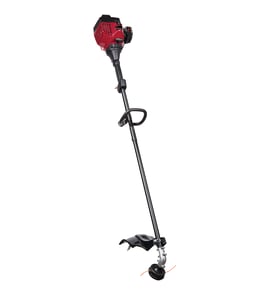
A whipper snipper, snipper, and line trimmer are usually the same tool: a handheld trimmer that cuts grass and weeds with a spinning nylon line. For your Mcculloch trimmer model ROAD, the practical difference is typically just regional wording, not a different machine.
- Line trimmer: The most generic name; describes how it cuts (nylon line).
- Whipper snipper: Common nickname (especially in Australia and New Zealand).
- Snipper: Shortened slang for the same tool.
- String trimmer / weed eater: Common U.S. terms for a line trimmer.
- Brushcutter (different tool): Usually a heavier-duty unit that can run a metal blade.
Use these checks before buying parts or accessories:
- Cutting head: Line trimmers use a bump-feed or fixed-line head; brushcutters often accept a blade kit.
- Shaft and gearbox: Brushcutters commonly have a stronger drive system for blade loads.
- Engine size: Brushcutters are often higher displacement and built for thicker growth.
- Handle style: Brushcutters frequently use bicycle-style handles for control.
| Term you hear | Usually means | Typical use |
|---|---|---|
| Line trimmer | Nylon line trimmer | Lawn edges, light weeds |
| Whipper snipper / snipper | Nylon line trimmer | Same as above |
| Brushcutter | Blade-capable cutter | Thick weeds, brush |
Using the right term helps you match the correct trimmer head, spool/line size, and guard style. It also prevents installing blade-type accessories on a unit that is designed only for nylon line.
If you are unsure whether your model number is complete, use our guide: how to find your appliance model number (and what it means for parts).
Last updated: February 2026