Installation guide
 Owner’s manual
 Error Codes


How to do a hard reset on a Kenmore washer?
For the Kenmore Elite washer model 11027082603, a hard reset is done by cutting power long enough for the control to fully power down, then restarting and selecting a fresh cycle. If the washer is paused or stopped mid-cycle, use the STOP and START buttons correctly so the lid unlocks and the control resets cleanly; see the 11027082603 owner's manual.
- Press STOP twice to end the cycle and turn the washer off.
- Unplug the washer (or switch the breaker off).
- Wait 2 minutes.
- Restore power.
- Press POWER, select a cycle, then press START.
The control will not restart a cycle until the lid is closed, and you must wait for the Lid Lock light to turn off before opening the lid.
- Press STOP once to pause.
- Wait for Lid Lock to turn off.
- Close the lid.
- Press START to restart.
A hard reset clears many temporary control glitches, but it will not correct a mechanical failure (drain, spin, or balance problems).
| Symptom after reset | Most common cause | What to check next |
|---|---|---|
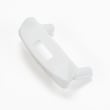
| Won’t start | Lid not locking | Lid closes fully; consider washer lid lock WPW10619844 |
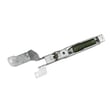
| Won’t drain | Drain pump issue or blockage | Hoses, pump, and tub-to-pump path; consider pump-water W10536347 |
| Loud roar in spin | Bearing/shaft wear | Basket drive and bearing kit inspection |
Resetting the control the right way prevents repeated stop-start behavior that can leave the lid locked, interrupt draining, or cause incomplete cycle selection. It also helps you confirm whether the issue is a one-time control glitch or a part problem.
Last updated: January 2026
What is the life expectancy of a Kenmore washer?
A Kenmore washer typically lasts 10 to 15 years. For the Kenmore Elite washer model 11027082603, lifespan depends most on load size, leveling, and monthly tub cleaning; staying within proper loading and using the recommended cycles helps the drive system, tub bearings, and suspension last longer (see the 11027082603 owner's manual).
- 10 to 15 years is the normal expectation for a Kenmore washer.
- 15+ years is common with lighter use, good leveling, and routine cleaning.
- Under 10 years is common with frequent heavy loads, chronic out-of-balance spinning, or poor installation.
| Usage pattern | Typical life expectancy | What shortens life fastest |
|---|---|---|
| Light (few loads/week) | 12 to 15 years | Overloading, poor leveling |
| Average (most households) | 10 to 15 years | Skipping cleaning, hard water buildup |
| Heavy (daily, bulky loads) | 7 to 12 years | Repeated off-balance spins, bearing wear |
We recommend these habits for model 11027082603 and similar Kenmore top-load designs:
- Do not overload; keep laundry below the top of the basket.
- Use HE detergent only and avoid overdosing to reduce residue.
- Run the Clean Washer cycle once a month (the manual calls this out for freshness).
- Level the washer so all four feet firmly contact the floor; vibration accelerates wear.
- Pause correctly when adding items; wait for the lid to unlock before opening.
When a washer starts getting noisy, shaking, or struggling to spin, these are frequent wear points:
- Tub bearing and drive shaft (often loud roaring or grinding)
- Suspension (excessive vibration or banging)
- Drain pump (won’t drain, slow drain, or humming)
- Lid lock (won’t start or stops mid-cycle)
If you are already seeing heavy vibration, confirm the leveling steps in the 11027082603 installation guide.
Most “washer died” complaints are really performance and vibration problems that shorten component life. Keeping the washer level, using HE detergent, and running the monthly cleaning cycle reduces stress on the tub, bearings, and drive components so the washer reaches its full 10 to 15 year lifespan.
Last updated: January 2026
What is the capacity of the Kenmore Elite washer?
The Kenmore Elite washer model 11027082603 is a high-efficiency top-load design; washers in this class are typically about 3.5 to 4.5 cu. ft. capacity. For the exact capacity rating used for this specific model, confirm it in the 11027082603 owner's manual.
Use these reliable places to verify the model-specific number:
- The “model information” or “features” pages near the front of the 11027082603 owner's manual
- The model and serial label on the cabinet (often under the lid or along the rim)
- Any “consumer information” or “specifications” section in the manual
- The product literature that shipped with the washer
Even without the exact cubic-feet number in front of you, correct loading protects cleaning performance and reduces vibration.
- Load items loosely; do not pack the basket tight
- Keep laundry below the top edge of the stainless steel basket
- Mix large and small items to help balance during spin
- Use only HE detergent and dose for the load size
| What you are doing | What capacity affects | Best practice |
|---|---|---|
| Washing towels | Rinsing and spin balance | Distribute evenly, avoid overfilling |
| Washing bedding | Room to move and rinse | Wash one bulky item at a time if needed |
| Everyday mixed loads | Cleaning and wear | Leave space at the top of the load |
Capacity is not just a number; it determines how much room the load has to circulate for proper wash action, rinsing, and high-speed spin. Overloading increases off-balance conditions and can strain suspension and drive components.
Last updated: January 2026
How to force a Kenmore Elite washer to drain?
On Kenmore Elite washer model 11027082603, force a drain by canceling the current cycle and running Drain/Spin (or Spin). If it still will not pump out, unplug the washer and gravity-drain through the drain hose, then clear the drain path.
- Press Pause/Cancel (or Stop) to end the cycle.
- Select Drain/Spin (or Spin) and press Start.
- If the lid will not lock, the washer may not drain or spin; check the lid lock.
- If the tub is full and the washer is unresponsive, unplug it before handling water.
- Unplug the washer.
- Pull the washer forward and find the drain hose at the back.
- Put the hose end into a shallow pan or bucket.
- Lower the hose close to the floor to let water flow out by gravity.
The installation guidance for this model calls out these limits.
| Item to check | Correct setup | Why it matters |
|---|---|---|
| Standpipe height | At least 39 in. (99 cm) | Supports proper draining |
| Hose insertion depth | No more than 4 1/2 in. (11.4 cm) | Prevents siphoning |
- Drain hose: kinks, crushed sections, lint buildup, clogged standpipe.
- Drain pump: humming with no water movement often means a jam.
- Lid lock: a failed lock can stop drain/spin for safety.
| Symptom | Part to inspect |
|---|---|
| Hums but will not pump | Pump-water W10536347 |
| Will not drain/spin because lid will not lock | Washer lid lock WPW10619844 |
Getting the water out is the immediate goal; fixing the hose, standpipe setup, or a failed pump or lid lock prevents repeat no-drain problems.
For model-specific safety and drain hose setup details, use the 11027082603 installation guide.
Last updated: January 2026