Owner’s manual
 Error Codes


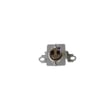

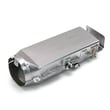
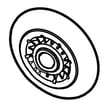
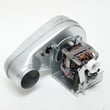
What is the average lifespan of a Samsung dryer?
Most Samsung dryers, including the Samsung DVE55M9600V, typically last 10 to 15 years with normal household use. Consistent lint removal, good airflow through the exhaust duct, and avoiding overloads are the biggest factors that push lifespan toward the high end; see the DVE55M9600V owner’s manual for care and safety guidance.
What affects dryer lifespan the most
- Vent airflow: restricted venting makes the dryer run hotter and longer
- Lint filter habits: cleaning the lint filter every load reduces strain on the blower system
- Load size: frequent overloading stresses the drum, belt, and motor
- Heat management: overheating can shorten the life of thermostats and thermal fuses
- Installation quality: stable leveling and correct ducting reduce vibration and wear
Quick maintenance checklist (best ROI)
- Clean the lint filter before or after every cycle.
- Inspect and clean the vent path periodically (dryer outlet to exterior hood).
- Keep the area around the dryer clear so air can circulate.
- Stop using the dryer if you notice burning smells, repeated overheating, or abnormal cycling.
Common wear items vs. what they usually cause
| Wear item | What you may notice | Typical impact on longevity |
|---|---|---|
| Drum belt | Drum not turning, squealing, thumping | High (can stop the dryer) |
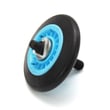
| Drum support rollers | Rumbling, thumping, uneven drum movement | Medium to high |
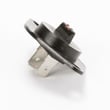
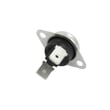
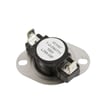
| Thermostats / thermal cut-offs | No heat, overheating shutdowns | Medium |
| Drive motor | Humming, no tumble, intermittent start | High |
Why it matters
A dryer that takes longer to dry or runs hotter than normal uses more energy and accelerates wear on key components like the heating system, drum support, and motor. Good airflow and routine cleaning are the simplest ways to extend service life.
Last updated: February 2026
How to tell if a Samsung dryer heating element is bad?
On our Samsung DVE55M9600V dryer, a bad heating element typically shows up as no heat or weak heat even though the drum tumbles normally. The most reliable check is a multimeter continuity test on the heater terminals, plus a ground-fault test to the heater housing; use the DVE55M9600V user manual for safety guidance before servicing.
Quick signs the heating element is failing
- Clothes stay damp and cycles run long (especially on Sensor Dry)
- Dryer tumbles but produces little or no heat
- Burning smell or scorching (stop the cycle and unplug)
- Breaks or hot spots visible on the heater coil (if accessible)
- Repeated overheating symptoms can also point to airflow restrictions, not just the heater
How we test the heating element (basic method)
- Unplug the dryer (electric shock risk) and let it cool.
- Access the heater assembly (panel removal varies by model; follow the manual).
- Set your multimeter to ohms (Ω) or continuity.
- Test terminal-to-terminal on the heating element:
- Good: continuity (beep) and a stable resistance reading
- Bad: no continuity (open circuit)
- Test each terminal to the metal heater housing (ground test):
- Good: no continuity to ground
- Bad: continuity to ground (shorted element)
Heating problem: element vs. safety thermostats (what to check)
| Symptom | More likely cause | Common related parts |
|---|---|---|
| Tumbles, no heat | Open heater or blown thermal safety | Samsung dryer heating element assembly DC93-00154A, dryer thermal cut-off thermostat DC47-00016A |
| Heats briefly, then stops | Overheat condition from restricted airflow | Dryer high-limit thermostat DC47-00018A |
| Long dry times, heat seems weak | Venting or lint buildup | Lint filter, vent ducting (clean first) |
Why it matters
A failed heating element stops proper drying, but restricted venting can mimic heater failure and can also trip thermal cut-offs. Cleaning the lint filter and checking the vent path first helps prevent repeat failures and protects key components.
Last updated: February 2026
Is it worth replacing a heating element in a Samsung dryer?
Yes, it’s usually worth replacing the heating element in a Samsung DVE55M9600V dryer when the dryer tumbles normally but won’t heat or heats inconsistently; the part cost is typically far less than replacing the entire dryer. We recommend confirming the failure with the diagnostic steps in the DVE55M9600V owner's manual before ordering parts.
When replacing the heating element makes sense
Replacing the heater is a good value when the rest of the dryer is in solid shape and the symptoms point to a heat circuit problem.
- The drum turns and airflow feels normal, but clothes stay damp
- Cycles run, but heat is weak or cuts in and out
- You smell “hot metal” or see scorching near the heater housing (stop using the dryer)
- You have no error code, but drying times suddenly increased
- You have already cleaned the lint filter and checked the exhaust duct for restrictions
Don’t replace the element until you rule out common look-alikes
On this model family, other heat-safety parts can stop heat and mimic a bad element. A restricted vent can also overheat the heater area and open a safety device.
Quick checks (power off):
- Clean the lint filter and confirm strong airflow at the outside vent hood
- Inspect the vent line for kinks, crushed flex duct, or heavy lint buildup
- Use a multimeter to check continuity on heat-safety components
Common heat-related parts to consider
| Symptom | Often involved | What you’ll notice |
|---|---|---|
| No heat at all | Thermal cut-off or fuse | Dryer runs but never warms |
| Heat starts then stops | High-limit thermostat | Heat cycles off early, long dry times |
| Erratic temperature | Thermistor | Overdrying or underdrying, unstable heat |
Model-matched examples include the Samsung dryer heating element assembly DC93-00154A, dryer thermal cut-off thermostat DC47-00016A, dryer high-limit thermostat DC47-00018A, and dryer thermistor DC32-00007A.
Why it matters
Replacing the correct part the first time saves money and prevents repeat failures. Venting and airflow issues can overheat the heater area, causing a new heating element or thermal cut-off to fail again.
For code-based diagnosis, we also use the Samsung dryer error codes guide alongside the manual.
Last updated: February 2026
What is the part number for the heating element in the Samsung DVE55M9600V?
For the Samsung DVE55M9600V dryer, the heating element is sold as a complete heating element assembly; the correct manufacturer part number is DC93-00154A (not a generic element-only number). For wiring and access details, follow the steps in the DVE55M9600V owner’s manual.
How to confirm you’re ordering the right heating part
We recommend matching the part number to your model tag and the symptom you’re fixing.
- Confirm the model number on the dryer label is DVE55M9600V
- Order the complete assembly when the coil is open, grounded, or physically broken
- If the dryer runs but does not heat, also check airflow and safety thermostats
- If the dryer shuts off early or shows temperature-related codes, check thermistors
- Always disconnect power before opening panels
Related heat and temperature parts commonly replaced together
A no-heat or overheating problem is often caused by a failed safety device or restricted venting, not only the heater.
| Symptom | Common related part to check | Example part number for this model |
|---|---|---|
| Runs but no heat | Thermal cut-off thermostat | DC47-00016A |
| Overheats, then stops heating | High-limit thermostat | DC47-00018A |
| Temperature codes or erratic heat | Thermistor | DC32-00007A or DC93-00329A |
If you’re replacing the heater, the model-matched part is the Samsung dryer heating element assembly DC93-00154A.
Why it matters
Using the correct DC93-00154A assembly for the Samsung DVE55M9600V helps ensure proper wattage, safe operating temperatures, and correct fit in the heater housing. It also reduces repeat failures caused by mismatched components.
Last updated: February 2026