Error Codes


How to do a Whirlpool washer reset and calibration?
For a Whirlpool WTW4816FW3 washer, we can safely do a basic reset by power-cycling the unit; however, the exact button or knob sequence to enter diagnostic mode and run calibration varies by console version and cannot be confirmed from model-specific documentation for this exact model. After repairs, calibration is still a good next step if your console supports it.
Safe reset steps (works for WTW4816FW3)
- Press Power/Cancel to stop the cycle.
- Unplug the washer (or turn off the breaker) for 1 minute.
- Restore power and wait 30 seconds.
- Select a normal cycle and start a test fill to confirm the control responds.
How calibration is typically started (console-dependent)
Because Whirlpool uses different control layouts under the same model number family, we recommend using the calibration method that matches your exact control panel. In general, calibration is started from a built-in diagnostic or service mode and then a “calibration” routine is selected.
Common signs calibration is running:
- Lid locks, then unlocks at the end
- Motor/basket makes short, gentle movements
- Cycle completes in a few minutes
| What you’re trying to fix | Calibration may help when | If it still won’t improve |
|---|---|---|
| Off-balance shutdowns | Suspension or load-sensing seems “confused” after service | Check suspension and leveling |
| Weak spin | Basket speed control seems erratic | Check drain and drive system |
| Long cycles | Sensing/drain checks repeat | Check for slow drain or siphoning |
If calibration will not start or finish
These are the most common model-relevant causes we see on top-load Whirlpool washers:
- Lid will not lock or unlocks immediately; inspect the washer lid lock W11307244
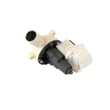
- Washer will not drain fully; check the washer drain pump W10919003 and drain path
- Shifting issues between agitate and spin; inspect the actuator, shift W11481722
- Control not responding to inputs; consider the machine control (control unit)
Why it matters
Calibration helps the washer’s control “relearn” basket movement and load sensing; that can reduce vibration, improve spin performance, and prevent repeated sensing or drain behavior after a repair.
For flashing lights or stored fault codes, use Whirlpool belt drive top load washer error codes.
Last updated: January 2026
What is the average life of a Whirlpool washer?
Most Whirlpool washers, including the Whirlpool WTW4816FW3, average about 10 to 14 years of service life in typical household use. Actual lifespan varies most with load size, detergent habits, water quality, and how quickly small issues (like draining or spinning problems) are corrected.
What affects lifespan the most
- Overloading (stresses the drive system, suspension, and gear case)
- Too much detergent (causes residue, odors, and extra wear from poor rinsing)
- Unbalanced loads (increases vibration and tub wear)
- Hard water (can contribute to valve and hose issues over time)
- Ignoring early symptoms (grinding, slow drain, lid not locking, weak agitation)
Maintenance habits that help a WTW4816FW3 last longer
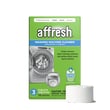
- Run periodic cleaning and keep the tub dry between uses (helps reduce residue and odors); see how to clean and maintain your washing machine.
- Use the correct amount of HE detergent and avoid “extra suds.”
- Wash bulky items in balanced pairs (one blanket plus towels, not one blanket alone).
- Check fill hoses for bulges or seepage and replace as needed.
- If draining gets slow, inspect the pump area and related hoses; a common replacement is the washer drain pump W10919003.
Repair vs replace: a practical guide
In many cases, a Whirlpool top-load washer is worth repairing when the cabinet and tub are in good shape and the fix is a common wear item.
| Situation | Typical direction | Examples of parts involved (WTW4816FW3) |
|---|---|---|
| Won’t drain, but otherwise runs | Often repair | Drain pump, drain hose |
| Won’t spin due to safety lock issue | Often repair | Lid lock |
| Excessive shaking or banging | Often repair | Suspension/damper parts |
| Loud grinding plus leaks from tub area | Evaluate cost | Tub seal, bearings, gear case |
Why it matters
Knowing the typical 10 to 14 year lifespan helps you plan maintenance and decide when a repair is a smart investment versus when multiple major failures suggest it may be time to replace.
Last updated: January 2026
What is the most common problem with Whirlpool washing machines?
Across Whirlpool washers (including model WTW4816FW3), the most common service issues we see are “won’t drain/spin,” leaking, and excessive noise or vibration. These symptoms are often caused by a small set of wear parts or a simple blockage rather than a major failure.
Most common symptoms and what they usually point to
- Won’t drain or drains slowly: clogged pump/filter area, kinked drain hose, or a failing drain pump
- Won’t spin or stops mid-cycle: lid lock not engaging, shift/drive issues, or control problems
- Leaking: loose fill hoses, worn hose seals/screens, or a cracked/loose drain hose
- Loud banging/vibration: out-of-balance loads, leveling issues, or worn suspension components
- Poor agitation/cleaning: worn agitator components (dogs/cam/auger) or drive wear
Quick checks we recommend first (WTW4816FW3)
- Unplug the washer for 1 minute, then restore power and retry a cycle.
- Confirm the washer is level and the load is not overloaded.
- Inspect the drain hose for kinks and verify the standpipe is not clogged.
- If the washer won’t spin, listen for the lid lock click and check the lid strike alignment.
Parts that commonly solve these problems on WTW4816FW3
If troubleshooting points to a failed component, these model-matched parts are common fixes:
- Washer drain pump W10919003
- Washer lid lock W11307244
- Drive belt W11239857
- Actuator, shift W11481722
- Damper assembly W10780045
Symptom-to-part cheat sheet
| Symptom | Most likely area | Example model-matched part |
|---|---|---|
| Won’t drain | Pump or restriction | Washer Drain Pump W10919003 |
| Won’t spin | Lid lock system | Washer Lid Lock W11307244 |
| Burning rubber smell | Belt slipping | Drive Belt W11239857 |
| Clicking, won’t shift modes | Shifter/actuator | Actuator, Shift W11481722 |
| Shaking/banging | Suspension | Damper Assembly W10780045 |
Why it matters
Catching these issues early helps prevent secondary damage (for example, a slipping belt can overheat, and a weak suspension can cause repeated out-of-balance events). It also helps you choose the right repair path before replacing bigger assemblies.
For fault codes and what they mean on Whirlpool top-load designs, use our Whirlpool belt drive top load washer error codes reference.
Last updated: January 2026