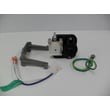
Owner’s manual
 Error Codes



How to find the model number on Kenmore Elite refrigerator?
On Kenmore Elite refrigerator model 59673503202, the model and serial number label is located inside the fresh food (refrigerator) compartment on the left interior wall. Check it before ordering parts or looking up troubleshooting steps in the owner's manual.
- Open the refrigerator (top) doors and look along the left inside wall
- Look for a sticker/plate that lists Model and Serial
- Use a flashlight; the label can be easy to miss behind stored items
- Write the full model number exactly as shown (all digits)
Some Kenmore bottom-mount designs also place identification labels in other common areas. Check these next:
- Behind or beside the crisper drawers (remove drawers for a clear view)
- Along the side wall near the lower bins
- Near the door hinge area inside the fresh food section
Kenmore Elite model numbers can look similar, and small differences can change the correct part match for items like an ice maker, light bulb, or control board.
| What you need | Why it helps | Example use |
|---|---|---|
| Model number | Ensures parts diagrams match your exact unit | Ordering the correct ice maker assembly |
| Serial number | Helps identify production details | Confirming compatible revisions |
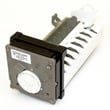
- Use the model number to match parts for your refrigerator, such as the refrigerator ice maker D7824706Q or bulb replcmt W11447232
- Keep the model and serial number recorded with your purchase paperwork for future reference
Last updated: February 2026
Why is my refrigerator not getting cold at the bottom?
If your Kenmore Elite refrigerator model 59673503202 is warm at the bottom, the most common causes are restricted airflow (blocked rear air grille, overcrowded shelves, shelf liners) or heat not being removed efficiently because the condenser coils are dirty. Start with cleaning and airflow checks, then confirm your temperature control settings.
- Clean the condenser coils (dust and pet hair reduce cooling performance).
- Make sure the rear air grille inside the fresh food section is not blocked by food packages.
- Remove shelf liners (foil, wax paper, paper towels) that can restrict airflow.
- Avoid overcrowding; cold air needs space to circulate around food.
- Reduce door-open time; organize items so the door stays open for the shortest time.
Your manual notes a recommended starting setting of 4 for both compartments, and that you should allow 8 to 12 hours before adding food and 24 hours for temperatures to stabilize. Use these rules when adjusting:
- Change only one control at a time.
- Move the control one number per adjustment.
- Wait 5 to 8 hours between changes.
For exact control locations and the temperature control guide, use the owner's manual.
| Symptom | Most likely issue | What to do first |
|---|---|---|
| Top feels cooler than bottom | Airflow blocked in fresh food section | Clear rear air grille; declutter shelves |
| Whole fridge struggles to cool | Dirty condenser coils | Clean coils; improve ventilation around unit |
| Temps swing after changes | Controls adjusted too quickly | Adjust 1 step; wait 5 to 8 hours |
Bottom-area warming is often an airflow problem, not a “no-cool” failure. Fixing airflow and coil cleanliness helps the refrigerator hold the 34°F to 40°F fresh food range (with 37°F as a good target) and reduces run time.
Last updated: February 2026
What is the average lifespan of a Kenmore Elite refrigerator?
Most Kenmore Elite refrigerators, including model 59673503202, typically last 10 to 15 years with normal household use and routine maintenance. Keeping condenser areas clean, maintaining good door seals, and fixing cooling or ice maker issues early helps you get the full expected service life.
A refrigerator’s lifespan depends most on run time, airflow, and how hard the sealed system has to work.
- Maintenance habits: cleaning, leveling, and keeping vents clear
- Door seal condition: warm air leaks force longer compressor run times
- Ice maker and water system health: leaks and clogs can create secondary damage
- Room conditions: hot garages and tight built-ins shorten life
- Repair history: repeated cooling failures often signal end-of-life decisions
Use the care and cleaning guidance in your 59673503202 owner's manual and focus on these high-impact items:
- Vacuum dust from the condenser area (unplug first)
- Keep door gaskets clean and sealing evenly
- Avoid overpacking; maintain airflow in the fresh food and freezer sections
- Replace the water filter about every 6 months (more often with heavy use or poor water quality)
- Address unusual noises or warming temperatures quickly
When a Kenmore Elite refrigerator is past the 10-year mark, we recommend weighing repair cost against remaining life.
| Situation | What it usually means | Common next step |
|---|---|---|
| Temps drift warm, frost buildup, or long run times | Possible defrost or airflow issue | Diagnose fans/defrost components |
| Water leaks or weak dispenser flow | Filter, tubing, or valve restriction | Service water path and filter |
| Ice maker stops producing | Ice maker module or fill issue | Check/replace ice maker |
If ice production is the main problem, the model-specific refrigerator ice maker D7824706Q is a common replacement part for this unit.
A refrigerator that runs longer than necessary uses more energy and puts extra wear on the compressor and sealed system. Simple upkeep and timely part replacement can prevent a minor issue from turning into a major cooling failure.
Last updated: February 2026
Does anyone make a 33 inch wide refrigerator?
Yes. Many brands make 33-inch wide refrigerators, including bottom-freezer, French door, and side-by-side styles. If you are trying to replace a Kenmore Elite 59673503202, the key is matching width plus the required installation clearances shown in the owner's manual.
When you measure, we recommend checking more than just cabinet width.
- Measure the opening width at the front and the back (walls are not always square)
- Confirm you have at least 1/2 inch of air space behind the refrigerator for airflow
- Measure height to the top of the hinge area (not just the cabinet top)
- Check depth with doors closed and allow room for doors to swing open
- Account for flooring thickness (tile, rugs, and underlayment can reduce the opening)
Most “33-inch” models are built to fit a 33-inch cabinet opening, but the actual cabinet width can vary slightly by brand and door design.
| What you’re comparing | What to look for | Why it matters |
|---|---|---|
| Listed width | Around 33 inches | Determines basic fit in the cutout |
| Required rear clearance | Often 1/2 inch or more | Helps prevent overheating and poor cooling |
| Door swing clearance | Space in front and to the sides | Prevents doors from binding and improves access |
| Height to hinge cap | Exact measurement | Avoids top interference in tight alcoves |
A refrigerator that is “close” in width can still be a bad fit if it needs more rear clearance, has thicker doors/handles, or sits higher once leveled. The installation section in the owner's manual covers measuring the opening, selecting the best location, and leveling to gain small amounts of clearance.
If your current unit is not making ice or dispensing water, a replacement refrigerator is not always necessary. Common fixes include addressing the ice maker assembly or water connections.
- Ice production issues can point to the refrigerator ice maker D7824706Q
- Leaks at a tubing connection can involve the refrigerator water supply tube union, 5/16 x 5/16-in WP2300868
- Water filter fit or leaks can involve the refrigerator water filter housing WP12568001
Last updated: February 2026
What are the common problems with Kenmore Elite refrigerators?
Common problems we see with the Kenmore Elite refrigerator model 59673503202 include warm temperatures from dirty condenser coils or doors not sealing, frost buildup that restricts airflow, water leaks from drain or water-line issues, and noises from the ice maker, compressor, or defrost cycle. Use the owner's manual for model-specific control settings and checks.
- Food temperature too warm: dirty condenser coils, blocked rear air grille, frequent door opening, controls set too warm
- Runs too often: dirty coils, door not closing, warm room conditions, recently added food
- Water droplets inside/outside: high humidity, frequent door opening, gasket not sealing
- Leaks: clogged defrost drain, loose fittings, water line connection issues
- Unfamiliar sounds: ice maker fill buzz, compressor hum, defrost heater hiss or pop (often normal)
- Make sure doors close fully; remove anything preventing closure (bins, drawers, oversized containers).
- Clean and inspect door gaskets; a poor seal causes warm temps and sweating.
- Clean condenser coils; keep the rear air grille clear for airflow.
- Minimize long door openings; organize food for quick access.
- Check the water line for kinks and seepage at fittings if you have an ice maker.
| Sound | What it often means | What we do |
|---|---|---|
| Buzz during fill | Ice maker filling | Normal; turn ice maker off if needed |
| High-pitched hum | Compressor running | Normal during operation |
| Hiss, sizzle, pop | Defrost heater | Normal during defrost |
| Grinding/rattling | Fan hitting ice or failing fan | Check for frost buildup; service if persistent |
| Symptom | Example part for this model |
|---|---|
| Ice maker not making ice | Refrigerator ice maker D7824706Q |
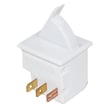
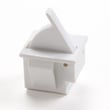
| Light or door sensing issue | Refrigerator switch W11396033 |
| Leak at 5/16-inch water line joint | Refrigerator water supply tube union, 5/16 x 5/16-in WP2300868 |
Warm temps, frost, and poor sealing reduce airflow and force longer run times, which accelerates wear on cooling components.
Last updated: February 2026