Owner’s manual
 Error Codes
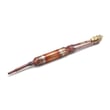


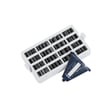
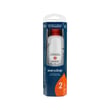

How do I remove the base grille on my Whirlpool refrigerator?
On the Whirlpool WRF767SDHZ00, the base grille (toe grille) usually comes off by pulling it straight forward from the bottom front to release the retaining clips; reinstall by aligning it around the leveling-leg openings and snapping it back on evenly. If yours has end screws, remove those first.
Steps to remove the base grille
- Unplug the refrigerator or switch off power at the breaker (recommended when working near wiring).
- Open the fresh food doors for better access.
- Grip the grille at both ends near the floor.
- Pull straight forward with steady pressure to release the clips.
- If the grille will not budge, check for screws at the ends near the leveling legs and remove them.
Reinstall tips
- Line up the grille with the leveling-leg areas.
- Press the ends in first, then press across the center until it snaps in.
- Make sure it sits flat and does not rub the floor.
If it will not come off
| What you notice | What it usually means | What to try |
|---|---|---|
| Grille flexes but will not release | Clips are tight | Pull from one end, then the other; avoid twisting hard |
| Stuck at the ends | End screws may be installed | Look for and remove end screws near leveling legs |
| Pops off but will not snap back | Misalignment | Re-seat tabs and press straight in across the grille |
Why it matters
We remove the base grille to access the leveling legs, clean dust from the lower air intake area, and reach the lower service area. A properly seated grille helps protect components and supports normal airflow.
Related help: refrigerator maintenance checklist
Last updated: January 2026
Are all fridges 36 inches wide?
No, not all refrigerators are 36 inches wide. Width varies by style and capacity, even within Whirlpool. For Whirlpool model WRF767SDHZ00, we cannot confirm the exact cabinet width from the model-specific information provided here, so measuring your opening is the most reliable way to verify fit.
Typical refrigerator width ranges
“Standard” covers a wide spread; 36 inches is common, but not universal.
- Compact and apartment models are often 24 to 28 inches wide
- Many top-freezer and bottom-mount models are often 30 to 33 inches wide
- Many French door models are commonly around 35 to 36 inches wide
- Built-in and specialty units can be wider or sized to custom openings
How we recommend measuring for fit
Measure the space and the path into the kitchen before you buy or replace a unit.
- Measure width at the front and back of the opening
- Measure height at multiple points (floor to cabinet or soffit)
- Measure depth including handles and door swing clearance
- Leave ventilation space so the condenser can shed heat properly
Quick comparison: common widths and best use
| Width range | Common refrigerator types | Fit notes |
|---|---|---|
| 24 to 28 in. | Compact, apartment | Tight spaces, less capacity |
| 30 to 33 in. | Top-freezer, some bottom-mount | Common “standard” openings |
| 35 to 36 in. | Many French door | Popular full-size width |
| 40+ in. | Built-in, specialty | Often needs custom cabinetry |
Why it matters
Assuming “36-inch standard” can cause delivery and installation problems, poor door swing, or blocked airflow. Measuring first helps ensure your refrigerator fits and cools efficiently.
For more general sizing and fit tips, see refrigerator common questions.
Last updated: January 2026
How do I stop ice buildup in my bottom freezer?
Ice buildup in the bottom freezer of your Whirlpool WRF767SDHZ00 is most often caused by warm, moist air leaking past the freezer seal or by defrost water that is not draining and refreezes on the freezer floor. We stop it by fixing the air leak and clearing the drain path.
Quick checks that prevent most frost and ice
- Make sure the freezer drawer closes fully and is not hitting baskets, bags, or the ice bin.
- Clean the gasket and the cabinet sealing surface with warm, soapy water; dry completely.
- Do the paper test: close the drawer on a strip of paper; if it slides out easily, the seal may be leaking.
- Confirm the refrigerator is level so the drawer naturally pulls shut.
- Minimize long door openings; humidity turns into frost fast.
Parts to consider if the seal is leaking
If you find gaps, tears, or a permanently flattened seal, replacing the gasket-related component is usually the most direct fix.
- Freezer gasket option: refrigerator gasket panel W10407215
- If the gasket is part of the door assembly on your unit: door, freezer (includes door gasket) (black stainless) W11104482
Defrost drain: what to look for
A restricted defrost drain can let meltwater pool, then refreeze into a thick ice sheet.
| What you see | Likely cause | What we do first |
|---|---|---|
| Ice sheet on freezer bottom | Drain restricted | Defrost, then flush drain with hot water |
| Frost on packages and walls | Air leak at drawer | Clean and inspect gasket contact |
| Ice returns quickly | Ongoing leak or drain issue | Re-check seal, leveling, and drain |
Why it matters
Ice buildup reduces airflow and forces longer run times, which can cause temperature swings and poor ice production. Fixing the seal or drain issue prevents repeat ice cycles.
Last updated: January 2026
What is the most common problem with Whirlpool refrigerators?
On Whirlpool refrigerators like model WRF767SDHZ00, the most common issue we see is cooling trouble (warm fresh-food section, soft ice, or temperature swings). It is often caused by restricted airflow, frost buildup from a defrost problem, or a fan or control issue.
What to check first (fast, high-impact)
- Confirm the doors close fully and nothing is holding them open.
- Make sure air vents inside the refrigerator are not blocked by food.
- Clean dust from the condenser area (unplug power first).
- Listen for the evaporator fan running when the doors are closed.
- Look for heavy frost on the freezer back panel (a defrost clue).
Common symptoms and what they often point to
| Symptom | What it often indicates | Parts commonly involved on WRF767SDHZ00 |
|---|---|---|
| Fresh food warm, freezer OK | Airflow issue between compartments | Airflow components, controls |
| Frost on freezer back wall | Defrost system not clearing frost | Refrigerator defrost heater WP12729128 |
| Clicking or won’t start | Start components or compressor circuit issue | Combination W10873801, run capacitor |
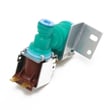
| Ice maker not making ice | Water supply or ice maker fill problem | Refrigerator water inlet valve assembly WPW10341329, ice maker |
When a part replacement is more likely
If basic airflow and cleaning checks do not help, these are common repair paths:
- Defrost failure symptoms: inspect heater and wiring; test components.
- Ice and water symptoms: check household water supply, then valve operation.
- Intermittent cooling: control board or fan issues can be involved.
Why it matters
Cooling problems can escalate quickly: warmer temperatures increase compressor run time, reduce ice production, and can lead to heavier frost that blocks airflow even more.
Related DIY help
- Troubleshooting a refrigerator not cooling video
- How to diagnose a faulty refrigerator water inlet valve
Last updated: January 2026