Installation guide
 Owner’s manual


How to find a Kenmore dishwasher model number?
You can find the model number for your Kenmore dishwasher on the rating label located just inside the door opening. On Kenmore model 66514545N711, the model and serial number label is typically on the inner door area near the tub opening; confirm the exact spot using the 66514545N711 owner's manual.
- Open the dishwasher door fully.
- Check the left and right inner door edges near the tub opening.
- Look along the top edge of the inner door (near the control panel area).
- Scan the frame of the tub opening where the door seals.
- Wipe the area with a damp cloth; labels can be hidden by residue.
Most Kenmore dishwashers use a printed rating label that includes:
- Model number (example format: 665.1454*)
- Serial number
- Electrical ratings (volts/amps)
- Certification markings
| Item | What it tells you | Why we need it |
|---|---|---|
| Model number | The exact design and parts fit | Ensures you get the correct parts and diagrams |
| Serial number | Production date and factory info | Helps with service bulletins and version changes |
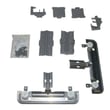
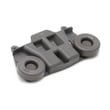
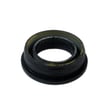
We use the model number to match the correct Kenmore parts and repair instructions for your dishwasher, including common fit-critical items like the dishwasher rack adjuster W10712395 and rack wheels.
Last updated: February 2026
What is the code E25 on a Kenmore dishwasher?
On a Kenmore dishwasher, an E25 code points to a drain problem, most often a blocked drain pump area or an issue with the pump cover, so the dishwasher cannot pump water out normally. For model 66514545N711, start with the drain path checks in the 66514545N711 owner's manual.
- Cancel the cycle and let the unit try to drain; listen for the drain pump running.
- Remove standing water (cup or wet/dry vac) so you can inspect the sump area safely.
- Check the bottom of the tub for debris (glass, labels, food) that can jam the impeller.
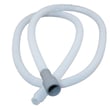
- Inspect the drain hose for kinks or a clog; confirm the high loop or air gap is clear.
- If your sink setup uses an air gap, clean it; a blocked air gap commonly causes poor draining.
If the drain path is clear but the dishwasher still will not drain, these model-compatible parts are common next steps:
| Symptom | Most likely area | Part to consider |
|---|---|---|
| Pump hums but little or no water exits | Drain pump jammed or failed | Dishwasher drain pump W10876537 |
| Slow drain, intermittent drain | Drain hose restricted or collapsing | Dishwasher drain hose (match your routing) |
| Fills but then stops with drain-related error | Water not evacuating fast enough | Drain system (hose, air gap, disposer inlet) |
When water cannot drain, the dishwasher can stop mid-cycle to prevent overflow and to protect wash performance. Clearing the drain system quickly also helps prevent odors and standing water in the tub.
- Use the Kenmore 665 model dishwasher error codes guide to confirm what your control is reporting and what checks to do next.
Last updated: February 2026
Why is my Kenmore dishwasher leaking from the bottom?
A bottom leak on your Kenmore 66514545N711 dishwasher is usually caused by an unlevel installation, oversudsing, or a seal or hose that is letting water escape during fill, wash, or drain. Start by leveling the unit, then check for suds and inspect the most common leak points.
- Confirm the dishwasher is level and firmly mounted; an out-of-level tub can let water spill past normal splash zones (see the 66514545N711 installation guide).
- Look for soap foam; suds can overflow the tub and mimic a “leak from the bottom.”
- Verify you are using dishwasher detergent only, and reduce detergent if you have soft water.
- Check the rinse aid dispenser for overfilling or a loose cap; rinse aid can seep and look like a leak.
- Run a short cycle and watch when the leak starts (fill, wash, or drain) to narrow the source.
| When you see water | Most likely area | What to inspect |
|---|---|---|
| During fill | Water supply path | Inlet valve area, clamps, and hose connections |
| During wash | Door and tub sealing | Door seal contact, spray splash, rack blocking closure |
| During drain | Drain path | Drain hose routing, clamps, drain pump area |
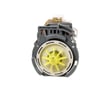
If you find dripping at the left front or under the toe-kick during fill, inspect the dishwasher water inlet valve W11175771 for seepage at the valve body and fittings.
If the leak appears near the drain path (often toward the rear or side), inspect the drain hose and pump area; a loose clamp, split hose, or pump seal issue can leak only during drain.
A small bottom leak can quickly damage flooring and can also trigger poor washing or draining if the dishwasher is losing water mid-cycle. The manual’s leak guidance also points to leveling and suds control as the first fixes to try (see the 66514545N711 user manual).
Last updated: February 2026