Owner’s manual



What is the most common problem with LG dryers?
The most common problem we see with the LG DLEX8500V dryer is restricted airflow from lint buildup in the lint filter or vent ducting, which causes long dry times, overheating, and sometimes shutdowns or error codes. Start with cleaning and verifying proper venting per the DLEX8500V owner's manual.
Quick symptoms that point to airflow restriction
- Loads take much longer than normal to dry
- Dryer feels unusually hot, or the laundry room gets very warm
- Clothes come out damp on normal cycles
- Burning or “hot lint” smell
- Error codes related to venting or temperature (model dependent)
What to check first (fast, high-impact steps)
- Clean the lint filter every load and make sure it is fully seated. The manual warns to never run the dryer without the lint filter in place and to never run it with a wet lint filter.
- Inspect the vent path from the dryer outlet to the outside hood; remove lint clogs and crushed sections.
- Confirm the vent material is heavy metal ducting (not plastic or thin foil). The manual specifies using a heavy metal vent.
- Check the outside vent hood for a stuck flap, bird screen blockage, or lint mat.
- Avoid overloading; packed loads restrict airflow through the drum.
When it is not the vent: common LG dryer part-related causes
If airflow is good but drying performance or noise is still an issue, these parts are frequent suspects:
| Symptom | Likely area | Example part for DLEX8500V |
|---|---|---|
| No heat or heat cuts in and out | Temperature sensing or safety limit | Dryer thermistor AGM30045804 or dryer high-limit thermostat 6931EL3003D |
| Loud thumping or rumbling | Drum support and rotation system | Drum rollers, idler, belt |
| Squealing | Idler pulley or belt wear | Idler pulley, belt |
Why it matters
Restricted venting does more than slow drying; it drives higher temperatures inside the dryer, which can trigger safety thermostats, shorten the life of components like the heating element, and increase energy use.
Last updated: January 2026
Do you have to hook up water to a LG steam dryer?
No. On the LG DLEX8500V, a water hookup is only needed when you want to use steam features. If you never use steam cycles or steam options, the dryer will still dry normally without any water connection; steam-related functions just will not operate.
When you do need water (steam features)
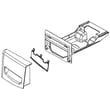
LG steam technology uses water to create steam for cycles like Steam Fresh and Spot Clean, and for steam options on certain cycles. The manual also notes the steam feeder must be filled with water before using a Steam Cycle.
- Use water only for steam features (no detergents or additives)
- Fill only to the indicated level (MAX line) before starting a steam cycle
- Do not use distilled water (the level sensor may not work correctly)
- Do not use hot water over 86°F (30°C)
- Empty the steam feeder before moving the dryer
For the exact steps and warnings, follow the DLEX8500V owner's manual.
If you see a steam-related message or symptom
If steam is selected and the steam feeder is empty or the drawer is not fully closed, the dryer can display a fill-related message and the steam cycle may not run as expected.
| What you notice | Most likely cause | What to do |
|---|---|---|
| Steam cycle will not start | Steam feeder not filled | Fill steam feeder with water to the proper level |
| Steam cycle stops or errors | Drawer not fully closed or feeder not seated | Reseat feeder, close drawer fully, restart cycle |
| Water drips at start of steam | Condensation from steam | This is normal; dripping stops shortly |
Why it matters
Steam features are optional, but they change how the dryer operates during those cycles. Keeping the steam feeder filled correctly helps prevent steam-cycle interruptions and avoids water spills inside the drawer area.
Last updated: January 2026
What does d mean on an LG dryer?
On an LG DLEX8500V dryer, a “D” message is most commonly part of the D80, D90, or D95 airflow warning; it means the dryer is detecting restricted exhaust airflow (usually lint buildup or a crushed/blocked vent). The higher the number, the more severe the restriction.
What to check first (fast airflow fixes)
- Clean the lint screen and make sure it seats fully in the housing (a warped or damaged screen can leak lint into the duct).
- Inspect the vent hose behind the dryer for kinks, crushing, or a long run with too many elbows.
- Check the outside vent hood for a stuck flap, lint matting, or a bird screen that is clogged.
- Confirm the dryer is not pushed too tightly against the wall, which can pinch the vent.
- Run a timed dry cycle and verify strong airflow at the exterior vent.
What the codes usually mean
| Display | What it indicates | What we recommend |
|---|---|---|
| D80 | Moderate restriction | Clean lint path and check vent routing |
| D90 | Heavy restriction | Deep-clean ductwork and exterior hood |
| D95 | Severe restriction | Stop using until vent is cleared to prevent overheating |
Parts that can contribute to airflow problems
If airflow is still weak after cleaning the entire vent system, a failed blower or a lint path issue inside the cabinet can be involved.
Why it matters
Restricted venting makes loads take longer to dry, increases energy use, and can cause the dryer to shut down to protect itself from overheating. Keeping the exhaust path clear is the single most important dryer maintenance step.
Where to find model-specific guidance
For control panel indicators, venting recommendations, and cleaning steps specific to this dryer, follow the instructions in the DLEX8500V manual.
Last updated: January 2026
Why is my LG steam dryer not drying?
If our LG DLEX8500V steam dryer runs but clothes stay damp, the most common causes are restricted airflow (lint screen or venting), a sensor-cycle ending early, or a heating problem. Start with airflow and cycle selection, then confirm steam setup in the DLEX8500V owner's manual.
Quick checks that fix most “not drying” complaints
- Clean the lint screen before every load; never run without the filter installed.
- Make sure the lint screen is dry and seated fully.
- Inspect the exhaust duct for crushing, kinks, or lint buildup; poor ducting increases drying time.
- Avoid overloading; packed loads block airflow through the drum.
- Try Timed Dry for one load to compare results against sensor cycles.
Steam-cycle specific checks
Steam cycles refresh and reduce wrinkles; they are not meant to fully dry wet laundry. If steam results seem “not dry”:
- Fill the steam feeder with water to the MAX line.
- Seat the steam feeder correctly and close the drawer fully.
- Use only water; do not use distilled water.
What your symptoms usually mean
| Symptom | Likely cause | Next step |
|---|---|---|
| Long dry times, clothes warm | Vent restriction | Clean/shorten vent run; confirm strong airflow outside |
| Clothes cool, no heat | Heating circuit issue | Check for heat; inspect heater and thermostats |
| Cycle ends early, damp clothes | Moisture sensing or load type | Clean sensor bars; use Timed Dry for mixed/small loads |
Parts that commonly relate to “no heat”
If airflow is strong but heat is missing or inconsistent, these model-compatible parts are commonly involved:
- Dryer heating element 5301EL1001J
- Dryer thermistor AGM30045804
- Dryer high-limit thermostat 6931EL3003D
Why it matters
Drying performance depends on airflow plus correct temperature control. A partially blocked vent can extend dry times and can also cause overheating protection to reduce heat.
Last updated: January 2026