Owner’s manual
 Error Codes


How do I tell what model Kenmore fridge I have?
You can identify your Kenmore refrigerator model by finding the model and serial number label on the cabinet liner inside the fresh food section or freezer area. For your Kenmore bottom-mount refrigerator, the label is typically on an inside wall or behind lower drawers; confirm the exact location in the owner's manual.
Check these common spots first (use a flashlight and look for a sticker or metal plate):
- Inside the refrigerator compartment on a side wall
- Inside the freezer compartment on an interior wall
- On the door liner (inside edge of the door)
- Behind or near the lower crisper drawers
- Behind the base grille or near the kick plate area
Record the full model number and serial number exactly as shown. For parts lookup and troubleshooting, the full model number matters because it matches your exact door style, control system, and internal components.
| What to capture | Example format | Why it matters |
|---|---|---|
| Model number | 79565214401 | Ensures correct parts diagrams and compatible replacement parts |
| Serial number | Letters and numbers | Helps match production version when designs change |
| Brand | Kenmore | Narrows parts and documentation to the right product family |
- Use the full model number, not just the first 3 digits (for example, use 79565214401, not 795).
- If the label is smudged, take a photo and zoom in.
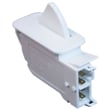
- If you are ordering parts, match the model number first, then choose the part by name and ID (for example, a door light issue can involve the refrigerator door push-button switch 6600JB1010A).
Kenmore refrigerators can look similar across multiple series, but parts like door gaskets, thermistors, and control boards vary by model. Using the exact model number prevents ordering the wrong refrigerator gasket assembly or electrical component.
Last updated: February 2026
How many cubic feet is my Kenmore refrigerator by model number?
For Kenmore model 79565214401, the exact cubic-foot capacity is listed on the model’s rating information in the product literature; we use the 79565214401 owner's manual to confirm the correct capacity for your specific 795.6521 series configuration.
Use these quick checks (in order) to get the right number for your exact version:
- Check the specifications section in the 79565214401 owner's manual.
- Look for the model and serial label inside the fresh food compartment (typically on the right-hand side wall).
- Match your model to the series shown in the manual (the manual covers multiple 795.65xx and 795.75xx variants).
- If your refrigerator has optional features (water filter, ice maker), confirm you are using the correct variant listing.
- If you are measuring for fit, use cabinet dimensions rather than capacity; cubic feet does not equal exterior size.
Cubic feet is the interior storage volume (fresh food plus freezer). On this Kenmore bottom-mount platform, capacity can vary by:
- Door style and bin layout
- Ice bin and freezer basket configuration
- Evaporator cover and air channel design
- Shelf and crisper arrangement
If you need a planning number while you confirm the exact spec in the manual, most Kenmore 795 bottom-mount refrigerators are commonly in this range:
| Refrigerator type | Typical total capacity range |
|---|---|
| Bottom-mount (Kenmore 795 platform) | About 20 to 25 cu. ft. |
Capacity helps when you are comparing models or planning food storage, but it does not tell you whether the refrigerator will fit your kitchen opening. For fit, focus on width, height, depth, and required air clearance (all typically listed in the manual).
Last updated: February 2026
How to tell if a Kenmore refrigerator compressor is bad?
On Kenmore model 79565214401, a bad compressor usually shows up as poor or no cooling while the unit keeps trying to run, often with repeated clicking or unusual running sounds. Before condemning the compressor, we confirm airflow, power, and start components using the troubleshooting steps in the owner's manual.
These items commonly mimic a “bad compressor” symptom:
- Make sure the refrigerator has power and the controls are not set to OFF.
- Listen for normal operating sounds; many newer units run longer and can sound different.
- Check that the condenser area is not blocked by dust or restricted airflow.
- Verify the doors seal tightly; a leaking gasket can cause long run times and warm temps.
- If you hear a click every few minutes and cooling never starts, suspect the start device (PTC) or overload.
If the basics above check out, these signs are more compressor-related:
- Compressor is running but both compartments stay warm.
- Compressor is extremely hot to the touch and repeatedly shuts off (overload cycling).
- You hear a click, then a brief hum, then another click (start attempt fails).
- Frost pattern on the evaporator is abnormal (for example, only a small patch of frost).
A technician typically uses electrical and temperature checks to separate a compressor issue from a control or airflow issue.
| Test or observation | What it suggests | Common next step |
|---|---|---|
| Click-hum-click at compressor | Start device not starting compressor | Replace start device (PTC) |
| Compressor runs, no cooling | Sealed system or compressor not pumping | Sealed-system diagnosis |
| Runs “too much” but cools some | Door seal, airflow, dirty condenser | Clean/adjust, check gaskets |
If you need the start device for this model, match by model number and symptoms; a common related part type is the ptc asm.
Replacing a compressor is a major repair; checking airflow, door sealing, and the start device first prevents unnecessary parts replacement and gets cooling restored faster.
Last updated: February 2026
Why is the bottom of my Kenmore refrigerator leaking water?
Water at the bottom of your Kenmore 79565214401 bottom-mount refrigerator is usually caused by defrost water not draining correctly, so it overflows into the fresh food section or down to the floor. A clogged/iced drain, a shifted drain pan, or a water line/ice maker connection issue are the most common causes; use the owner's manual to locate access points and follow model-specific guidance.
- Look for ice or debris in the defrost drain (often behind the rear panel inside the refrigerator or freezer); a blocked drain sends defrost water to the bottom instead of the drain pan.
- Check the drain pan position and condition; if it is cracked or not seated, it can spill during the defrost cycle.
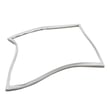
- Inspect door sealing; warm air leaks can create excess frost that later melts and overwhelms the drain. If the gasket is torn or warped, consider replacing the refrigerator gasket assembly ADX73350925 or refrigerator gasket assembly ADX73350928 (match by door location and fit).
- If you have an ice maker or water dispenser, check the water supply line and fittings for slow drips.
- Confirm the refrigerator is level; poor leveling can cause water to miss the drain channel and run forward.
| Where the water shows up | Most likely cause | What we recommend |
|---|---|---|
| Under crisper drawers / fresh food bottom | Clogged or frozen defrost drain | Clear the drain path; melt any ice buildup and flush with warm water |
| On the floor near the front | Drain pan shifted, or drain overflowing | Reseat the pan; clear the drain; verify leveling |
| Near back wall or behind unit | Water line leak or condensation | Tighten fittings; inspect tubing for cracks; clean condenser area |
A defrost drain problem can keep returning and may lead to recurring puddles, ice buildup, and temperature swings. Fixing the drain and door seal early helps the refrigerator run efficiently and prevents repeat leaks.
- Door sealing issues: refrigerator gasket assembly ADX73350925, refrigerator gasket assembly ADX73350928
- Heavy frost leading to meltwater overflow: refrigerator defrost sensor assembly 6615JB2005C, refrigerator defrost heater 5300JB1100J
Last updated: February 2026
What are the common problems with Kenmore Elite refrigerators?
Common problems on Kenmore Elite refrigerators like model 79565214401 are warm temperatures (cooling loss), ice maker or water supply issues, and water leaks. Most fixes start with airflow and temperature checks, then move to door sealing and the defrost system (sensor, heater, and controls) as needed; see the owner's manual.
- Refrigerator or freezer too warm: blocked air vents, dirty condenser coils, weak condenser fan, or defrost failure
- Ice maker slow or not making ice: freezer too warm, heavy door openings, or water supply restriction
- Water under the refrigerator: clogged/iced defrost drain, door left ajar, or condensation from poor sealing
- Frost buildup on the back wall/freezer: defrost heater or defrost sensor problem
- Lights not working or door alarm type symptoms: door switch not closing consistently
- Confirm control settings and make only one change at a time; wait 24 hours between adjustments.
- Check airflow: keep packages from blocking vents and allow space for air circulation.
- Inspect door closing and sealing: look for gaps, torn gasket areas, or doors that sit uneven.
- Clean condenser coils (unplug first) and make sure the condenser area is not packed with dust.
If the symptom matches, these model-specific parts are common repair paths:
| Symptom | Common suspect part | Example part for this model |
|---|---|---|
| Interior lights act up, fan stops when door “seems” closed | Door switch | Refrigerator door push-button switch 6600JB1010A |
| Frost buildup, warming after a few days | Defrost sensor | Refrigerator defrost sensor assembly 6615JB2005C |
| Heavy frost, no defrost heat | Defrost heater | Refrigerator defrost heater 5300JB1100J |
| Warm temps, poor heat removal at back/bottom | Condenser fan | Refrigerator condenser fan 4680JK1001B |
| Door won’t seal, moisture, icing near door | Door gasket | Refrigerator gasket assembly ADX73350925 |
Cooling, ice production, and leak complaints often share the same root causes: restricted airflow, incorrect temperature control adjustments, or a defrost system that cannot keep the evaporator clear. Fixing the underlying cause prevents food spoilage, repeat icing, and compressor overwork.
For display or diagnostic codes on Kenmore 795 bottom-freezer models, use our Kenmore 795 model bottom freezer refrigerator error codes reference to narrow the failure to a specific circuit or sensor.
Last updated: February 2026