Installation guide
 Owner’s manual
 Error Codes


Where is the model number on a Kenmore side by side refrigerator?
On Kenmore side-by-side refrigerator model 10654549400, the model number is printed on the model and serial number label located inside the refrigerator (fresh food) compartment on an inside wall. Use that label to record both the model and serial number for parts and service.
How to find it quickly
- Open the refrigerator (not the freezer) door.
- Look along the inside walls of the fresh food compartment.
- Check near the upper side walls first, then scan downward.
- Look for a label that lists Model and Serial.
- Write the model number exactly as shown (for this unit: 10654549400).
What the label is used for
The model and serial label is the fastest way to match the correct Kenmore parts diagrams and replacement parts for your exact configuration. We also recommend recording it in your paperwork as shown in the owner's manual.
Model number vs. serial number (what to copy)
| Item on the label | What it tells you | When you need it |
|---|---|---|
| Model number | The exact refrigerator design and parts match | Ordering parts like an ice maker, inlet valve, or gasket |
| Serial number | The unit’s unique production identifier | Service history, age tracking, and documentation |
Why it matters
Kenmore side-by-side refrigerators can look similar across multiple model numbers, but parts like the ice maker, water inlet valve, and door gasket can vary. Using the correct model number helps prevent ordering the wrong part and saves time during troubleshooting.
Last updated: February 2026
How many cubic feet is my Kenmore refrigerator by model number?
Your Kenmore side-by-side refrigerator model 10654549400 has a specific cubic-foot capacity listed on the model and serial number label inside the fresh food compartment and in the specifications section of the owner's manual. That label is the fastest, most accurate way to confirm capacity for your exact unit.
Where to find the cubic-foot capacity on model 10654549400
Check these common locations first:
- Inside the refrigerator compartment on the side wall near the crisper area (model and serial label)
- Behind the crisper drawers on an interior liner wall
- In the specifications section of the owner's manual
- On the product record page in the manual (where model and serial information is recorded)
Quick steps to confirm capacity (no tools needed)
- Open the refrigerator door and look for the model and serial number label.
- Look for wording such as “Capacity”, “Total capacity”, or “cu. ft.”.
- If the label is hard to read, use a flashlight and take a photo, then zoom in.
Why the model number alone is not enough
Kenmore model numbers (including the 106 prefix) identify the product family and configuration, but the exact cubic-foot rating is a spec that can vary by version and is best confirmed from the unit label or manual.
Model number vs. capacity (what to expect)
| What you use | What it tells you | Accuracy for cubic feet |
|---|---|---|
| Model number (10654549400) | Series and design family | Medium |
| Model and serial label | Exact unit specifications | High |
| Owner's manual | Published specifications for the model | High |
Why it matters
Knowing the correct cubic-foot capacity helps us match the right shelves, bins, and storage parts, and it also helps when comparing cooling performance expectations for a side-by-side refrigerator.
Last updated: February 2026
What are the most common problems with Kenmore refrigerators?
The most common problems we see on Kenmore refrigerators like model 10654549400 are cooling issues (often airflow or defrost related), water leaks, ice maker or dispenser failures, and door sealing problems. Many of these start with simple checks like clearing air vents, cleaning gaskets, and verifying control settings in the owner's manual.
Common problems and what usually causes them
- Not cooling or warm temperatures: blocked air vents, doors opened frequently, controls set incorrectly, or a defrost system problem.
- Interior moisture buildup: high room humidity, frequent door openings, blocked vents, or poorly wrapped food.
- Water leaking or puddles: a clogged defrost drain, loose water line connections, or a leaking inlet valve.
- Ice maker not making ice: water supply issues, a failing ice maker, or a weak/failed inlet valve.
- Doors hard to open or not sealing: dirty or sticky door gaskets, door alignment issues, or worn door hardware.
Quick checks we recommend first (before replacing parts)
- Check airflow: make sure packages are not blocking interior vents.
- Confirm settings: verify temperature controls are set correctly for your kitchen conditions.
- Reduce door-open time: organize food so the doors stay open for less time.
- Clean door gaskets: sticky gaskets can cause sealing and opening problems.
- Look for frost or ice buildup: heavy frost points to a defrost problem.
Parts that commonly fix these symptoms (when checks do not)
| Symptom | Common part to inspect/replace | Example part for 10654549400 |
|---|---|---|
| No ice or slow ice | Water inlet valve | Refrigerator inlet valve W10408179 |
| Ice maker dead or inconsistent | Ice maker assembly | Ice maker assembly - refrigerator ice maker by whirlpool 4317943 |
| Frost buildup, warm fridge | Defrost thermostat or heater | Refrigerator defrost bi-metal WPW10225581, refrigerator heater WP2323198 |
| Door not sealing well | Door gasket | Refrigerator gasket panel (black) 2159083 |
Why it matters
Cooling, ice production, and leak complaints usually trace back to airflow, door sealing, or the water and defrost systems. Fixing the root cause protects food temperatures, reduces frost buildup, and helps the compressor run less.
Last updated: February 2026
How to tell if a Kenmore refrigerator compressor is bad?
On a Kenmore 10654549400 side-by-side refrigerator, a bad compressor typically shows up as poor cooling with the unit running longer than normal, unusual clicking or repeated start attempts, or the compressor being very hot while the refrigerator still will not maintain temperature. Use the sound and operation checks in the owner's manual to separate normal running noises from true failure symptoms.
Quick checks we use before blaming the compressor
- Confirm the refrigerator and freezer are not set too warm (target about 37°F fresh food, 0°F freezer).
- Listen for normal operating sounds (pulsating or high-pitched compressor sound can be normal on efficient units).
- Check airflow: strong air movement from the evaporator fan area and no heavy frost blocking vents.
- Verify the condenser area is clean and the unit has proper clearance for heat to escape.
- Rule out door seal leaks that cause nonstop running (warm, moist air infiltration).
What “bad compressor” symptoms look like
| Symptom | What it often means | What to check next |
|---|---|---|
| Runs constantly but temperatures stay warm | Sealed system or compressor not pumping | Frost pattern on evaporator, condenser heat, airflow |
| Repeated clicking every few minutes | Start device overload tripping or compressor locked | Start components, wiring, compressor amp draw (tech test) |
| Very hot compressor shell and poor cooling | Compressor struggling or system issue | Condenser fan/coil condition, ventilation |
| Compressor silent and no cooling | No power to compressor or failed start circuit | Controls, wiring, start components |
Parts that commonly mimic a compressor problem
These issues can cause “warm fridge” symptoms even when the compressor is still good:
- Defrost system failure leading to an iced-over evaporator (for example, refrigerator defrost bi-metal WPW10225581 or refrigerator heater WP2323198).
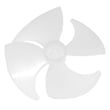
- Evaporator fan issues (a damaged blade like refrigerator evaporator fan blade WP2169142 can reduce airflow).
- Water and ice maker related noises that sound alarming but are normal (buzzing when the valve fills the ice maker).
Why it matters
A compressor diagnosis is expensive and time-consuming if it is wrong. On this model, normal “new” sounds and longer run times are expected for efficient cooling, so we focus first on airflow, frost buildup, and heat removal before concluding the compressor has failed.
Last updated: February 2026
How to replace an ice maker in a side by side refrigerator?
To replace the ice maker in your Kenmore 10654549400 side-by-side refrigerator, we unplug the unit, shut off the water supply, remove the ice bin and mounting screws, swap the ice maker assembly, reconnect the harness, then restore power and water and turn the ice maker back on.
Before you start (safety and prep)
- Unplug the refrigerator or switch off the breaker.
- Shut off the household water supply to the refrigerator.
- Turn the ice maker off by lifting the wire shutoff arm to the OFF (up) position.
- Remove the ice bin and clear space to work.
- Keep screws and brackets together for reassembly.
For model-specific safety warnings and ice maker on/off details, use the 10654549400 owner's manual.
Replacement steps (typical procedure)
- Remove any shelf or cover blocking the ice maker.
- Unplug the ice maker wiring harness connector.
- Remove the mounting screws; lift the ice maker off the mounting tabs.
- If the new assembly does not include a matching fill cup or bracket, transfer identical pieces from the old unit.
- Hang the new ice maker on the tabs, tighten screws, and reconnect the harness.
- Reinstall the ice bin; restore water and power.
If you are replacing the complete assembly used on this model, use the ice maker assembly - refrigerator ice maker by whirlpool 4317943.
Quick checks after installation
| Check | What “good” looks like | If not |
|---|---|---|
| Shutoff arm | Moves freely; down = ON | Reposition arm; do not force it |
| Water fill | Ice maker cycles and fills | Verify water supply; check for kinks |
| First ice | First cubes take time | Discard first few batches |
Why it matters
Correct shutoff arm position and a solid water supply prevent “no ice,” hollow cubes, and nuisance leaks after an ice maker swap.
Last updated: February 2026