Owner’s manual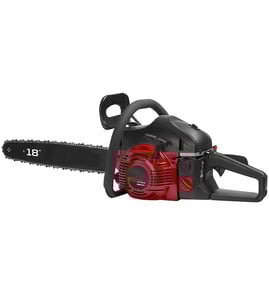





How to tell the year of a Husqvarna chainsaw?
For a Husqvarna chainsaw, the build year is typically encoded in the serial number on the product ID tag. On many saws, the first two digits indicate the year (YY) and the next two digits indicate the production week (WW); confirm the exact serial-number format for model 965167936 in the 965167936 owner's manual.
Where to find the ID tag and serial number
On most Husqvarna gas chainsaws, the ID tag is on the saw body near the rear handle area. Look for a sticker or metal tag that lists the model and serial.
- Check under or near the rear handle and starter housing area
- Wipe off oil and sawdust so all digits are readable
- Write the serial number down exactly as shown (letters and numbers)
- Take a photo before the label wears further
- If the tag is missing, check for a stamped number on the crankcase area
How to decode the year from the serial number
Many Husqvarna serial numbers follow a pattern where the date is at the beginning.
| Common serial pattern | What it means | Example interpretation |
|---|---|---|
| YYWWxxxxx | Year, week, then production sequence | 0512xxxxx = 2005, week 12 |
| YYYYWWxxxxx | Full year, week, then production sequence | 201905xxxxx = 2019, week 05 |
Quick checks to avoid misreading the year
- If the first 4 digits look like a valid year (2016, 2019, 2021), treat it as YYYY
- If the first 2 digits are 00 to 26, treat them as YY (2000 to 2026)
- The “week” portion runs 01 to 52 (sometimes 53)
Why it matters
Knowing the manufacture year helps us match the correct cutting equipment and service parts (for example, bar and chain combinations and other fuel-system components) and it also helps when comparing maintenance guidance across similar Husqvarna platforms.
For more model-specific maintenance and safety details, we also recommend reviewing the chainsaw common questions resource.
Last updated: January 2026
Is 50 1 or 40 1 better for chainsaws?
For your Husqvarna chainsaw model 965167936, the “better” mix is the fuel-to-oil ratio the manufacturer specifies; that ratio is tuned for lubrication, cooling, and emissions. In general use, 50:1 is the modern standard with quality 2-cycle oil, while 40:1 adds more oil for extra lubrication but can increase smoke and deposits.
Quick comparison (per 1 gallon of gas)
| Mix ratio | 2-cycle oil amount | What you’ll notice most |
|---|---|---|
| 50:1 | ~2.6 oz | Cleaner running, less smoke, common OEM spec |
| 40:1 | ~3.2 oz | More oil cushion, more smoke, more carbon buildup risk |
What we recommend for model 965167936
Use the ratio and oil type listed in the 965167936 owner's manual. That guidance is the safest way to protect the piston, crank bearings, and cylinder while keeping the carburetor and spark plug from fouling.
When 40:1 can help (and when it can hurt)
- Can help if you are doing sustained heavy cutting in hot weather and you are using a high-quality 2-cycle oil.
- Can hurt if it causes carbon buildup on the exhaust port or muffler screen, or if it leads to spark plug fouling.
- Never “fix” a lean-running saw by changing mix ratio; address air leaks, fuel delivery, or carburetor tuning instead.
If your chainsaw is hard to start or runs rough after changing mix
- Drain old fuel and refill with fresh, correctly mixed fuel.
- Check the spark plug condition and gap; replace if fouled.
- Inspect the air filter and clean it.
- Check fuel lines for cracks or softness.
- If symptoms persist, follow Tips for a hard to start chainsaw for step-by-step troubleshooting.
Why it matters
The fuel mix ratio directly affects lubrication and combustion. Too little oil increases wear risk; too much oil can create deposits that reduce performance and reliability over time.
Last updated: January 2026
What is the most common problem with Husqvarna chainsaws?
On the Husqvarna 965167936 gas chainsaw, the most common problems we see are fuel and tune-up related: starting problems, rough running, or loss of power caused by a dirty air filter, spark plug deposits, or carburetor/fuel-mixture issues. Regular maintenance prevents most of these failures.
Most common issues (and what they look like)
- Dirty air filter: hard starting, poor idle, reduced power
- Spark plug fouling: no-start, misfire, weak acceleration
- Carburetor/fuel mixture problems: surging, stalling, runs rough at idle
- Old or incorrect fuel mix: smoky running, plug fouling, poor performance
- Dull chain or incorrect chain tension: slow cutting, excessive vibration, higher kickback risk
Quick checks we recommend first
- Inspect and clean the air filter; it must seal tightly when reinstalled (see the 965167936 owner's manual).
- Check the spark plug condition; deposits often point to mixture or air-flow problems.
- Confirm fresh, properly mixed fuel and a clean fuel system (tank, lines, filter).
- Verify the chain is sharp and correctly tensioned before chasing engine problems.
Symptom-to-likely-cause guide
| Symptom | Most likely cause | Best first step |
|---|---|---|
| Won’t start | Fouled plug, dirty air filter, carburetor issue | Clean filter, inspect/replace plug |
| Runs rough at idle | Carburetor adjustment, air leak, dirty filter | Clean filter, check fuel delivery |
| Low power under load | Dirty filter, dull chain, plug deposits | Sharpen chain, service air filter |
| Stalls when throttled | Fuel delivery or carburetor issue | Check fuel lines and carburetor |
Why it matters
Fuel and air-flow problems make the engine run lean or rich, which causes hard starts, poor idle, and unnecessary wear. Separately, a dull chain increases cutting time and raises the chance of kickback; keeping the chain sharp and using recommended bar/chain combinations improves control and safety.
Helpful DIY resources
Last updated: January 2026
How many cc's does a Husqvarna 965167936 have?
The Husqvarna chainsaw model 965167936 has a 40.9 cc engine (40.9 cm³ displacement). You can confirm the displacement and other technical specs in the 965167936 owner's manual.
How to verify the cc on the saw
Use the saw’s identification label and the specifications section so you are matching the correct powerhead.
- Find the product/ID label on the saw body (commonly near the starter housing or rear handle)
- Look for displacement listed as cm³ (this equals cc)
- Compare the label details to the specifications in the 965167936 owner's manual
- If the cylinder or engine was replaced, use the current engine markings for service and parts matching
- Keep the full model number 965167936 handy when ordering parts
What 40.9 cc means for performance
A 40.9 cc gas chainsaw is designed for general cutting and property maintenance; it is not in the 90 cc professional class.
| Item | 40.9 cc class (like 965167936) | 90 cc class (pro saws) |
|---|---|---|
| Typical use | Limbing, firewood, small to medium trees | Heavy felling, large timber |
| Handling | Lighter, easier to maneuver | Heavier, power-focused |
| Fuel demand | Moderate | High |
Why it matters
Correct displacement helps you choose compatible cutting equipment and tune-up parts (spark plug, air filter, fuel system components) so the saw starts reliably and cuts safely.
For maintenance and troubleshooting tips that apply to most gas chainsaws, use chainsaw care and troubleshooting tips.
Last updated: January 2026