Owner’s manual


How many cubic feet is a Kenmore Model 11021652020 washer?
The exact tub capacity (cubic feet) for Kenmore washer model 11021652020 is listed in the product specifications section of the 11021652020 owner's manual. Most Kenmore 110-series top-load washers are typically in the 3.2 to 3.8 cu. ft. range, depending on the exact platform and tub design.
How to find the capacity for model 11021652020
We recommend using the manual because it’s the only place you’ll see the model-specific spec stated clearly.
- Open the 11021652020 owner's manual
- Look for “Specifications”, “Capacity”, or “Washer dimensions”
- If you see capacity in liters, convert to cubic feet (1 cu. ft. = 28.3 L)
- If the manual lists only dimensions, use the capacity value (not dimensions) for the most accurate number
Typical capacity ranges (for context)
Here’s what we commonly see across Kenmore top-load designs:
| Washer type | Typical capacity range | What it means for loads |
|---|---|---|
| Standard top-load (agitator) | 3.0 to 3.6 cu. ft. | Good for everyday mixed loads |
| High-efficiency top-load (impeller) | 3.6 to 4.8 cu. ft. | Better for bulky items |
Why it matters
Capacity affects how much you can wash per cycle and how well the washer can move water through the load. Overloading a smaller-capacity tub often leads to poor cleaning, out-of-balance spinning, and extra wear on suspension and drive components.
Last updated: February 2026
How to hard reset kenmore washer?
To hard reset your Kenmore washer model 11021652020, we recommend a simple power reset first: unplug the washer (or switch off the breaker) for 1 minute, then restore power and try a normal cycle. This clears minor control glitches without changing any settings.
Quick hard reset steps (power reset)
- Press Power/Cancel to stop the cycle.
- Unplug the washer (or turn the breaker off).
- Wait 60 seconds.
- Plug back in (or turn breaker on).
- Select a Rinse/Spin or a short cycle and press Start.
If the washer still acts up: what to check next
A “reset” will not fix a mechanical or installation issue. These checks solve the most common repeat problems after a reset:
- Confirm the washer is properly grounded and plugged into a grounded 3-prong outlet (no adapter or extension cord).
- Make sure the washer is level and all four feet contact the floor to reduce vibration-related shutdowns.
- Verify the drain hose is secured and not siphoning; improper draining can cause cycle interruptions.
- If the lid will not lock or the cycle will not start, inspect the lid strike and lid lock.
Common symptoms and likely causes
| Symptom after reset | Most common cause | What we do next |
|---|---|---|
| Won’t start, lid-related clicking | Lid lock or strike issue | Check/replace lid lock-sol W11700916 or washer lid strike W11457841 |
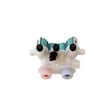
| Stops mid-cycle, won’t fill | Water supply or inlet valve issue | Check screens/hoses; consider washer water inlet valve W11165546 |
| Excessive shaking or “walking” | Not level, suspension wear | Level the washer; inspect suspension components |
Why it matters
Resetting clears temporary control-board logic issues, but repeated failures usually point to a real cause (power/grounding, leveling, draining, or a lid lock problem). Fixing the root issue prevents repeat no-starts, incomplete cycles, and unnecessary part replacements.
For model-specific operating and safety details, use the 11021652020 washer manual.
Last updated: February 2026
How to identify a Kenmore washer model?
You can identify your Kenmore washer model by finding the model and serial tag on the washer cabinet; on Kenmore model 11021652020, it’s commonly on the back of the control panel, on the top area, or on the cabinet side near the bottom. Confirm the exact label location in the 11021652020 owner’s manual.
Where to look on the washer
Check these common label locations first:
- Back of the control panel (rear surface)
- Under the lid area along the top rim of the cabinet
- Left or right side of the main cabinet near the bottom edge
- Around the lid opening (top edge of the cabinet)
What to write down (and why)
Record both numbers exactly as shown.
| What you’ll see | What it’s used for | Example format |
|---|---|---|
| Model number | Matching parts and diagrams | 11021652020 |
| Serial number | Production run details, service history | Letters and numbers |
Why it matters
The model number is what we use to match the correct Kenmore washer parts (like a lid lock, water inlet valve, or drain hose) and to pull the right procedures from the manual. A single digit difference can point to a different control, tub, or wiring configuration.
Tips if the tag is hard to read
- Wipe the label gently with a damp cloth; dry it right away.
- Use your phone camera and zoom in for clearer characters.
- Copy the model number exactly, including all digits.
Last updated: February 2026
What is the average lifespan of a Kenmore washer?
A Kenmore washer typically lasts 10 to 15 years. For Kenmore model 11021652020, consistent care (proper detergent, avoiding overloads, and routine cleaning) helps you reach the higher end of that range; neglected maintenance and repeated out-of-balance loads shorten it.
Typical lifespan and what changes it
Most washers fall into a predictable life range, but day-to-day use makes a big difference.
- 10 to 15 years is the normal expectation for a residential washer
- Large, frequent loads and chronic overloading reduce drivetrain and suspension life
- Hard water and poor cleaning habits increase odor, residue, and component wear
- Installation issues (not level, poor drain setup) increase vibration and stress
- Replacing wear items early often prevents bigger failures
Maintenance that extends washer life
We recommend following the care schedule in the 11021652020 washer installation & care manual. Key habits include:
- Use HE detergent and measure correctly (too much causes buildup)
- Keep the lid open between loads to help the tub dry
- Periodically clean the dispenser and run a cleaning cycle
- Inspect hoses for bulges, cracks, or leaks; replace inlet hoses about every 5 years
- Make sure the washer stays level to reduce shaking and suspension wear
Common parts that affect longevity
When performance problems start, these parts are often involved on top-load washers:
| Symptom | Common cause | Example part for this model |
|---|---|---|
| Won’t fill or fills slowly | Clogged screens or failing inlet valve | Washer water inlet valve W11165546 |
| Won’t start or stops mid-cycle | Lid lock or strike issue | Lid lock-sol W11700916 |
| Excessive vibration or banging | Worn suspension/dampers | Damper assembly (varies by symptom) |
Why it matters
A washer near the end of its lifespan often shows early warnings (long fill times, louder spin, more vibration). Addressing those symptoms quickly helps protect high-cost assemblies like the drive system and outer tub.
Last updated: February 2026