
How to find a compatible garage door opener?
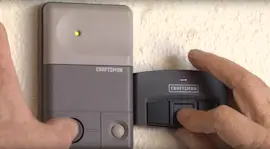
To find a compatible opener or accessory for your Craftsman garage door opener model 139654001, match the opener’s radio system (learn button color, frequency, and whether it uses rolling-code technology) to the remote, keypad, or smart controller you want to use. This prevents programming failures and intermittent operation.
What to check on the opener first
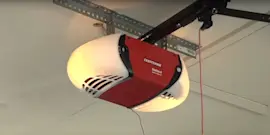
Look on the motor unit (powerhead) label and under the light lens near the learn button.
- Model number: 139654001 (confirms the opener family)
- Learn button color (commonly yellow, purple, red/orange, or green)
- Remote type: rolling code vs. older dip-switch style
- Frequency: commonly 315 MHz or 390 MHz on many Craftsman units
- Accessory goal: remote, wireless keypad, wall control, or smart hub
Quick compatibility guide (most common scenarios)
Use this as a fast way to narrow down what will work before you buy.
| What you see on the opener | What it usually means | What to buy/use |
|---|---|---|
| Learn button present | Newer-style programming | A compatible rolling-code remote/keypad that matches the learn button system |
| No learn button; dip switches on remote/opener | Older fixed-code system | A dip-switch compatible remote (must match switch pattern) |
| Remotes program but range is poor | Signal or antenna issue | Check hanging antenna wire, LED bulb interference, and battery condition |
Steps we use to confirm compatibility
- Identify the learn button color and note it.
- Check your current remote for a model number and whether it has dip switches.
- Decide whether you need universal (multi-brand) or brand-matched accessories.
- If the opener has diagnostic flashes or codes, look them up in Craftsman error codes.
Why it matters
Garage door opener accessories are not universal. If the frequency or rolling-code system does not match, the remote or smart controller may not program at all, or it may work inconsistently and create safety and security issues.
Last updated: February 2026
What are the common problems with Craftsman garage door openers?
Common problems with the Craftsman garage door opener model 139654001 usually fall into three areas: safety sensor issues (misalignment or blocked beam), drive system wear (chain/belt, sprocket, gears), and control or remote problems (wall control, keypad, logic board). These often show up as blinking lights, grinding noises, or a door that reverses.
Most common symptoms and what they usually mean
- Door will not close and lights blink: safety sensors are blocked, dirty, misaligned, or sun glare is interfering.
- Door starts down then reverses: travel limits or force settings are off, or the door is binding.
- Motor runs but door does not move: stripped drive gear, broken sprocket, or a disconnected trolley.
- Grinding or loud clicking: worn gear set, loose chain, or failing sprocket assembly.
- Remote/keypad works sometimes: weak battery, interference, or receiver/logic board issue.
- Wall control does nothing: wiring issue, bad wall control, or logic board problem.
Quick checks we recommend before replacing parts
- Check the door balance: disconnect the opener and lift the door by hand; it should stay about halfway open.
- Inspect the photo eyes: confirm both sensor LEDs are steady and the lenses are clean.
- Look for binding: rollers, hinges, or tracks that stick can cause reversal.
- Listen at the motor head: grinding during travel points to gear/sprocket wear.
- Reprogram and test remotes: rule out a simple pairing or battery issue.
Common causes vs. typical fixes
| Problem area | What you notice | Typical fix |
|---|---|---|
| Safety sensors | Won’t close; lights blink | Clean/align sensors; add a sun shield if glare is the trigger |
| Force/travel settings | Reverses; stops short | Adjust force and travel limits |
| Drive system wear | Motor runs; grinding | Replace worn gear/sprocket/drive components |
| Controls/remotes | Intermittent response | Replace batteries; troubleshoot wall control; test logic board |
Why it matters
A garage door opener that reverses, won’t close, or strains during travel is usually reacting to a safety input or excess door resistance. Fixing the root cause protects the opener’s motor and drive gears and helps the door operate smoothly and safely.
For model-specific troubleshooting patterns like light flashes and diagnostic sequences, use our Craftsman error codes guide.
Last updated: February 2026
Is it worth repairing a 20 year old garage door opener?
For a 20-year-old garage door opener, replacement is usually the better long-term choice because most openers are built for about 10 to 15 years of service. A small repair can be worth it if the fix is simple and low-cost, but major failures typically mean more downtime and repeat repairs.
When repair makes sense
A repair is a good “buy time” option when the opener is otherwise reliable and the door hardware is in good shape.
- The opener still runs smoothly and only has an intermittent issue
- The problem is clearly external (misaligned safety sensors, loose wiring, sticking door)
- You only need basic adjustments (travel limits, force settings)
- You want short-term function while planning a full upgrade
When replacement is the smarter move
With an older Craftsman unit like model 139654001, replacement is the better value when the failure is in the drive system or electronics.
- Motor hums but the door does not move (drive gear or internal failure)
- Door reverses or stops repeatedly even after force and travel adjustments
- Remote and wall control problems persist after basic troubleshooting
- Safety sensor issues keep returning (especially in bright sun or dusty garages)
- You want modern features (quieter operation, better security, smart control)
Quick decision guide
| What you’re seeing | Best next step | Why |
|---|---|---|
| Door will not close and lights blink | Troubleshoot sensors first | Often a setup or alignment issue |
| Door stops mid-travel | Check door balance and force settings | Binding doors overload openers |
| Grinding/clicking from opener head | Plan for replacement | Common sign of internal wear |
| Random operation or no response | Check controls and wiring | Could be wall control or logic board |
Why it matters
A garage door opener is a safety device as much as a convenience item. When an older opener starts failing, it can strain the door system, create inconsistent closing behavior, and lead to repeated service calls.
What we recommend you do next
- Disconnect the opener and confirm the garage door moves smoothly by hand
- Inspect and align the safety sensors; clean the lenses
- Verify force and travel settings are not set too “tight”
- Use our Craftsman error codes resource if your opener has diagnostic flashes
- If problems continue after these checks, plan for replacement rather than investing in major repairs
Last updated: February 2026
How to find out garage door opener type?
To find the “type” of your Craftsman garage door opener (including your 139654001), we identify the drive style (chain, belt, or screw) and the control system (learn button color, wall control style, and safety sensor setup). Those details determine which remotes, keypads, and troubleshooting steps apply.
Quick ways to identify your opener type
- Look at the rail above the door:
- Chain drive: a metal chain like a bicycle chain
- Belt drive: a rubber or reinforced belt
- Screw drive: a long threaded steel rod
- Check the motor unit cover for a label with the model number and sometimes the logic board type.
- Find the learn/program button (usually under the light lens or a small cover) and note the button color.
- Look at the wall control:
- Basic push button (simple control)
- Multi-function wall console (often includes lock/light features)
- Observe the safety sensors near the floor on each side of the door; misalignment often shows up as blinking lights.
What to record (so you can match parts and programming)
| What you’re checking | What it tells you | Why it matters |
|---|---|---|
| Drive type (chain, belt, screw) | Mechanical system | Determines common wear parts and noise level |
| Learn button color | Radio/control generation | Determines remote/keypad compatibility |
| Wall control style | Control wiring/features | Helps diagnose wall button and wiring issues |
| Sensor LED behavior | Safety sensor status | Explains “won’t close” and light-blink patterns |
If you’re trying to program a remote or keypad
Start by identifying the learn button and then follow the matching programming steps for that control system. Our how to program garage door opener remotes video walks through the common learn-button process used on many openers.
If you’re troubleshooting instead of programming
If the opener lights blink or the unit shows a diagnostic pattern, use the error-code path for Craftsman openers. Our Craftsman error codes guide helps you match the symptom to the most likely cause (sensors, travel limits, force settings, or control issues).
Why it matters
Garage door opener “type” is really a combination of drive mechanism and control generation. Getting both right prevents buying the wrong remote, setting the wrong force/travel adjustments, or chasing the wrong repair.
Last updated: February 2026
How do I know what model my garage door opener is?
Your Craftsman garage door opener model number is printed on a label on the powerhead (the motor unit on the ceiling). On many Craftsman units, you can find it under the front light lens, under the left light lens (when facing the opener), or on the side opposite the antenna.
Where to look on the opener (fast checklist)
- Check under the front light lens cover
- Check under the left light lens cover (if you are facing the garage door opener)
- Check the side of the powerhead opposite the antenna wire
- Look for a white or silver sticker that lists MODEL and sometimes PART or SERIAL
- Wipe dust off the label; the model number can be faint
What the model number looks like
For Craftsman openers, the model number is usually a short number string (for example, 139.XXXXXX or similar). For this parts page, the model number format is 139654001.
| What you see on the label | What it means | Why you need it |
|---|---|---|
| Model number | Identifies the exact opener version | Ensures correct parts and troubleshooting steps |
| Serial number | Production identifier | Helps match the right revision when parts vary |
| Motor type (AC/DC) | Drive and control style | Impacts error codes and repair approach |
Why it matters
Using the exact model number helps us match the correct Craftsman parts diagrams and the right troubleshooting steps for your opener. It also prevents ordering the wrong safety sensor, wall control, logic board, or drive gear kit.
Next step after you find it
- Write the model number exactly as shown (include all digits)
- Use the model number to look up troubleshooting steps such as Craftsman error codes
- If your opener has blinking lights or a diagnostic code, match the pattern before adjusting force or travel limits
Last updated: February 2026