Owner’s manual
 View engine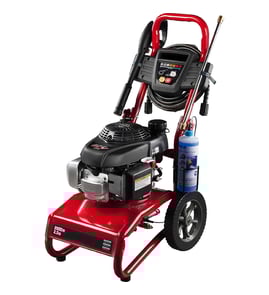



What PSI should my pressure washer be?
For the Craftsman pressure washer model 580752820, the maximum outlet pressure is 3,000 PSI. For most home cleaning, you typically use a lower effective PSI by choosing the right spray tip and keeping the nozzle about 8 to 24 inches from the surface; see the 580752820 owner's manual for safe operating guidance.
What to use 3,000 PSI for (and when to back off)
Higher PSI is not always better. Use the least pressure that gets the job done.
- Cars, patio furniture, painted surfaces: use a wider fan tip and keep more distance
- Decks and fences (wood): start with a wider fan tip; avoid lingering in one spot
- Concrete and masonry: you can use higher pressure, but keep the spray moving
- Siding: use lower pressure and the correct detergent method to avoid forcing water behind siding
- Delicate areas (caulk, window seals): avoid high pressure; increase distance
Quick PSI guidance by task
These are typical effective PSI ranges for common jobs; your 580752820 can cover them by adjusting tip selection and technique.
| Cleaning task | Typical effective PSI range | Best control method |
|---|---|---|
| Car washing | 1,200 to 1,900 | Wide fan tip, more distance |
| Deck or fence (wood) | 1,500 to 2,500 | Wide fan tip, steady motion |
| Driveway or concrete | 2,500 to 3,000 | Narrower fan tip, keep moving |
| Siding | 1,300 to 2,500 | Wide fan tip, detergent where appropriate |
Setup checks that affect real pressure
If pressure seems weak or inconsistent, these basics usually fix it.
- Confirm your water source can supply more than 3.7 GPM and at least 20 PSI at the garden hose
- Keep water supply temperature 100°F or less
- Clean the garden hose inlet screen if it is clogged
- Inspect the high-pressure hose for kinks, bulges, or leaks; replace a damaged hose (do not repair)
- Use the correct spray nozzle; a worn or partially clogged tip reduces cleaning power
Why it matters
Using the right effective PSI helps you clean faster while preventing surface damage and reducing kickback risk. It also protects the pump from overheating when the trigger is not engaged for several minutes.
Last updated: January 2026
What kind of gas goes in a Craftsman 3000 PSI pressure washer?
For the Craftsman pressure washer model 580752820 (3000 PSI), we use clean, fresh, unleaded gasoline with a minimum 87 octane (87 AKI) rating. Avoid old fuel and never mix oil into the gas; the engine uses a separate crankcase oil fill.
Fuel tips that prevent hard starting and surging
- Use fuel that is 30 days old or less when possible.
- Choose unleaded fuel; do not use diesel or E85.
- If the washer will sit for more than a few weeks, treat the fuel with stabilizer or drain the tank.
- Fill the tank outdoors with the engine off; wipe up spills before starting.
- After fueling, follow the starting steps in the 580752820 operator's manual.
Quick reference: what to use vs. what to avoid
| Fuel type | OK to use? | Why |
|---|---|---|
| Unleaded gasoline, 87 AKI or higher | Yes | Correct octane for reliable combustion |
| Premium unleaded (91 to 93 AKI) | Yes | Acceptable, but usually not necessary |
| Old or stale gasoline | No | Causes hard starting, rough running, and varnish |
| E85 or high-ethanol blends | No | Can damage fuel system components |
Why it matters
Correct fuel helps your 580752820 start easier after sitting and keeps the engine running smoothly under load, which protects the pump and helps maintain consistent spray pressure.
If it still will not start after refueling
Use our troubleshooting steps in pressure washer won't start to check common causes like stale fuel, spark plug condition, and choke/throttle settings.
Last updated: January 2026
Is a 3000 PSI pressure washer good?
Yes. A 3000 PSI pressure washer is a strong, “heavy-duty residential” level of cleaning power, and the Craftsman model 580752820 is rated up to 3,000 PSI with a max flow rate of 2.7 GPM, which is enough for most driveway, deck, siding, and equipment cleaning when used with the right spray tip and technique (see the 580752820 owner's manual).
What 3,000 PSI is best for
- Concrete and brick cleaning (driveways, sidewalks, patios)
- Decks and fences (use a wider fan tip and keep distance to avoid damage)
- Siding and outdoor furniture (lower-pressure tip and more distance)
- Grime and mildew removal on tools, trailers, and lawn equipment
- Prepping surfaces for repainting (spot testing first)
PSI vs GPM: what matters most
PSI is “impact,” and GPM is “rinsing power.” For the Craftsman 580752820, the combination of 3,000 PSI and 2.7 GPM gives you strong cleaning plus decent rinse speed.
| Spec | What it affects | Craftsman 580752820 rating |
|---|---|---|
| PSI | How hard the spray hits | Up to 3,000 PSI |
| GPM | How fast you rinse and flush dirt | Up to 2.7 GPM |
| Water temp limit | Protects pump seals and valves | Max 100°F |
How to get the best results (and avoid damage)
- Match the nozzle to the job; a narrow spray cleans faster but can gouge wood and etch concrete
- Start farther away, then move closer until cleaning is effective
- Keep the spray moving; lingering in one spot causes streaking and surface damage
- Use only cold to warm supply water; keep inlet water under 100°F
- Confirm your water source can supply adequate flow and pressure before starting
Quick safety and setup checks
- Operate outdoors only and keep at least 5 ft clearance around the unit
- Inspect the high-pressure hose for cuts, bulges, or leaks; replace if damaged
- Clean the garden hose inlet screen if clogged
Why it matters
A 3,000 PSI machine like the Craftsman 580752820 cleans faster than lower-PSI units, but it also increases the risk of surface damage if you use the wrong spray tip or work too close. Proper nozzle choice, distance, and steady motion give you the best clean with fewer repairs.
Last updated: January 2026