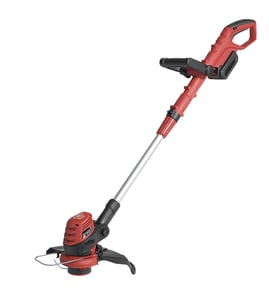

Why do landscapers take the guard off string trimmers?
Landscapers sometimes remove the debris guard on a string trimmer to cut faster and see the cutting path better, especially when edging. On a Craftsman 636796241 51.7-cc gas brushwacker, taking the guard off also increases the amount of thrown debris and the chance of injury, so we recommend keeping the guard installed.
What they’re trying to gain (and what they give up)
Removing the guard is usually about speed and access, not better trimming quality.
Common reasons pros remove the guard
- More visibility for precise edging along sidewalks and curbs
- Easier reach into tight spots (fences, shrubs, landscape borders)
- Less drag and fewer hang-ups in heavy weeds
- Slight weight reduction at the cutting end
- Fewer interruptions when working quickly around obstacles
Tradeoffs that matter
- More rocks, sticks, and wire get thrown farther and faster
- Higher risk of cuts, eye injuries, and leg impacts
- More chance of damaging siding, windows, vehicles, and irrigation heads
- More line breakage and faster line consumption in rough areas
- Less protection if the trimmer head contacts hard surfaces
Safety guidance we use for this model
For the Craftsman 636796241, the guard is part of the safety system that helps control debris and defines a safer cutting zone.
Minimum PPE if you’re trimming (guard on)
- Safety glasses plus a face shield
- Long pants and closed-toe boots
- Hearing protection (gas brushwacker engines are loud)
- Gloves with good grip
If the guard is missing or damaged
Use the trimmer only after restoring the guard; this is the fastest way to get back to safe, consistent operation. Use Sears PartsDirect to search the model number and match the correct guard and mounting hardware.
Quick comparison
| Setup | Speed | Visibility | Debris control | Injury risk |
|---|---|---|---|---|
| Guard installed | Medium | Medium | High | Lower |
| Guard removed | Higher | Higher | Low | Higher |
Why it matters
A 51.7-cc gas brushwacker has enough power to launch debris with real force. The guard reduces thrown objects and helps keep the cutting area predictable, which protects you, bystanders, and property.
Last updated: February 2026
Which is better, .080 or .095 trimmer line?
For a Craftsman 636796241 51.7-cc gas brushwacker, .095 trimmer line is the better default choice because it holds up longer in thick grass and weeds. Use .080 line when you want easier feeding and lighter cutting for routine edging.
Quick pick guide
- Choose .095 for heavy weeds, fence lines, and rocky edges (better durability)
- Choose .080 for light trimming and clean edging (easier to spin and feed)
- If your head accepts both sizes, start with .095 and drop to .080 if the engine bogs down
- Match line size to the trimmer head rating and spool capacity
- Replace line when it gets brittle, flattened, or keeps breaking short
.080 vs .095: what changes
| Feature | .080 line | .095 line |
|---|---|---|
| Best for | Light grass, edging | Thick grass, weeds, brushy areas |
| Durability | Good | Better |
| Cutting load on engine | Lower | Higher |
| Line feed | Typically easier | Can be slightly harder |
| Typical use case | Residential touch-ups | Heavy-duty trimming |
How to choose the right line for your trimmer head
- Check the trimmer head markings (often molded into the head) for the maximum line diameter.
- If the head is rated for .095, use it for most work on this gas model.
- If you mainly edge sidewalks and trim light grass, .080 reduces drag and can feel smoother.
Why it matters
Line diameter affects cutting performance and how hard the engine has to work. Too-thick line can reduce RPM and increase fuel use; too-thin line can snap constantly and slow the job.
For help confirming you have the correct model number before choosing parts or accessories, use how to find your appliance model number (and what it means for parts).
Last updated: February 2026
Can I use .095 trimmer line in a .080 trimmer?
Yes, you can often run .095-inch trimmer line in a trimmer that normally uses .080-inch line, but on a Craftsman 636796241 (51.7-cc gas brushwacker) it can increase drag, reduce RPM, and make the head feed less reliably. Use it only if the trimmer head and eyelets physically accept the thicker line.
Quick fit check (before you spool it)
- Confirm the trimmer head’s maximum line diameter; many heads are designed for a specific range.
- Make sure .095 line slides freely through the eyelets; binding causes poor bump-feed and rapid wear.
- Check spool capacity; thicker line means less length on the spool.
- Spin the head by hand (engine off) to ensure nothing rubs.
- If the head is a fixed-line or blade-capable setup, verify you are using the correct head style for line.
What changes when you go thicker
| Item | .080 line (typical) | .095 line (typical) |
|---|---|---|
| Cutting load on engine | Lower | Higher |
| Best use | Grass, light weeds | Heavier weeds, thicker stems |
| Runtime/fuel use | More efficient | Uses more fuel under load |
| Feed behavior | Usually smoother | More likely to stick if head is tight |
How to try .095 without causing problems
- Start with a shorter cut length (keep the line trimmed to the guard knife).
- Avoid full-throttle “bogging”; let the engine stay in its power band.
- If bump-feed becomes inconsistent, switch back to .080 or use a premium .080 line.
- Replace worn eyelets; sharp edges can grab thicker line.
Why it matters
Line diameter directly affects cutting resistance. If the head is not designed for .095, the extra drag can make the trimmer feel weak, overheat the clutch area, and cause frequent feed issues.
For model identification and parts lookup tips, use how to find your appliance model number (and what it means for parts).
Last updated: February 2026
How to replace the head on a string trimmer?
To replace the trimmer head on your Craftsman model 636796241 (51.7-cc gas brushwacker), you typically lock the shaft, then unthread the head from the gearbox. Many heads use reverse (left-hand) threads, so the loosening direction can be opposite of what you expect.
Before you start (safety and setup)
- Shut the engine off and let it cool completely.
- Disconnect the spark plug wire so the trimmer cannot start.
- Wear gloves; the cutting attachment area can be sharp.
- Clean grass and debris off the head and gearbox so you can see the fasteners.
- Set the trimmer on a stable surface.
Steps to remove and install the head
- Lock the shaft/gearbox: Look for a small hole in the gearbox housing or head area. Insert a screwdriver, nail, or the locking pin (if your unit has one) and rotate the head until the shaft locks.
- Unthread the head: With the shaft locked, turn the head to loosen it. If it will not loosen, try the opposite direction because many brushcutter-style heads use left-hand threads.
- Remove any adapters or washers: Note the order of spacers, cupped washers, or adapters so you can reinstall them the same way.
- Install the new head: Thread it on by hand first to avoid cross-threading, then snug it while the shaft is locked.
- Test for secure fit: Spin the head by hand to confirm it runs true and does not wobble.
Quick direction check (common setups)
| What you see | What it usually means | What to try |
|---|---|---|
| Head will not loosen turning left | Possible left-hand thread | Try loosening by turning right |
| Shaft-lock hole present | Designed for a locking pin/tool | Lock shaft before loosening/tightening |
| Wobble after install | Washer/spacer order wrong or cross-threaded | Recheck hardware order; reinstall by hand-starting threads |
Why it matters
A correctly installed trimmer head prevents vibration, protects the gearbox, and helps the line feed properly. Cross-threading or missing spacers can strip threads and cause the head to come loose during use.
Helpful related reading
- Use our guide to confirm you are matching the correct model and parts list: how to find your appliance model number (and what it means for parts)
Last updated: February 2026