Owner’s manual
 View engine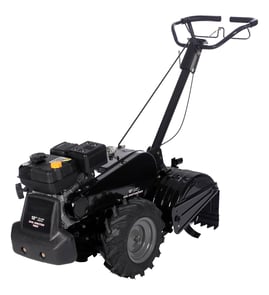


Where is the model number on a Craftsman rear tine tiller?
On a Craftsman rear-tine tiller like model 917294261, the model number is printed on the product ID label. You will typically find that label on the tine shield (tine guard) area or on or near the fuel tank; some units place it toward the front of the frame. See the 917294261 owner's manual for the exact label location diagram.
- Tine shield or tine guard (rear of the unit near the tines)
- Fuel tank area (side of the tank or nearby frame rail)
- Front frame or engine mounting plate area
- Handle support or transmission housing area
- Under a dirt shield or debris guard (wipe clean to read)
- Turn the engine off and let it cool.
- Brush off dirt, then wipe the label area with a rag.
- Look for a sticker or metal tag with 917294261 and other numbers.
- Write down the full model number exactly as shown.
| Label item | What it’s used for |
|---|---|
| Model number (example: 917294261) | Matching parts and diagrams |
| Serial number | Identifying production run |
| Engine info (varies) | Engine tune-up and service parts |
We use the model number to match the correct Craftsman parts and diagrams for your tiller, especially for wear items like the drive system and controls. For example, the correct belt routing and replacement steps depend on the exact configuration shown in the 917294261 owner's manual.
Last updated: January 2026
What tiller is made in the USA?
If you’re specifically looking for a tiller made in the USA, Mantis states that its tillers are designed, engineered, and manufactured in the United States. For your Craftsman rear-tine tiller model 917294261, we use the 917294261 owner's manual to confirm operation, maintenance, and parts identification, but country of manufacture varies by brand and production run.
When “made in the USA” is the priority, we focus on verifying the claim and then confirming the model details before purchase.
- Check the product data plate or label on the tiller frame for country of origin
- Confirm the exact model number and engine model (they can differ from the tiller model)
- Review the manufacturer’s current “made in USA” statement for the specific model line
- Ask the seller to confirm the country of manufacture for the exact unit you’re buying
- Keep documentation for warranty and future parts lookup
| What you’re checking | Where to find it | Why it helps |
|---|---|---|
| Tiller model number | Frame tag / product label | Ensures you’re comparing the right unit |
| Engine model number | Engine shroud / label | Parts and origin can differ by engine |
| Country of origin | Product label or carton | Most reliable confirmation |
| Parts support | Parts diagrams and lists | Helps long-term repairability |
Country of manufacture can affect your buying decision, but long-term ownership usually comes down to parts availability and serviceability. For example, common wear items like a drive belt or clutch cable are routine maintenance on many rear-tine tillers; having the correct model number makes parts matching much easier.
Last updated: January 2026
How much does a Craftsman rear tine tiller weigh?
The Craftsman rear-tine tiller model 917294261 is a heavy, walk-behind machine; most rear-tine tillers are about 150 to 300 lb depending on engine size, transmission, and installed attachments. For the exact operating or shipping weight for your unit, use the specifications in the 917294261 owner's manual.
Use these quick checks to get a number you can trust for loading ramps, trailers, and storage floors.
- Check the manual’s Specifications section for weight, shipping weight, or dry weight
- Look for the model and serial tag on the frame; some tags list weight
- If both are listed, use operating weight for transport planning
- Add installed accessories (wheel weights, tine extensions, furrower, bumper)
- If you weigh it yourself, use a platform scale and keep fuel level consistent
These ranges help you choose ramps and tie-downs without assuming an exact model-specific number.
| Rear-tine tiller type | Typical weight range | What changes the weight most |
|---|---|---|
| Smaller rear-tine | 150 to 220 lb | Smaller engine, lighter transmission |
| Mid-size rear-tine | 200 to 300 lb | Larger engine, stronger gear case |
| Large rear-tine | 280 to 350+ lb | Heavy-duty transmission, added weights |
Weight directly affects traction and tilling depth, and it also determines safe loading and transport. If the tiller feels unusually hard to roll, inspect for drive drag and belt issues such as a worn or misrouted husqvarna rear-tine tiller drive belt 591372401.
Last updated: January 2026
How to use a tiller with front tines?
Craftsman model 917294261 is a rear-tine tiller, so the controls and “bite” adjustment differ from a front-tine machine. For a true front-tine tiller, you control how hard it pulls by setting the depth stake for shallow passes first, then lowering it gradually.
- Set the depth stake high (shallow) for the first pass.
- Start the engine and use a steady, moderate throttle.
- Engage the tines smoothly; let the tines pull while you guide the handles.
- Make multiple shallow passes; overlap each pass slightly.
- Disengage the tines before turning, backing up, or crossing hard obstacles.
| Adjustment | What you feel | Best use |
|---|---|---|
| Depth stake higher (shallow) | Less bite, easier control | First pass, hard or packed soil |
| Depth stake lower (deeper) | More bite, more pull | After soil is loosened |
| Higher throttle | Faster tine speed | Use only if it stays controllable |
Rear-tine tillers typically have separate wheel drive and tine engagement, plus a depth stake that sets digging depth. Use the exact control sequence, lever positions, and adjustment points shown in the 917294261 owner's manual.
- Clear rocks, wire, and roots before tilling.
- Wear eye protection, gloves, and sturdy footwear.
- Keep hands and feet away from rotating tines.
- Shut off the engine before clearing jams or adjusting the depth stake.
Starting shallow prevents the tiller from surging forward, improves control, and reduces strain on the drive system.
Last updated: January 2026