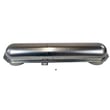
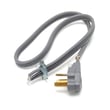
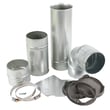
Installation guide
 Owner’s manual
 Error Codes


What is the most common problem with whirlpool dryers?
For Whirlpool dryers like model WED8500BW0, the most common service issue we see is poor drying or no heat caused by restricted airflow (lint buildup or a crushed/too-long vent). Overheating from poor airflow can also lead to a blown thermal fuse and a dryer that will not run.
Quick checks first (most fixes start here)
- Clean the lint screen every load; wash it with mild soap and water if you use dryer sheets.
- Inspect the vent hose behind the dryer for crushing, kinks, or loose connections.
- Confirm you are using 4-inch heavy metal venting (not plastic or foil).
- Check the outside hood flap for lint blockage and that it opens fully.
- Run a timed dry cycle and verify strong airflow outside.
For venting rules and maximum vent length guidance, use the WED8500BW0 installation instructions.
When the dryer won’t start after overheating
If airflow has been restricted, the dryer can overheat and open a safety fuse. On WED8500BW0, a common repair path is checking the thermal fuse and correcting the venting problem before restarting.
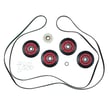
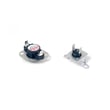
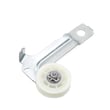
Common parts involved:
Symptom-to-likely-cause guide
| Symptom | Most common cause | What to do next |
|---|---|---|
| Runs but clothes stay damp | Vent restriction | Clean/shorten vent; verify outside airflow |
| No heat but drum turns | Heating circuit issue | Check thermal cut-off, thermostat, heating element |
| Won’t start at all | Blown thermal fuse or door switch issue | Test fuse and door switch; correct airflow |
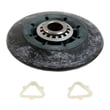
| Squealing or thumping | Worn rollers/idler | Inspect drum support and idler components |
Why it matters
Airflow problems do more than slow drying; they raise operating temperatures, which can shorten the life of heating and safety components and cause repeat failures if the venting issue is not fixed first.
Last updated: January 2026
Is a 7.4 cu ft dryer big?
Yes. For the Whirlpool WED8500BW0 27-inch electric dryer, a 7.4 cu. ft. drum is considered a large-capacity size, which is typically big enough for bulky items (like comforters) and larger family loads with fewer cycles. See the capacity and use guidance in the WED8500BW0 use & care manual.
What “large capacity” means in everyday use
A 7.4 cu. ft. dryer is designed to handle bigger loads without overpacking the drum, which helps airflow and drying performance.
- Fits larger mixed loads (towels, jeans, sweatshirts) more comfortably
- Better for bulky items (blankets, comforters) than smaller drums
- Helps reduce wrinkles when you avoid stuffing the drum full
- Can shorten laundry day by reducing the number of loads
Quick capacity comparison
| Dryer drum size | Common label | Best for |
|---|---|---|
| 5.0 to 6.5 cu. ft. | Standard | Singles, couples, smaller loads |
| 6.6 to 7.3 cu. ft. | Large | Families, frequent laundry |
| 7.4 cu. ft. and up | Large to extra-large | Bulky items, big households |
Tips to get the best drying results with a 7.4 cu. ft. drum
Even with a large drum, performance depends on loading and airflow.
- Load loosely; leave space for tumbling (especially on sensor cycles)
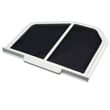
- Clean the lint screen every load; replace it if it is torn or warped (see screen W10120998)
- Avoid mixing very heavy items with lightweight items in the same cycle
- If drying times suddenly get long, check venting and airflow requirements in the WED8500BW0 installation instructions
Why it matters
A large-capacity dryer like the WED8500BW0 can save time and reduce wear on fabrics, but only if air can move through the load and out the vent system. Overloading and restricted venting are the most common reasons large dryers still dry slowly.
Last updated: January 2026
What's the average lifespan of a whirlpool duet dryer?
A Whirlpool Duet-style electric dryer like model WED8500BW0 typically lasts 10 to 13 years with normal household use. With consistent vent cleaning and basic upkeep, it’s common for these dryers to reach 14 to 17 years before major repairs become more likely.
What affects lifespan the most
A dryer’s life is usually determined by heat stress, airflow restriction, and wear on moving parts.
- Venting that is too long, crushed, or partially blocked (overheats components)
- Heavy weekly loads and frequent high-heat cycles
- Lint buildup inside the cabinet or blower housing
- Worn drum support parts (rollers, idler pulley, belt)
- Power supply issues that cause repeated heating problems
For venting and installation best practices specific to WED8500BW0, use the WED8500BW0 installation guide.
Parts that commonly wear as dryers age
If your WED8500BW0 is getting noisy, taking longer to dry, or stopping mid-cycle, these are common wear items to inspect or replace:
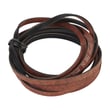
- Dryer drum belt WP8547157 (drum won’t tumble or slips)
- Dryer drum support roller WPW10314173 (thumping or rumbling)
- Dryer idler pulley WPW10547292 (squealing, belt tension issues)
- Dryer thermal fuse WP3390719 (no heat or won’t run, depending on failure)
- Dryer heating element WP8544772 (no heat or weak heat)
Quick “repair vs. replace” guide
| What you’re seeing | Typical cause | Usually worth repairing? |
|---|---|---|
| Loud thump/squeal | Rollers/idler/belt wear | Yes |
| No heat but drum turns | Heater or thermostat/fuse | Often yes |
| Long dry times | Vent restriction or lint buildup | Yes |
| Multiple issues at once | Mixed wear + heat stress | Depends |
Why it matters
A restricted vent can shorten the life of a Whirlpool electric dryer by overheating the heating circuit and safety devices. Keeping airflow strong is the simplest way to protect the heater, thermostats, and control components.
Last updated: January 2026