Error Codes



How much are electric wall ovens?
Electric wall ovens typically cost $500 to over $5,000, depending on size (single vs. double), features (convection, self-clean), and brand tier. For Kenmore model 9114038816, the oven’s replacement cost usually lands in the mid-range unless you are comparing premium built-in designs.
What drives the price
- Configuration: single wall ovens usually cost less than double wall ovens
- Size: 24-inch models often cost less than 27-inch or 30-inch models
- Cooking features: convection, air fry, and advanced controls raise price
- Cleaning system: self-clean and steam-clean options add cost
- Electrical and installation needs: hardwiring, cabinet cutout fit, and labor can add significant total cost
Typical price ranges (appliance only)
| Type | Common price range | Best fit for |
|---|---|---|
| Basic single wall oven | $500 to $1,500 | Straightforward bake and broil needs |
| Mid-range single wall oven | $1,500 to $3,000 | Convection and upgraded controls |
| Premium single or double wall oven | $3,000 to $5,000+ | High-end features and finishes |
Repair vs. replace: a practical way to decide
If your Kenmore 9114038816 still heats evenly and the cabinet fit is good, repairing common wear items is often the better value than replacing the entire oven.
Common repairable issues include:
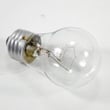
- Oven light out (often the lamp bulb 40A15)
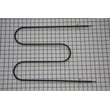
- Broil not heating (often the oven broiler element WB44M5)
- Door heat leakage or poor sealing (often the seal WB2X9168)
Why it matters
Wall ovens are built-in appliances; the total cost is not just the oven price. Installation complexity, cabinet cutout compatibility, and electrical requirements can make replacement far more expensive than a targeted repair.
Last updated: January 2026
Are all 30 inch wall ovens the same size?
No. “30-inch” wall ovens are a size class, not an exact measurement. For Kenmore model 9114038816 (electric built-in oven), the actual oven width and the required cabinet cutout can vary by brand and design, so we always recommend measuring your existing opening before ordering a replacement.
What “30-inch” usually means
Most 30-inch wall ovens are designed to fit a cabinet cutout close to 30 inches wide, but the real dimensions often differ by fractions of an inch.
Common differences include:
- Cutout width vs. overall oven width (they are not the same)
- Cutout height (single vs. double wall oven)
- Depth (especially if the oven has a larger door or trim)
- Trim overlap (how much the front frame covers the cabinet opening)
- Electrical junction box location and clearance needs
How we recommend measuring before you buy
Measure the cabinet opening and compare it to the replacement oven’s required cutout specs.
- Measure cutout width at the top, middle, and bottom
- Measure cutout height on both sides
- Measure cutout depth to the back wall (and note any obstructions)
- Confirm door swing clearance in front of the oven
- Verify your power supply matches the new oven’s requirements
Typical sizing ranges (what you’ll see most often)
These are common ranges for 30-inch class wall ovens; exact specs vary by model.
| Measurement | Typical range for “30-inch” class |
|---|---|
| Cutout width | About 28 1/2 to 29 7/8 inches |
| Overall width | About 29 3/4 to 30 inches |
| Cutout depth | Often 23 to 24 inches |
Why it matters
Even a small mismatch can prevent the oven from fitting, leave gaps around the trim, or create clearance issues for wiring and ventilation. Measuring first helps avoid returns and ensures a safe, proper installation.
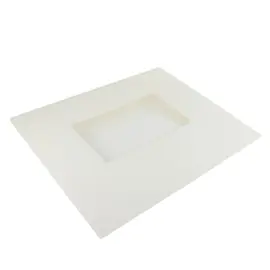
If you are repairing your existing Kenmore 9114038816 instead of replacing it, common fit-related items include the door glass WB36X779 and trim WB7M10.
Last updated: January 2026
How do you reset a wall oven?
To reset a Kenmore wall oven model 9114038816, we recommend power-cycling the oven at the home electrical panel: turn the oven circuit breaker OFF for about 1 minute, then turn it ON to reboot the electronic control.
Quick reset steps (most effective)
- Set the oven controls to OFF.
- Turn the wall oven breaker OFF (or remove the fuse if your home uses fuses).
- Wait 60 seconds.
- Turn the breaker ON (or reinstall the fuse).
- Set the clock (if needed) and test Bake and Broil.
If the reset does not fix the problem
A reset clears many temporary control glitches, but it will not fix a failed part or a power supply issue. Check these common causes next:
- Tripped breaker that will not stay set (possible short or wiring issue)
- Loose wire connection at the junction box (power supply problem)
- Failed oven temperature sensor causing bad temperature readings
- Broil not heating due to a burned-out element
- Oven light out due to a burned bulb or bad socket
Common part checks for this model
| Symptom | What to check first | Example part for 9114038816 |
|---|---|---|
| Oven will not broil | Broil element continuity | Oven broiler element WB44M5 |
| Oven temperature is erratic | Sensor resistance and wiring | Sensor WB21X5301 |
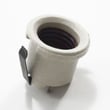
| Oven light does not work | Bulb, then lamp holder | Lamp bulb 40A15, lamp holder WB8X303 |
Why it matters
Resetting restores normal operation after a power interruption or control “lock-up.” If the oven immediately fails again after a reset, that points to an underlying issue like a heating circuit problem, sensor failure, or wiring connection that needs repair.
Last updated: January 2026
Are electric wall ovens 110 or 220?
Most Kenmore electric built-in ovens like model 9114038816 are designed for a 240-volt (often called 220V) circuit, not a standard 120-volt (110V) household outlet. In practice, that means the oven is typically hardwired or connected to a dedicated 2-pole breaker circuit.
What you should expect for power
Most U.S. electric wall ovens use a dedicated 240V supply because the bake and broil heating elements need higher wattage than a 120V circuit can safely provide.
- Dedicated 240V circuit (2 hot legs)
- Typically 30A to 50A breaker range (varies by oven size and features)
- Usually hardwired in a junction box (common for wall ovens)
- Some models use a 4-wire connection (hot, hot, neutral, ground)
- A standard 120V receptacle is not used for the oven’s main heating load
Quick comparison: 120V vs 240V for ovens
| Item | 120V (110V) circuit | 240V (220V) circuit |
|---|---|---|
| Typical use | Small countertop appliances | Electric wall ovens, ranges, dryers |
| Breaker type | Single-pole | Double-pole |
| Heating capability | Limited | High wattage for bake/broil |
| Common connection | Plug into outlet | Hardwired or special range-style connection |
How to confirm what your home and oven are set up for
We recommend checking the electrical supply at the wall and the oven’s rating information.
- Look in your electrical panel for a double-pole breaker labeled “oven”
- Check the wiring at the junction box for two hot wires (often black and red)
- Verify the oven’s rating label (commonly on the door frame or behind the control area)
- If the oven is not heating correctly, inspect for heat damage at connections
- Use safe testing practices; our how to use a multimeter to test electrical parts video can help with basic meter technique
Why it matters
Using the correct voltage protects the control, wiring, and heating elements, and it prevents nuisance breaker trips. If your oven is on the wrong supply, it can heat poorly or not heat at all.
Last updated: January 2026