Owner’s manual


What is the average lifespan of a Kenmore washer?
Most Kenmore washers average 10 to 15 years of service life in normal household use. For your Kenmore model 11028932790, consistent care (proper loading, leveling, and routine cleaning) is what most often determines whether it lands closer to 10 years or keeps running well past that; see the 11028932790 owner's manual for model-specific care and operating guidance.
Typical lifespan by washer type
Washer design and how hard it is worked make a big difference.
| Washer type | Typical lifespan | Notes |
|---|---|---|
| Top-load (direct-drive style) | 10 to 15 years | Often very durable; wear parts are usually mechanical (agitator, clutch, coupling). |
| Front-load | 10 to 15 years | More sensitive to maintenance (door seal care, detergent use, drainage). |
| Heavy-use household (large loads, daily cycles) | 8 to 12 years | Faster wear on drive, suspension, and bearings. |
What shortens washer life fastest
We see these issues reduce lifespan more than anything else:
- Overloading the basket, which strains the drive system and suspension
- Out-of-level installation, which increases vibration and tub wear
- Poor draining (slow drain or clogs), which can overwork the pump
- Ignoring early symptoms (burning smell, loud spin, oil leak, repeated off-balance)
- Incorrect detergent amount, which can cause residue and performance problems
Maintenance that helps your 11028932790 last longer
Your washer’s manual emphasizes safe operation and proper use; these habits help prevent common failures:
- Keep loads balanced; mix items and avoid washing single heavy pieces alone
- Use the correct water level and cycle for the load size
- Periodically check hoses and connections for seepage or cracking
- If the washer starts shaking, re-level it and confirm all feet are firmly on the floor
- Address agitation or spin problems early; small drive issues often grow into bigger repairs
Parts that commonly affect performance over time
If your washer stops agitating, won’t spin correctly, or makes new noises, these model-compatible parts are often involved:
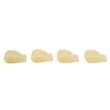
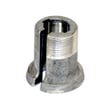
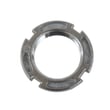
- Agitator dog 80040 (common cause of weak or slipping agitation)
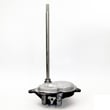
- Coupling 285753A (common cause of no-agitate and no-spin on direct-drive designs)
- Washer drain pump WP3363892 (common cause of slow drain or no drain)
Why it matters
A washer that is level, not overloaded, and repaired when symptoms first appear typically avoids secondary damage to higher-cost assemblies (drive system, basket, gear case). That is the simplest way to get the full 10 to 15 years from a Kenmore washer.
Last updated: February 2026
How to force a Kenmore Elite washer to drain?
To force-drain a Kenmore washer model 11028932790, we use the Spin/Drain function (if available) or manually drain through the tub-to-pump drain path. Most “no drain” situations come from a kinked drain hose, a clogged pump, or a blocked hose connection.
Fast ways to get the water out
- Try a Spin/Drain cycle first: Set the washer to Spin and start it; the pump should run and evacuate water.
- If the washer will not run the pump: Unplug the washer, then lower the drain hose into a shallow pan or floor drain (keep control of the hose to prevent spills).
- Check the drain hose routing: Remove kinks and avoid forcing extra hose down into a standpipe.
What to check when it will not drain
Unplug power before inspecting parts.
- Drain hose: Make sure the hooked end is not straightened and jammed into the standpipe; that can cause poor draining or backflow.
- Standpipe or laundry tub: Confirm the drain is open and not slow.
- Pump and hoses: Look for lint, coins, socks, or debris in the pump inlet and hoses.
- Drive system symptoms: If you hear the motor but the pump is not moving water, a worn coupling can prevent proper operation.
Parts that commonly fix “won’t drain” on this washer
| Symptom | Most likely area | Example part on this model page |
|---|---|---|
| Hums but drains slowly or not at all | Drain pump or blockage | Washer drain pump WP3363892 |
| Motor runs but washer does not move water consistently | Motor-to-drive connection | Coupling 285753A |
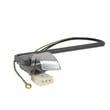
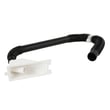
| Overfills or drains oddly due to pressure issues | Water-level sensing hose/switch | Hose-wl WP353244 or washer water-level switch W10339326 |
Why drain hose setup matters
A correct drain hose connection helps prevent leaks and helps the washer pump water out efficiently. The manual also notes to rotate the drain hose hook to eliminate kinks and to avoid stuffing excess hose into the standpipe. See the 11028932790 owner's manual for the recommended drain hose connection and securing method.
Last updated: February 2026
How to reset Kenmore washer model 11028932790 top loader?
To reset your Kenmore top-load washer model 11028932790, stop the current cycle by pushing the timer (Cycle Selector) knob in, then pull the knob back out to restart. For a deeper reset, unplug the washer for 2 to 5 minutes, then restore power and select a new cycle using the timer.
Quick reset options (most common)
- Stop and restart the cycle: Push the timer knob in to stop; pull it out to restart.
- Power reset: Unplug the washer (or switch off the breaker) for 2 to 5 minutes, then power it back on.
- Control reset during agitation (water level): Turn the water level knob to RESET, then to the new setting.
Step-by-step: power reset (recommended)
- Turn the timer knob to OFF.
- Unplug the washer for 2 to 5 minutes.
- Plug it back in.
- Set water level, water temperature, options, and speeds.
- Push the timer knob in and turn it to the right to the desired cycle.
- Pull the timer knob out to start.
What a “reset” fixes (and what it does not)
A reset clears a stuck timer position and gets the washer ready to start a fresh cycle. It will not correct a mechanical problem like a no-spin condition caused by a worn drive component.
| Symptom after reset | What to check next | Common related part on this model |
|---|---|---|
| Won’t drain or spins poorly | Kinked/clogged drain hose; lid fully closed; too many suds | Washer drain pump WP3363892 |
| Agitates weakly or not at all | Drive coupling wear; agitator wear | Coupling 285753A |
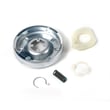
| Loud noise or poor spin | Clutch wear; load balance | Clutch 285785 |
Why it matters
Resetting correctly prevents partial cycles and helps you confirm whether the issue is a simple control/timer interruption or a drain, spin, or drive-system problem.
For model-specific control and cycle details, follow the steps in the 11028932790 owner's manual.
Last updated: February 2026
How many cubic feet is a Kenmore Model 11028932790 washer?
The cubic-foot capacity for your Kenmore washer model 11028932790 is listed in the specifications/product information in the 11028932790 owner's manual. Use that value as the correct, model-specific capacity for load sizing, detergent dosing, and comparing washers.
Where the capacity is listed in the manual
Look for capacity under headings like Specifications, Features, or Basket/tub information. Common places to check:
- The product specifications section
- A features page describing load size (sometimes “super capacity” wording)
- Any chart or table that lists basket or tub details
If you need a practical working estimate today
While you confirm the exact spec in the manual, most Kenmore 110-series traditional top-load washers of this design are commonly in this range:
- Typical capacity range: 3.2 to 3.5 cu. ft.
- Smaller variants: about 3.0 cu. ft.
- Larger traditional top-load variants: about 4.0+ cu. ft.
Why it matters
Using the correct capacity helps prevent overloading, improves cleaning and spin balance, and reduces wear on drive components.
Capacity and what it affects
| What you’re doing | What capacity changes | What we recommend |
|---|---|---|
| Choosing load size | Turnover and rinse performance | Load loosely; do not pack items down |
| Reducing vibration | Out-of-balance risk | Use smaller loads for bulky items |
| Preventing drive wear | Strain on drivetrain | Avoid chronic overloading that can stress the clutch 285785 and coupling 285753A |
Last updated: February 2026