Installation guide
 Owner’s manual


Is it worth repairing a Kenmore dishwasher?
Yes, repairing a Kenmore Elite dishwasher like model 66513109K901 is worth it when the problem is a single failed part (pump, fuse, inlet valve, rack hardware) and the tub is in good shape; you often restore full cleaning and draining performance for less than replacement.
Quick way to decide
Use this checklist to make a clear repair vs. replace call:
- The dishwasher still fills, washes, and drains but has one obvious failure (leak, no heat, no drain, weak wash).
- The stainless tub and inner door are not leaking or rusted through.
- The issue is tied to a common service part (circulation pump, drain hose, inlet valve, control board).
- You can access the component safely (undercounter units need careful shutoff of power and water).
- The repair cost is reasonable compared to the dishwasher’s age and condition.
For model-specific maintenance, cleaning, and troubleshooting steps, follow the owner's manual.
Common repairs that usually make sense on 66513109K901
These are frequent, targeted fixes that can bring a dishwasher back quickly:
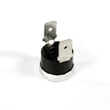
- No power or dead control: check the thermal fuse and wiring; replace the fuse W10258275 if it tests open.
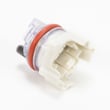
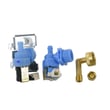
- Not filling or fills slowly: inspect the supply line and inlet screen; replace the dishwasher water inlet valve W10648041 if it will not open.
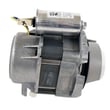
- Poor wash or weak spray: circulation issues often point to the wash motor; consider the dishwasher wash pump motor assembly WPW10757217.
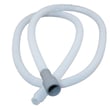
- Not draining or leaking at the sink connection: inspect routing, kinks, and clamps; replace the dishwasher drain hose 8269144A if cracked or soft.
Repair cost vs. benefit (simple comparison)
| Situation | Usually worth repairing? | Why |
|---|---|---|
| One failed part, unit otherwise solid | Yes | Lowest cost, fastest return to service |
| Repeated electrical failures | Sometimes | May involve control board plus wiring checks |
| Tub or inner door panel leak | Yes (if covered) | Some Kenmore Elite stainless tub models include long-term leak coverage when rust-through causes leaks |
| Multiple major failures at once | No | Costs add up quickly |
Why it matters
A focused repair keeps your kitchen setup the same, avoids the time and complexity of a new installation, and reduces waste. For this Kenmore Elite platform, many performance problems trace back to a single component (wash pump, inlet valve, drain path, or fuse).
Last updated: February 2026
Where can I find my Kenmore 66513109K901 dishwasher model number?
On your Kenmore Elite dishwasher model 66513109K901, the model number is printed on the rating label located just inside the dishwasher door, typically along the inner edge of the tub opening. That same label also lists the serial number.
Where to look (fast checklist)
- Open the dishwasher door fully.
- Check the tub frame just inside the door opening.
- Look along the left side first (most common placement).
- Also scan the right side and the top edge of the opening if you do not see it immediately.
- Wipe the label gently with a damp cloth if it is dusty or spotted.
What the label looks like
The rating label is usually a small rectangular sticker or metalized label with several lines of text.
| You will see | Why it matters |
|---|---|
| Model number (example: 66513109K901) | Ensures you get the correct Kenmore Elite dishwasher parts |
| Serial number | Helps match production details for certain part variations |
| Electrical ratings | Useful for safe troubleshooting and installation checks |
Why it matters
Kenmore dishwashers often have similar-looking doors and racks across multiple models. Using the exact model number helps us match the correct parts list, diagrams, and repair instructions for your specific Elite undercounter dishwasher.
Helpful tip for ordering parts
When you write the model number down, copy it exactly as shown (including all digits and letters). Then use it to confirm fit before ordering parts like a control board, door spring, or drain hose.
For more label-location details and model-specific documentation, check the owner's manual.
Last updated: February 2026
How to remove lower spray arm Kenmore 66513109K901 dishwasher?
On the Kenmore Elite 66513109K901, the lower spray arm typically lifts off after you remove the lower rack and release the spray arm retainer (center cap or nut). Once the retainer is off, pull the spray arm straight up and out.
Before you start (safety and access)
- Turn off power to the dishwasher at the breaker.
- Let the unit cool if it recently ran a heated cycle.
- Pull the lower rack fully out and lift it off the rails.
- Place a towel over the sump area so small parts do not fall into the pump area (this is a good practice noted in the installation guide).
Steps to remove the lower spray arm
- Remove the lower rack. Set it aside.
- Locate the spray arm retainer in the center of the lower spray arm.
- Remove the retainer (common styles):
- Twist-lock cap: turn counterclockwise to unlock, then lift off.
- Center nut: hold the spray arm and turn the nut counterclockwise.
- Lift the lower spray arm straight up to remove it.
- Inspect and clean the spray arm holes and the hub area; clear debris and rinse.
If you are replacing parts while you are in there
A damaged rack or worn rack stops can cause the spray arm to get blocked or hit dishes.
| Symptom | What to check | Common fix |
|---|---|---|
| Spray arm not spinning | Food debris in spray arm jets | Clean jets and hub |
| Poor wash on bottom rack | Spray arm cracked or warped | Replace spray arm (if needed) |
| Rack blocks spray arm | Rack wheels/positioning | Adjust loading, inspect rack |
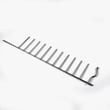
| Upper rack falls off track | Missing rail stop | Replace dishwasher dishrack slide rail stop, upper WP8565925 |
Why it matters
The lower spray arm is the main water delivery for the bottom rack. If it is loose, clogged, or not seated correctly, you can get poor cleaning, gritty residue, and water circulation noise.
Last updated: February 2026
What are common problems with Kenmore dishwashers?
Common problems with a Kenmore dishwasher like model 66513109K901 include not draining, not starting, poor cleaning, odors, leaks, and unusual noise. Many issues trace back to power supply checks, a kinked or blocked drain path, or normal maintenance items like filters and rinse aid (see the owner's manual).
Most common symptoms and what usually causes them
- Won’t start or seems dead: tripped breaker, blown house fuse, or a failed internal fuse
- Won’t drain: kinked drain hose, disposer knockout plug not removed, or a clog in the drain path
- Poor cleaning or cloudy glassware: hard water buildup, dirty filters, low rinse aid, or old detergent
- Odors: food soil buildup in filters or standing water from a partial drain restriction
- Noisy operation: items contacting spray arms, debris in the sump area, or a failing pump motor
Quick checks we recommend first (fast, no parts)
- Verify the dishwasher has power; check the house fuse/circuit breaker.
- If it won’t drain, check for kinks in the drain hose and food obstructions in the drain or disposer.
- If connected to a food waste disposer, confirm the knockout plug in the disposer inlet was removed.
- For hard water residue and cleaning issues, clean filters monthly and use rinse aid.
Parts that commonly fix these problems
| Symptom | Part that often helps | What it does |
|---|---|---|
| No power / dead control | Fuse W10258275 | Protects the dishwasher from electrical overload |
| Not draining / water left in tub | Dishwasher drain hose 8269144A | Routes drain water to the disposer or drain line |
| Poor wash, weak spray, noisy wash | Pump motor WPW10780877 | Drives water circulation through spray arms |
Why it matters
Catching a drain restriction or hard water buildup early helps prevent repeat clogs, odors, and poor wash results. Power-related checks also prevent unnecessary control or motor replacements.
Last updated: February 2026