


How do I reset my LG dryer flow sensor?
On an LG DLGX3701W dryer, the “Flow Sense” alert resets after you restore proper airflow and power-cycle the dryer. Clean the lint screen and venting first, then unplug the dryer (or switch the breaker off) for about 5 minutes and restart a cycle; the warning clears when airflow is back to normal.
- Turn the dryer off and let it sit for 1 minute.
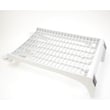
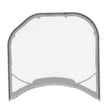
- Remove and clean the lint screen; wash off any fabric softener film, then dry it completely.
- Check the exhaust path: behind the dryer, the vent hose, and the outside hood; remove lint buildup and kinks.
- Restore power reset: unplug for 5 minutes (or turn the breaker off for 5 minutes), then power back on.
- Run a timed dry cycle for 5 to 10 minutes and confirm strong airflow outside.
Restricted airflow is the root cause, so the alert returns if the restriction is still there.
| Common issue | What you’ll notice | What to do |
|---|---|---|
| Lint screen clogged or coated | Long dry times, hot cabinet | Clean screen; wash and dry it |
| Crushed/kinked vent hose | Flow Sense returns quickly | Re-route or replace vent hose |
| Lint buildup in duct or hood | Weak airflow outside | Clean ducting and exterior hood |
| Blower or lint housing restriction | Rattling, weak airflow | Inspect blower area and lint housing |
If the venting is clear and airflow is still weak, a failed blower or a restriction inside the dryer can mimic a vent problem.
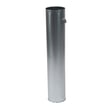
- A damaged blower wheel can reduce airflow; inspect the dryer blower wheel 5835EL1002A.
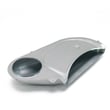
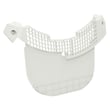
- A cracked or obstructed lint housing can leak airflow; inspect the LG dryer lint screen housing MCK49049101.
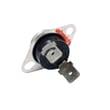
- If the dryer runs but heat seems inconsistent, a temperature-sensing issue can contribute to abnormal cycling; check the dryer thermistor AGM30045804.
Flow Sense is an airflow protection feature. Fixing the airflow improves drying performance, helps prevent overheating, and reduces nuisance shutdowns or repeated alerts.
Last updated: February 2026
Is a D90 code a serious problem for my LG dryer?
Yes. On an LG DLGX3701W dryer, a D90 code means the dryer senses a severe exhaust restriction (about 90% blocked). That is serious because it causes long dry times, overheating, and repeated shutdowns until the venting is corrected.
- Turn the dryer off and let it cool.
- Clean the lint screen and confirm it seats correctly in the housing.
- Disconnect the vent from the back of the dryer and check for packed lint right at the outlet.
- Run a short timed cycle with the vent disconnected (blowing into the room) to see if airflow is strong.
- Inspect the entire vent run to the outside hood for crushed flex duct, kinks, or long runs with multiple elbows.
- Clean the outside vent hood and confirm the flap opens fully while the dryer runs.
D90 is almost always caused by restricted airflow in the home exhaust system, not a failed control. Typical causes include lint buildup, a blocked exterior hood, a crushed duct behind the dryer, or improper vent materials.
| Test | What you’re looking for | What it suggests |
|---|---|---|
| Strong airflow with vent disconnected | Air blasts out of the dryer outlet | House venting is restricted |
| Weak airflow with vent disconnected | Little air movement | Internal airflow issue (lint blockage inside, blower problem) |
If the venting is clear and airflow is still weak, we focus on internal airflow components:
- Lint path restrictions (lint screen housing and ducting)
- Blower wheel damage or looseness
- Temperature sensing issues that cause abnormal cycling
For this model, common related parts include the LG dryer lint screen housing MCK49049101 and the dryer blower wheel 5835EL1002A.
A restricted vent traps heat and moisture in the dryer. That increases dry time, wastes gas, and can overheat components such as thermostats and sensors.
For code meanings and related checks, use our LG dryer error codes guide.
Last updated: February 2026
What is the average lifespan of an LG dryer?
Most LG dryers, including model DLGX3701W, typically last 10 to 15 years with normal household use. Consistent airflow maintenance (lint and venting) and fixing wear items early are what most often determine whether you land closer to 10 years or 15.
- Cleaning the lint screen every load and keeping the exhaust vent clear
- Avoiding chronic overloading (extra strain on the drum, belt, and motor)
- Using the right cycle and heat level for the load
- Catching noises early (roller, idler, belt wear) before they damage other parts
- Keeping the dryer level so the drum rides evenly on supports
If your DLGX3701W starts squealing, thumping, or the drum stops turning, these are the parts we check first:
- LG dryer drum belt 4400EL2001F
- Dryer drum support roller 4581EL2002H
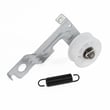
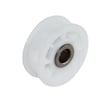
- LG dryer idler pulley 4561EL3002A
| Symptom | Most likely area | What it usually means |
|---|---|---|
| Drum will not turn, motor runs | Drive system | Belt slipped or broke; idler issue |
| Squealing or rumbling | Drum support | Worn roller(s) or idler pulley |
| Long dry times, hot cabinet | Airflow/heat control | Vent restriction or thermostat/thermistor issue |
| Shuts off early on sensor cycles | Moisture sensing | Dirty sensor bars or sensor circuit issue |
A dryer that is forced to run hot or run long (usually from restricted venting) wears out the motor, thermostats, and drum supports faster. Keeping airflow strong is the simplest way to extend the service life of an LG gas dryer.
For code-related problems that can impact run time and heating, we use the LG dryer error codes guide to pinpoint the failure faster.
Last updated: February 2026
What is the most common problem with LG dryers?
For LG dryers like model DLGX3701W, the most common problem we see is poor drying or no heat, usually caused by restricted venting (lint buildup or a crushed duct) or a failed heat-related component. The next most common issue is no tumble/noisy tumble from worn drum support parts.
- Takes too long to dry: vent restriction, lint blockage, or airflow problem
- No heat (but tumbles): thermostat/thermistor issue, burner ignition issue (gas), or airflow restriction
- No tumble (motor runs or hums): broken belt or idler problem
- Squealing, thumping, rumbling: worn rollers, idler pulley, or drum seal
- Stops mid-cycle or shows temperature-related errors: sensor or control reacting to overheating/poor airflow
- Clean the lint screen and confirm the lint screen housing is seated and not leaking air.
- Check airflow at the outside vent hood; it should be strong and steady.
- Inspect the vent duct behind the dryer for kinks, crushing, or long runs.
- Run a timed dry cycle; compare drying time with the vent connected vs. temporarily disconnected (only if safe and properly vented).
- If the dryer is gas, confirm the gas supply valve is fully open.
| Symptom | Likely area | Example part for this model |
|---|---|---|
| No tumble | Drive system | LG dryer drum belt 4400EL2001F |
| Squeal or rumble | Drum support | Dryer drum support roller 4581EL2002H |
| No heat or temp errors | Temperature sensing | Dryer thermistor AGM30045804 |
| No heat (gas ignition) | Ignition | LG dryer burner igniter 5318EL3001A |
LG dryers often point you toward the system that is failing (heat, airflow, sensors, door). Use LG dryer error codes to match the code to the most likely checks and parts.
Heat and airflow problems do more than slow drying; they can overheat the dryer, trip safety thermostats, and shorten the life of components like the blower thermostat, high-limit thermostat, and control board.
Last updated: February 2026
Why is the LG dryer not drying?
If your LG DLGX3701W dryer runs but isn’t drying, the most common causes are restricted airflow (lint screen or venting), a moisture sensor that’s coated with residue, or a heat problem in the gas burner system. Start with airflow and sensor cleaning before replacing parts.
- Clean the lint screen completely before every load.
- Check the outside vent hood for a stuck flap, lint buildup, or a crushed vent.
- Run a timed dry cycle for 10 to 15 minutes; weak airflow at the vent points to a vent restriction.
- Wipe the moisture sensor bars inside the drum with rubbing alcohol; residue can end the cycle early.
- Avoid overloading; tightly packed loads block air movement and slow drying.
| What you notice | Most likely issue | What to do first |
|---|---|---|
| Clothes warm but still damp | Vent restriction or poor airflow | Inspect and clean venting end-to-end |
| Dryer stops early on sensor cycles | Dirty moisture sensor | Clean sensor bars; try timed dry |
| No heat at all | Ignition/heating circuit problem | Check for burner ignition; test heat components |
| Loud squeal or thump plus poor drying | Drum not turning correctly | Inspect belt, idler, and rollers |
If airflow is good and the dryer still won’t dry, these model-matched parts are common culprits:
- Dryer moisture sensor 6500EL3001A (sensor cycles end early when readings are wrong)
- Dryer thermistor AGM30045804 (temperature sensing issues can reduce heat or cycle time)
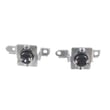
- Dryer high-limit thermostat 6931EL3003C (can open if overheating occurs)
- Dryer blower thermostat 6931EL3002M (controls blower housing temperature)
- LG dryer burner igniter 5318EL3001A (gas models: failed igniter can prevent heat)
Drying performance depends on three things working together: strong airflow, accurate moisture/temperature sensing, and steady heat. A clogged vent can also cause overheating, which can trip thermostats and make drying worse over time.
For display codes or sensor-related shutdowns, use our LG dryer error codes guide to match the code to the most likely cause and next steps.
Last updated: February 2026