 Owner’s manual



How to identify a Kenmore washer model?
You can identify your Kenmore washer model by finding the model/serial label on the machine and matching the full model number exactly (for this page, it is 11047561601). On front-load washers like Kenmore 11047561601, the label is commonly in the door opening area.
Where to look on Kenmore washers
Check these common label locations first:
- Behind the washer door, on the door frame or door jamb
- Along the inside edge of the door opening
- On the back of the control panel
- On the side of the main cabinet near the bottom
- On the rear panel (less common, but worth a quick look)
What the model number looks like
Kenmore model numbers are usually a long number string. For this washer family, the manual shows models in the 110.4756 and 110.4757 series (with a color number after it), so your tag may look similar.
| What you see on the tag | What it means | What to do |
|---|---|---|
| 110.4756### or 110.4757### | Model series | Write down every digit |
| Extra digits after the series | Color/variant code | Include them when ordering parts |
| Serial number | Production identifier | Keep for service records |
Tips to avoid ordering the wrong parts
- Copy the model number exactly as printed (include all digits)
- If there is a dot (example: 110.4756), record it, but use the full number format when searching parts
- Match the model number on the tag to the model number on your parts list page
- Use the model number to reference the correct diagrams and part list in the 11047561601 owner's manual
Why it matters
Kenmore washers can look nearly identical across series, but small model-code differences change parts like the door boot, drain pump, control board, and drive belt. Using the exact model number keeps the part fit and troubleshooting steps aligned with your washer.
Last updated: February 2026
What is the average lifespan of a Kenmore washer?
A Kenmore washer typically lasts 10 to 15 years with normal household use and routine care. For your Kenmore model 11047561601, following the maintenance and cleaning steps in the 11047561601 owner's manual helps you get the longest, most reliable service life.
Typical lifespan by use
| Use pattern | Typical lifespan | What shortens it most |
|---|---|---|
| Light (1 to 3 loads/week) | 12 to 15 years | Long idle periods, musty buildup |
| Average (4 to 7 loads/week) | 10 to 13 years | Overloading, too much detergent |
| Heavy (8+ loads/week) | 7 to 10 years | Wear on drain, drive, and suspension |
What most affects washer life
- Load size and balance: chronic overloading and out-of-balance loads increase wear.
- Detergent habits: excess HE detergent can cause residue and odors that lead to extra cleaning and stress on components.
- Water quality: hard water speeds mineral buildup.
- Ventilation: leaving the door closed after use traps moisture and promotes odors.
- Preventive maintenance: periodic cleaning and hose checks reduce surprise failures.
Signs it is nearing end of life
- Frequent drain problems or standing water after cycles.
- Persistent leaks around the door area (often tied to the door boot and clamps).
- Loud banging or walking that returns even after leveling.
- Repeated control or cycle issues.
- Repairs start stacking up (multiple major parts in a short time).
How to extend the life of model 11047561601
- Run the cleaning routine described in the 11047561601 owner's manual.
- Check inlet hoses periodically and replace aging hoses before they burst.
- Use the correct amount of HE detergent and avoid chronic overloading.
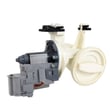
- Address draining issues early; a weak or noisy pump is a common wear item (see water pump WPW10730972).
Why it matters
Most washer breakdowns that feel “sudden” come from gradual wear (drain, drive, or leak-related). Simple care steps and early part replacement often add years of dependable operation.
Last updated: February 2026
Is it worth repairing a Kenmore washing machine?
Yes, repairing a Kenmore washer is worth it when the fix restores reliable operation for less than replacing the machine, especially on a solid model like Kenmore 11047561601. Start by identifying whether the failure is a normal wear item (belt, pump, door boot) or a major component.
A practical repair vs. replace checklist
We use these decision points to make the call quickly:
- Repair cost vs. replacement cost: If the repair is clearly less than a comparable new washer, repair wins.
- What failed: Wear items (belt, pump, door boot, clamps) are usually good-value repairs.
- Age and condition: If the tub, basket, and cabinet are in good shape, repairs tend to pay off.
- Repeat failures: Frequent breakdowns point to deeper issues (wiring, control, motor, suspension).
- Downtime: If you need a fast fix, common in-stock parts can get you running sooner.
Common repairs on model 11047561601 (and what they usually mean)
Many “not draining” or “leaking” complaints come down to a few parts.
| Symptom | Likely area | Example part for this model |
|---|---|---|
| Won’t drain, water left in drum | Drain system | Water pump WPW10730972 |
| Leaks at door, musty smell | Door seal area | Washer door boot WPW10111435 |
| Loud thumping, walking | Suspension or leveling | Check leveling legs and floor |
| Won’t spin or slips | Drive system | Washer drive belt WP8540101 |
Why it matters
A targeted repair keeps a good washer out of the landfill and avoids the learning curve and installation hassles of a new unit. The Kenmore 11047561601 manual also emphasizes routine care and troubleshooting steps that can prevent repeat problems. See the Kenmore 11047561601 owner's manual for model-specific troubleshooting and maintenance guidance.
Safety and planning notes we follow
- Unplug the washer before servicing.
- Shut off both water faucets before disconnecting hoses.
- Do not reach into the washer if the drum is moving.
- Use only HE detergent in the correct amount to avoid oversudsing issues.
Last updated: February 2026






