Owner’s manual
 Error Codes



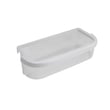
How many cubic feet is a Kenmore upright freezer model 59669312010?
Kenmore model 59669312010 is a bottom-mount refrigerator, not an upright freezer, so its cubic-foot capacity is different from upright freezer models. The exact capacity for this specific refrigerator is listed in the product specifications section of the 59669312010 owner's manual.
To avoid ordering the wrong parts or comparing the wrong specs, match the model number to the appliance style:
- 59669312010: Kenmore bottom-mount refrigerator (fresh food on top, freezer drawer on bottom)
- Upright freezer: a different product type with different capacity ranges and shelving layout
- If you need upright freezer capacity, confirm the upright freezer model number from the rating plate
If you are estimating space while you locate the exact spec, these typical ranges help:
| Appliance type | Typical capacity range | What it’s used for |
|---|---|---|
| Upright freezer | 14 to 21 cu. ft. | Bulk frozen storage |
| Bottom-mount refrigerator | 18 to 25 cu. ft. | Fresh + frozen storage |
We recommend checking these spots first:
- The specifications section in the 59669312010 owner's manual
- The model and serial tag inside the refrigerator compartment (often on a side wall)
- Any product label information that lists “Capacity” or “Total volume”
Capacity is tied to the cabinet size and internal layout; it affects shelf, bin, and gasket fitment. For example, if you are replacing storage components like the refrigerator crisper pan W10833528 or sealing parts like a door gasket, you want to stay matched to the exact refrigerator model.
Last updated: February 2026
Why is my refrigerator not getting cold at the bottom?
If your Kenmore refrigerator model 59669312010 is warm at the bottom, the most common cause is poor cold-air circulation from the freezer into the fresh-food section (blocked vents, frost buildup, or a weak evaporator fan). Start by clearing vents and confirming the evaporator fan is running.
- Make sure food packages are not blocking the return or supply vents (especially on the back wall).
- Set the refrigerator to 37°F and the freezer to 0°F, then allow 24 hours to stabilize.
- Check for heavy frost on the freezer back panel (a sign of a defrost airflow problem).
- Listen for the evaporator fan when the compressor is running (a steady fan sound from the freezer area).
- Confirm the door closes fully and the gasket seals all the way around.
Cold air is made in the freezer and moved by the evaporator fan; it then travels through ducts into the refrigerator section. When airflow is restricted, the bottom shelves and crisper area often warm up first.
| Symptom | Most likely cause | What to do next |
|---|---|---|
| Top is cooler than bottom | Blocked vents or overpacked shelves | Reorganize to leave space around vents |
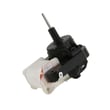
| Freezer cold, fridge warm | Evaporator fan issue | Inspect fan area; consider refrigerator evaporator fan motor WPW10128551 |
| Frost/ice on freezer back wall | Defrost system airflow restriction | Defrost manually, then monitor for repeat |
| Temps swing, odd behavior | Control or sensor issue | Check settings; consider refrigerator thermistor 12002355 |
If airflow checks point to a fan problem, these model-matched parts are common fixes:
- Refrigerator evaporator fan motor WPW10128551 (moves cold air through the compartments)
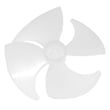
- Refrigerator evaporator fan blade WP2169142 (a cracked or loose blade reduces airflow)
- Refrigerator thermistor 12002355 (helps the control sense temperature accurately)
Running warm at the bottom can push food above safe temperatures and also forces the compressor to run longer, which increases energy use and can accelerate wear on cooling components.
For vent locations, temperature adjustment steps, and compartment airflow guidance for Kenmore 59669312010, use the 59669312010 owner's manual.
Last updated: February 2026
What are the common problems with Kenmore Elite refrigerators?
Kenmore Elite refrigerators (including Kenmore model 59669312010) most often have cooling problems, ice maker and water issues, and door sealing or airflow problems. In many cases, the fix is basic maintenance (coil cleaning, clearing vents) or replacing a failed fan motor, sensor, or control.
- Not cooling or warm temperatures: dirty condenser coils, blocked air vents, or a failing compressor
- Freezer cold but fresh food warm: evaporator fan not moving air, frost buildup from a defrost problem
- Ice maker not making ice: water supply restriction, frozen fill tube, or dispenser/ice maker component issue
- Water leaks or puddles: clogged defrost drain or drain tube
- Door not sealing: torn or warped gasket causing frost, sweating, and temperature swings
- Set temps to typical targets: 0°F freezer, 37°F refrigerator.
- Make sure vents are not blocked by food packages.
- Clean condenser coils and confirm the condenser fan (if equipped) runs when the compressor runs.
- Listen for the evaporator fan in the freezer; no fan airflow usually means a fan or control issue.
- Check for ice or debris in the drain area if you see water under drawers.
| Symptom | Common cause | Example part for this model |
|---|---|---|
| Fresh food warm, freezer OK | Evaporator fan not running | Refrigerator evaporator fan motor WPW10128551 |
| Temps fluctuate or read wrong | Bad temperature sensor | Refrigerator thermistor 12002355 |
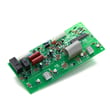
| Random cooling issues, dead display, odd behavior | Control problem | Refrigerator electronic control board WPW10503278 |
| Water pooling inside | Drain restriction | Refrigerator drain tube W10619951 |
| Frost, sweating, poor cooling | Door air leak | Refrigerator door gasket (white) WPW10443309 |
A small airflow restriction or door leak can force longer run times, create frost buildup, and make the refrigerator section warm even when the freezer seems fine. Catching these early helps prevent food spoilage and reduces strain on the compressor.
- Use the 59669312010 owner's manual to confirm temperature settings, control features, and model-specific operating checks.
- If your refrigerator shows an error code, start with Kenmore 111 model bottom freezer refrigerator error codes for code meanings and common fixes.
Last updated: February 2026