Owner’s manual
 Error Codes



How do I remove the base grille on my Whirlpool refrigerator?
To remove the base grille on your Whirlpool GI6FARXXY06 bottom-mount refrigerator, grasp the grille firmly at the bottom front of the cabinet and pull it straight toward you until it releases. This is the same step used for leveling adjustments and condenser cleaning in the GI6FARXXY06 owner's manual.
Steps to remove the base grille
- Unplug the refrigerator if you plan to clean behind the grille (recommended for safety).
- Stand in front of the refrigerator and locate the base grille at the very bottom.
- Grasp the grille firmly with both hands.
- Pull the grille straight toward you to release the retaining clips.
- Set the grille aside where it will not get stepped on or warped.
Reinstalling the base grille
- Align the grille with the openings at the bottom front of the refrigerator.
- Press evenly along the grille until it snaps back into place.
- Confirm it sits flush and does not rattle.
Why it matters
Removing the base grille gives you access to key service areas, including the front leveling screws (used to steady the cabinet and improve door closing) and the condenser area for periodic dust and pet-hair cleanup.
Quick reference
| Task | Do you remove the base grille? | Typical tool needed |
|---|---|---|
| Level the refrigerator | Yes | 1/4-inch hex driver |
| Clean condenser area | Yes | Vacuum with soft brush |
| Door removal procedure | Yes | Hand pull (grille), then hand tools for hinges |
Last updated: February 2026
Is a bottom mounted refrigerator good?
Yes. A bottom-mount refrigerator like the Whirlpool GI6FARXXY06 is a good choice when you want everyday fresh-food items at eye level and a freezer drawer below. It typically improves convenience and reduces bending compared with top-freezer designs, while still offering strong storage and organization.
Why many people prefer bottom-mount designs
- Fresh food is easier to reach because it sits higher in the cabinet.
- Freezer storage is usually a pull-out drawer, which helps with organization.
- Wide refrigerator doors can make it easier to load large platters.
- Many models include ice and water features (plan space behind the unit for the water line).
- Bottom-mount layouts often feel more “kitchen-friendly” for daily use.
Trade-offs to consider
Bottom-mount refrigerators are not automatically “better” for every home. Here are the common downsides to weigh:
- Freezer access can require more bending (especially for heavy frozen items).
- French-door styles need door-swing clearance near walls.
- Some bottom-mount models cost more than basic top-freezer units.
- Drawer slides and door gaskets can wear over time and may need replacement.
Installation and clearance basics (GI6FARXXY06)
Our GI6FARXXY06 manual calls out ventilation and clearance targets that help performance and door operation.
| Clearance area | Typical requirement for this model | Why it matters |
|---|---|---|
| Sides and top | 1/2 in. (1.25 cm) | Airflow and cooling efficiency |
| Behind unit | 1 in. (2.54 cm) | Airflow; room for connections |
| Next to a fixed wall | 3 3/4 in. (9.5 cm) minimum | Door swing clearance |
See the exact guidance in the owner's manual.
Why it matters
A refrigerator that fits your cooking habits and your kitchen layout stays more efficient, seals better, and is less likely to have nuisance issues like doors not closing easily (leveling and door alignment are key on bottom-mount and French-door designs).
Last updated: February 2026
What's the average lifespan of a whirlpool refrigerator?
A Whirlpool refrigerator typically lasts about 13 years on average. For your Whirlpool GI6FARXXY06 bottom-mount refrigerator, good airflow, correct temperatures, and routine maintenance (like keeping seals tight and coils clean) are the biggest factors that help it reach or exceed that lifespan; see the GI6FARXXY06 owner's manual for model-specific care guidance.
Typical lifespan and what to expect
Most full-size Whirlpool refrigerators fall into a predictable range:
| What you’re measuring | Typical range | What it means for you |
|---|---|---|
| Average service life | ~13 years | Common point where repairs become more frequent |
| Common “good run” | 10 to 15 years | Normal with basic maintenance |
| Often achievable with strong upkeep | 15+ years | Depends on usage, environment, and repairs |
What shortens refrigerator life fastest
These are the most common lifespan reducers we see in the field:
- Dirty condenser area (restricted airflow makes the compressor work harder)
- Door gaskets not sealing (warm air intrusion causes longer run times)
- Overpacked compartments blocking vents (uneven cooling and frost issues)
- Warm room or tight cabinet clearance (heat cannot dissipate)
- Skipped filter changes on dispenser models (can contribute to low flow and valve strain)
Maintenance that helps GI6FARXXY06 last longer
Use this as a simple, repeatable routine:
- Keep fresh food at 37°F and freezer at 0°F
- Clean dust from the condenser area periodically (more often with pets)
- Check door seal contact all the way around; correct gaps and keep gaskets clean
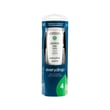
- Replace the water filter on schedule if you use the dispenser; the correct filter for this model is the refrigerator water filter EDR4RXD1
- Level the refrigerator so doors close fully and consistently
Why it matters
A refrigerator that runs longer cycles due to airflow restrictions or air leaks puts extra load on the sealed system (compressor, condenser, evaporator). Reducing run time and keeping temperatures stable is the most reliable way to extend service life.
Last updated: February 2026
What is the most common problem with whirlpool refrigerators?
The most common Whirlpool refrigerator problems are cooling issues (warm fridge or freezer), ice maker or water dispenser problems, and door sealing issues that cause temperature swings and frost. For Whirlpool model GI6FARXXY06, our owner's manual troubleshooting section walks through the first checks to avoid unnecessary repairs.
Most common issues we see (and what they usually point to)
- Not cooling or weak cooling: dirty condenser area, failed condenser fan motor, sealed-system issue, or control problem
- Ice maker not making ice: clogged filter, low water pressure, frozen fill tube, or inlet valve problem
- Water dispenser slow or not dispensing: restricted water filter, air in the line, or inlet valve issue
- Frost buildup or moisture: door gasket not sealing, door alignment, or frequent door openings
- Lights not working: burned-out bulb or a failed door/light switch
Quick checks to try first (GI6FARXXY06)
- Confirm the unit has power and the controls are turned on (the manual lists these as first troubleshooting steps).
- Set temperatures to typical targets: 37°F for fresh food and 0°F for freezer; allow 24 hours to stabilize.
- If water or ice is slow, replace the filter and purge the dispenser line.
- Inspect door gaskets for gaps, tears, or areas that do not grip a dollar bill.
- Listen for the condenser fan near the compressor; it should run when the compressor is running.
Common symptoms and the parts that often fix them
| Symptom | Most likely area | Example part for GI6FARXXY06 |
|---|---|---|
| Slow water, bad taste/odor | Water filtration | Refrigerator water filter EDR4RXD1 |
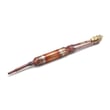
| No ice or no water fill | Water supply/inlet valve | Refrigerator inlet valve WPW10498990 |
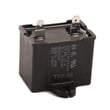
| Warm temps, compressor runs a lot | Airflow at condenser | Refrigerator condenser fan motor W11613295 |
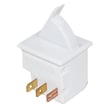
| Interior light stays off | Door/light switch | Refrigerator light switch W11396033 |
| Frost, sweating, poor seal | Door gasket | Refrigerator gasket panel (gray) W10830055 |
Why it matters
Cooling, ice, and water problems often share the same root causes: restricted airflow, restricted water flow, or a poor door seal. Catching those early helps protect food temperatures, reduces compressor run time, and prevents repeat failures.
Last updated: February 2026