Installation guide
 Owner’s manual
 Error Codes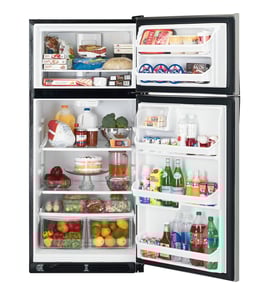




Are top mount or bottom mount fridges better?
Top-mount refrigerators (like the GE GIE21GSHCSS top-freezer design) are typically the better choice for value and efficiency; bottom-mount models are typically better for everyday convenience because fresh food sits at eye level.
Quick comparison
- Choose top-mount if you want strong energy efficiency, simpler design, and a lower purchase price.
- Choose bottom-mount if you want less bending for daily fridge use and easier access to fresh food.
- Either style can cool well; door sealing, airflow, and proper leveling matter more than freezer location.
| Feature | Top-mount (top freezer) | Bottom-mount (bottom freezer) |
|---|---|---|
| Fresh food access | Lower, more bending | Higher, less bending |
| Energy use (typical) | Lower | Higher |
| Cost (typical) | Lower | Higher |
| Complexity | Simpler | More complex (often more drawers/rails) |
| Best for | Budget, efficiency, fewer repairs | Convenience, frequent fridge access |
What we recommend for most homes
- If you open the refrigerator section many times a day, a bottom-mount usually feels better long-term.
- If you want a dependable, efficient layout with fewer “extras,” a top-mount is usually the smarter buy.
- If you have back or knee pain, prioritize fresh-food height (often bottom-mount).
- If you use the freezer more than the fridge, a top-mount can be more convenient.
- If you are tight on space, compare door swing and clearance requirements in the GIE21GSHCSS owner's manual.
Why it matters
Freezer placement affects ergonomics and operating cost, but day-to-day performance depends heavily on setup and maintenance. For example, keeping doors aligned and sealed and setting the unit level helps doors close properly and supports stable temperatures.
Last updated: February 2026
What are the disadvantages of a top mount fridge?
Top-mount (top-freezer) refrigerators like the GE GIE21GSHCSS are reliable and efficient, but the main disadvantages are less convenient fresh-food access (you bend more), fewer premium organization features, and fewer built-in dispenser options compared with many bottom-freezer or side-by-side designs. See the GIE21GSHCSS owner's manual for your exact storage features and control layout.
Common disadvantages (what most owners notice)
- Fresh-food items sit lower: you reach down more often for produce, drinks, and leftovers.
- Freezer is easiest to access: great if you use frozen food a lot; less ideal if you mostly use the refrigerator section.
- Fewer “premium” organization options: many top-mount models have simpler bins, drawers, and shelf adjustability.
- Less common to have external water or ice dispensing: many top-mount designs skip door dispensers.
- Smaller freezer opening: bulky boxes can be harder to maneuver in and out.
Quick comparison: top-mount vs. bottom-mount
| Feature | Top-mount (top-freezer) | Bottom-mount (bottom-freezer) |
|---|---|---|
| Fresh-food access | Lower, more bending | Higher, easier daily access |
| Freezer access | Eye-level | Lower drawer/basket |
| Organization | Often simpler | Often more flexible |
| Typical cost/complexity | Often lower/simpler | Often higher/more features |
Tips to reduce the downsides on a top-mount
- Keep everyday items on the upper refrigerator shelves to reduce bending.
- Use bins consistently (dairy, snacks, condiments) so items do not get lost.
- Avoid blocking rear air vents; it helps prevent uneven temps and freezing in the fresh-food section.
- If odors build up, follow the cleaning guidance in the manual; strong-smelling foods should be tightly wrapped.
Why it matters
Choosing a refrigerator style is mostly about daily ergonomics and how you store food. If you open the fresh-food section far more than the freezer, a bottom-mount can feel more convenient. If you want simpler design and easy freezer access, a top-mount is often a solid fit.
Last updated: February 2026
What is the average lifespan of a GE refrigerator?
Most GE refrigerators average 12 to 16 years of service life. For a top-freezer model like GE GIE21GSHCSS, consistent temperatures, clean airflow at the condenser area, and timely fixes for issues like icing or fan noise are what most often determine whether it reaches the high end of that range.
Typical lifespan ranges (what to expect)
Refrigerator life varies most by design complexity and how hard the sealed system has to work.
| Refrigerator type | Typical lifespan | Notes |
|---|---|---|
| Top-freezer (like GIE21GSHCSS) | 12 to 16 years | Usually the longest-lasting style due to simpler design |
| Side-by-side | 10 to 15 years | More components (dispenser, controls) can add wear points |
| French door | 9 to 14 years | Often more features; ice maker and airflow issues are common repair drivers |
What shortens refrigerator life fastest
We see these conditions cause the most premature failures across GE refrigerators:
- Dirty condenser area causing higher compressor run time
- Warm kitchen or tight cabinet clearance reducing heat dissipation
- Door seal leaks letting humid air in (leads to frost and longer run times)
- Ice maker or water system leaks creating corrosion and ice buildup
- Ignoring early symptoms (clicking, buzzing, warming, heavy frost)
Maintenance that helps you hit the 12 to 16-year mark
Use these habits to reduce strain on the compressor, evaporator fan, and defrost system:
- Keep the fresh food at 37°F and freezer at 0°F (adjust gradually)
- Clean dust from the condenser area regularly
- Confirm doors close easily; adjust leveling legs if needed (see the GIE21GSHCSS owner’s manual)
- Fix frost buildup promptly (defrost problems can lead to warm temps)
- If you have an ice maker, keep the water supply line and fittings in good condition
Repair vs. replace: a simple rule of thumb
This helps decide when a repair makes sense.
| If your refrigerator is… | Usually makes sense to… |
|---|---|
| Under 8 years old | Repair most issues |
| 8 to 12 years old | Repair if the cost is reasonable and cooling is stable |
| Over 12 years old | Repair smaller issues; consider replacement for major sealed-system work |
Why it matters
A refrigerator that runs longer to maintain temperature uses more energy and wears out key components faster. Basic upkeep and quick troubleshooting protect high-cost parts like the compressor and keep food temperatures safe.
Last updated: February 2026
What is the most common problem with GE profile refrigerators?
On GE refrigerators like model GIE21GSHCSS, the most common customer complaints are ice maker issues (no ice or slow ice) and temperature problems (warm fridge or freezer). These symptoms usually trace back to airflow, defrost, or control and sensor-related problems rather than the sealed system.
Most common symptoms we see
- Ice maker not making ice or making small/hollow cubes
- Freezer cold but fresh food section warm
- Frost buildup on the back wall of the freezer
- Fan noise changes, or no fan sound when the door is closed
- Door not sealing well, causing temperature swings and moisture
Quick checks before replacing parts
Use these steps first because they solve many “common problem” calls:
- Confirm controls are not set to “off” or too warm (see the temperature control section in the GIE21GSHCSS owner’s manual).
- Make sure doors close fully and the cabinet is level; poor leveling can cause doors to pop open.
- Check for blocked vents (packages pushed against air returns).
- If you have an ice maker, confirm the unit is connected to a cold water line and the shutoff valve is fully open.
- Listen for normal operating sounds (humm, whoosh, gurgle) versus grinding or repeated clicking.
What the symptom usually points to
| Symptom | Most likely area | Example part on this model page |
|---|---|---|
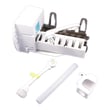
| No ice / slow ice | Ice maker assembly or water supply | GE refrigerator ice maker kit WR30X10093 |
| Frost buildup, warming | Defrost system | Refrigerator defrost heater WR09X24623 |
| Warm temps, weak airflow | Evaporator fan | Refrigerator evaporator fan assembly (model-specific) |
| Door not closing, moisture | Leveling or door seal | Ff gasket dg WR14X42866 |
Why it matters
Ice production and cooling performance depend on steady airflow and stable temperatures. A small issue like a door not sealing or a frosted evaporator can quickly turn into warm food temps, excess moisture, and repeated ice maker failures.
Last updated: February 2026