 Owner’s manual


How do I reset the lid lock on a Maytag washer?
For a Maytag MTW6700TQ1 washer, we reset a lid lock by stopping the cycle correctly so the control unlocks the lid: press PAUSE/CANCEL once, wait for the Lid Lock light to turn off, then open and close the lid and press START. For a stuck lock, cancel and drain the cycle.
Quick reset steps (most common)
- Press PAUSE/CANCEL once to pause.
- Wait until the Lid Lock status light turns off.
- Open the lid, then close it firmly.
- Press START to resume.
- If you need to fully stop the cycle, press PAUSE/CANCEL twice; the washer drains and turns off.
For the exact button behavior and indicator lights on MTW6700TQ1, follow the owner's manual.
If the lid stays locked
1) Cancel and drain (forces an unlock after draining)
- Press PAUSE/CANCEL twice.
- Wait for draining to finish.
- When the Lid Lock light turns off, open the lid.
2) Power reset
- Turn the washer OFF.
- Unplug for 5 minutes.
- Plug back in, select a cycle, and press START.
3) Check for a lid lock hardware problem
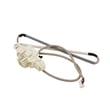
If the washer will not start, stops mid-cycle, or the lid never unlocks after draining, the lid lock assembly can be failing. On this model, a common replacement is the washer lid lock WPW10619844.
What the lights and buttons mean on MTW6700TQ1
| What you see | What it means | What we do |
|---|---|---|
| Lid Lock light on | Lid is locked | Wait; do not force the lid |
| Lid Lock light off | Lid can open | Open lid, add item if needed |
| PAUSE/CANCEL pressed twice | Cycle stops | Washer drains, then turns off |
Why it matters
The lid lock is a safety feature; the washer will not spin at high speed with the lid open. Resetting it the right way prevents broken lid strikes, damaged hinges, and repeat “won’t start” symptoms.
Last updated: February 2026
What's the average lifespan of a Maytag washer?
Most Maytag washers, including the Maytag MTW6700TQ1, typically last 10 to 13 years with normal household use. Lifespan depends most on load size, cycle frequency, and routine care such as keeping the washer clean and maintaining good water flow.
What affects washer lifespan the most
- Overloading (stresses the drive system, hub, and suspension)
- Frequent heavy cycles (bulky, heavy towels, bedding)
- Poor draining (standing water strains the drain pump)
- Unbalanced loads (extra wear on suspension and spin components)
- Hard water and detergent buildup (odor, residue, and performance issues)
Maintenance that adds years (practical checklist)
We recommend these habits for the MTW6700TQ1:
- Use HE (High Efficiency) detergent and avoid overdosing.
- Run a periodic cleaning cycle; the owner's manual outlines washer care and cleaning.
- Check fill performance if the washer takes too long to fill; clogged hose screens and inlet screens are common.
- Prevent drain slowdowns by keeping the drain hose properly installed and unkinked.
- If you see frequent off-balance behavior, reduce load size and redistribute items.
Common wear areas and related parts
If performance issues start showing up, these parts are often involved:
| Symptom | Common area | Example part for MTW6700TQ1 |
|---|---|---|
| Loud banging or walking | Suspension | Washer suspension W10820048 |
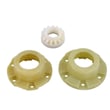
| Won’t spin or poor agitation | Drive connection | Hub W10820039 |
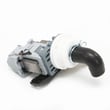
| Slow or no drain | Drain system | Pump-water W10536347 |
| Lid won’t lock or cycle won’t start | Safety interlock | Washer lid lock WPW10619844 |
Why it matters
A washer that is filling slowly, draining slowly, or repeatedly going out of balance works harder every cycle. Fixing those issues early helps protect major components (motor drive, tub support, and suspension) and helps you get the full 10 to 13 years.
Last updated: February 2026
What is the most common problem with a Maytag washer?
The most common problems we see on a Maytag washer like model MTW6700TQ1 are drain and spin troubles caused by a kinked or clogged drain hose, excessive suds from using too much detergent, or an unbalanced load. These issues often show up as long fill or long drain code messages.
Most common symptoms and what they usually mean
- Won’t drain or won’t spin; water left in tub: drain hose height/routing issue, clog, or a drain pump problem
- Long fill (LF) message: kinked inlet hoses or clogged inlet valve screens
- Long drain (LD) message: kinked/clogged drain hose or improper drain hose installation
- Unbalanced load (uL) message: load is off-balance and the washer is trying to correct before final spin
- Stops mid-cycle or seems stuck: drain hose setup can cause siphoning or slow draining
Quick checks we recommend first (MTW6700TQ1)
Use these checks before replacing parts; they match common causes called out in the owner's manual.
- Confirm the lid is fully closed; the washer will not operate with the lid open
- Check the drain hose for kinks/clogs and confirm it is installed correctly
- Verify the drain hose standpipe setup:
- Top of drain hose is at least 39 in. above the floor
- End of drain hose is not more than 96 in. above the floor
- Drain hose is not sealed or taped to the standpipe (it needs an air gap)
- Reduce suds: use HE detergent and measure carefully (soft water often needs less)
- Redistribute the load if you get repeated uL (unbalanced) behavior
Parts that commonly solve drain/spin complaints
If the hose setup is correct and the washer still drains slowly or won’t spin out, these parts are common next steps:
| Symptom | Common part to check | Part anchor |
|---|---|---|
| Hums but won’t drain, or drains very slowly | Drain pump | Pump-water W10536347 |
| Lid won’t lock, won’t start spin, or stops | Lid lock | Washer lid lock WPW10619844 |
| Shakes, bangs, or goes out of balance easily | Suspension | Washer suspension W10820048 |
Why it matters
Drain, spin, and balance problems can leave clothes soaking wet, trigger repeated cycle pauses, and put extra strain on the drive system. Correct hose installation and proper HE detergent use prevent many “no drain” and “no spin” service calls.
Last updated: February 2026
Can I still use my washer with an F7E1 error?
No. On a Maytag MTW6700TQ1 washer, an F7E1 error points to a drive or speed-sensing problem that can stop proper agitation or spinning; continuing to run cycles can leave clothes soaking wet and can strain the motor system. Use the checks below, then run a test cycle.
What to do first (safe, quick checks)
- Press PAUSE/CANCEL to stop the cycle.
- Unplug the washer for 5 minutes, then plug it back in to reset the control.
- Make sure the load is evenly distributed; mix large and small items to keep the basket balanced.
- If you see suds or the washer shows a suds-related message, switch to HE detergent only and reduce the amount (regular detergent can trigger errors and long cycle times).
- If the washer will not proceed because the lid will not lock, check for clothing caught at the lid and confirm the lid closes fully.
Why this error happens on this washer
This washer uses a direct-drive motor (no transmission). When the control cannot confirm the expected motor speed or movement, it can throw an F7E1-type fault and stop the cycle.
Common causes (most likely first)
- Load out of balance or overloaded basket
- Excess suds from non-HE detergent or too much detergent
- Lid not locking consistently
- Drive system issue (hub, rotor, stator, or related sensing)
- Wiring connection problem in the drive circuit
Parts that commonly relate to spin or drive issues
If the washer fills and drains but will not agitate or spin correctly after the reset and load checks, these model-listed parts are common suspects:
| Symptom you notice | What it often points to | Example part on this model page |
|---|---|---|
| Basket will not spin, grinding, or slipping | Worn drive connection | Hub W10820039 |
| Loud banging, off-balance during spin | Weak suspension | Washer suspension W10820048 |
| Hums but will not spin, intermittent spin | Motor drive components | Rotor 280146 or stator WPW10419333 |
Why it matters
F7E1 is a performance-stopping fault; it usually means the washer cannot control or verify basket movement. Fixing the underlying cause prevents repeat shutdowns, poor rinsing, and wet loads.
For cycle setup, detergent guidance (HE only), and operating notes, use the owner's manual.
Last updated: February 2026





