Owner’s manual


Is 4.5 cu ft a large capacity washer?
Yes. In washer sizing, 4.5 cu. ft. is considered large capacity; it is typically big enough for bulky items like a comforter or a large towel load. Your Whirlpool LXR7244JQ0 is a compact washer, so its usable capacity is smaller than 4.5 cu. ft.; use the load size selector guidance in the LXR7244JQ0 owner's manual.
What “large capacity” usually means
Washer capacity is the tub volume. In practical terms, most 4.5+ cu. ft. washers can handle:
- A king-size comforter (varies by fill and fabric)
- A large mixed load (multiple shirts, towels, and sheets)
- Fewer loads per week for a typical household
- Better room for items to move, which can improve cleaning and rinsing
How to compare 4.5 cu. ft. to common washer sizes
Use this as a quick reference when shopping or comparing models.
| Capacity range | Common label | Best for |
|---|---|---|
| 2.0 to 3.0 cu. ft. | Compact | Apartments, small loads, limited space |
| 3.1 to 4.4 cu. ft. | Standard | Everyday family laundry |
| 4.5 cu. ft. and up | Large | Bulky items, fewer loads, larger households |
How to load your Whirlpool LXR7244JQ0 for best results
Even without a 4.5 cu. ft. tub, you can get strong cleaning by loading correctly and matching the water level.
- Load items loosely; do not pack or compress laundry
- Keep the top of the load below the tub rim so items can circulate
- Match the water level to the load size (too low can reduce rollover action)
- Balance heavy items (for example, wash one blanket with a few towels)
- If the washer struggles to agitate, reduce the load and retry
Why it matters
Capacity affects cleaning, wear, and cycle performance. Overloading a compact top-load washer can reduce agitation rollover, increase vibration, and contribute to spin or drain complaints (which can also involve parts like the washer drain pump WP3363394).
Last updated: February 2026
Where is the drain pump filter on a whirlpool LXR7244JQ0 washer?
On the Whirlpool LXR7244JQ0 compact top-load washer, there is not a user-accessible drain pump filter like you see on many front-load washers. This model uses a self-cleaning lint filter in the bottom of the wash basket, and lint is carried out during the spin cycle (details are in the LXR7244JQ0 owner's manual).
What you can clean instead (and where to look)
If you are chasing a drain problem, the “filter” maintenance points on this washer are typically in the drain path, not behind a front access door.
- Check the drain hose for kinks, clogs, or a crushed section behind the washer.
- Confirm the drain hose height is correct; the hose end should not be more than about 72 inches above the floor.
- If the washer drains into a laundry tub, remove lint collected in the tub or strainer.
- If the washer will not drain or spin, reduce oversudsing by using less detergent.
- If you suspect an internal blockage or weak draining, inspect the pump and pump hoses.
Parts that are commonly involved in “won’t drain” symptoms
If the washer hums but does not drain, drains slowly, or leaves water behind, these parts are the most common suspects for this direct-drive style top-load design:
| Symptom | Most likely area | What to check first |
|---|---|---|
| Won’t drain at all | Pump or blockage | Pump inlet/outlet ports, coins/socks in hoses |
| Drains slowly | Hose restriction | Drain hose, standpipe, laundry tub strainer |
| Drains but won’t spin | Lid switch or drive system | Lid switch function, coupling/clutch symptoms |
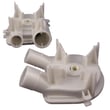
If you determine the pump is failing or jammed, the correct replacement for this model is the washer drain pump WP3363394.
Why it matters
A front-load style pump filter is meant to catch debris before it reaches the pump. On the LXR7244JQ0, debris that gets past the basket area can lodge in the pump or hoses, causing slow draining, no-drain, or a “gurgling/air” sound near the end of draining.
Last updated: February 2026
How do I reset the lid lock on my Whirlpool washer?
On the Whirlpool LXR7244JQ0, the quickest way to clear a lid lock issue is a power reset: unplug the washer (or switch off the breaker) for 5 minutes, restore power, then close the lid and restart the cycle. If the lock still will not release, the problem is usually the lid switch/lock mechanism or the control timer.
Quick reset steps (safe, no tools)
- Turn the Cycle Control knob to Off.
- Unplug the washer for 5 minutes.
- Plug it back in.
- Close the lid firmly.
- Pull the Cycle Control knob out to start.
- If the washer stopped mid-cycle, push the knob in to stop, then pull it out to restart.
For model-specific operating steps and cycle behavior, use the LXR7244JQ0 owner's manual.
If it still shows locked or will not start
A “stuck locked” symptom is often caused by a lid switch that is not closing consistently, or a timer/control that is not advancing.
- Check that the lid is closing straight and not hitting the cabinet.
- Make sure the tub is not overloaded; an off-balance load can interrupt normal operation.
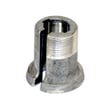
- If the washer will not agitate or spin after the reset, inspect common drive components such as the coupling 285753A (direct-drive coupling).
- If the washer will not drain and the lid stays locked at the end of a cycle, a drain problem can keep the cycle from completing; the washer drain pump WP3363394 is a common fix when the pump is jammed or weak.
What to check first (fast diagnosis)
| Symptom | Most likely cause | What we recommend |
|---|---|---|
| Lid will not “click” or washer will not run | Lid switch/lock not engaging | Confirm lid alignment; test switch operation |
| Washer drains slowly or not at all | Drain restriction or failing pump | Check drain hose and pump for blockage |
| Motor runs but no agitation/spin | Drive coupling issue | Inspect/replace coupling |
Why it matters
The lid lock or lid switch is a safety feature. If it does not sense the lid closed, the washer can pause, stop advancing, or refuse to spin. Resetting power clears a temporary interruption; persistent problems point to a switch, drain, or drive issue.
Last updated: February 2026
What is the most common problem with Whirlpool washers?
The most common Whirlpool washer problems are failure to drain or spin, leaks, and poor agitation. On the Whirlpool LXR7244JQ0 compact washer, these symptoms often trace back to a clogged or too-high drain hose, excessive suds, an open lid, or worn drive and pump components. See the owner's manual for model-specific checks.
Most common symptoms and what they usually mean
- Won’t drain or spin: Drain hose restriction, drain hose installed too high (over 72 inches), lid not closed, or too many suds.
- Leaks: Loose fill hoses, mis-seated hose washers, drain hose clamp issues, or a clogged sink/standpipe.
- Won’t agitate or weak agitation: Worn agitator dogs, a worn motor coupling, or drive system wear.
- Loud noises: Normal gear engagement sounds can happen between drain and spin; persistent grinding can point to clutch or gear case wear.
Quick checks we recommend first (fast, no parts)
- Confirm the lid is fully closed during operation.
- Check the drain hose for kinks or clogs; make sure the hose end is not higher than 72 inches above the floor.
- Reduce detergent if you see excessive suds (especially with soft water).
- Verify both hot and cold faucets are on and inlet hoses are not kinked.
- Make sure the washer is level and the load is balanced to prevent splashing and vibration.
Parts that commonly fix these problems on LXR7244JQ0
| Symptom | Common suspect part | What it affects |
|---|---|---|
| Won’t drain or leaves water | Washer drain pump WP3363394 | Pumps water out during drain/spin |
| Won’t agitate or spin | Coupling 285753A | Connects motor to drive system |
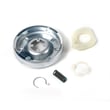
| Agitator “ratchets” or won’t move clothes well | Agitator dog 80040 | Helps the agitator grip and move load |
| Spins poorly or slips | Clutch 285785 | Helps basket reach/hold spin speed |
Why it matters
Drain, spin, and leak issues can look like major failures, but on a direct-drive Whirlpool washer like the LXR7244JQ0, the root cause is often installation (drain height), oversudsing, or a single wear part such as the drain pump, motor coupling, or agitator dogs.
Last updated: February 2026