Owner’s manual



Where is the model number on Kenmore 79661423410 dryer?
On the Kenmore Elite 79661423410 dryer, the model number is printed on the identification plate inside the dryer door opening. Open the door and look along the cabinet frame near the opening; the same plate typically lists the serial number.
Where to look first
Check these common label locations around the door opening:
- On the cabinet frame just inside the door opening (most common)
- Along the left or right side of the door opening
- Near the top edge of the door opening
- On the inside edge of the front panel near the lint screen housing
For a visual reference and other identification details, use the owner's manual.
What you should see on the identification plate
The identification plate usually includes more than just the model number.
| Item on label | What it’s used for |
|---|---|
| Model number | Matching parts and diagrams to your exact dryer |
| Serial number | Identifying production details for service records |
| Purchase/date fields (sometimes recorded in the manual) | Keeping a maintenance and repair history |
Why it matters
Kenmore Elite dryers often have similar-looking cabinets across multiple series. Using the exact model number from the door-opening identification plate helps us match the correct parts (like a drum belt, thermistor, or heating element) and avoid ordering the wrong replacement.
Last updated: February 2026
How to hard reset a Kenmore dryer?
To hard reset your Kenmore Elite dryer model 79661423410, we recommend disconnecting power for a few minutes (unplug the cord or switch the breaker off), then restoring power and starting a cycle again. This clears many temporary control glitches and restores normal operation.
Hard reset steps (safe, standard method)
- Press POWER to turn the dryer off.
- Unplug the dryer (or turn the circuit breaker OFF).
- Wait 1 to 5 minutes.
- Restore power (plug back in or turn breaker ON).
- Press POWER, select a cycle, then press START/PAUSE to begin.
If the dryer still will not run after a reset
A reset helps with electronic hiccups, but it will not fix a failed safety switch, airflow restriction, or a heating problem.
- Make sure the door fully closes and latches.
- If the cycle was paused, press START/PAUSE again; opening the door also pauses the cycle.
- Clean the lint screen and confirm strong airflow at the outside vent.
- If the dryer runs but does not heat, check common heat-related parts such as the heating element and thermostats.
Common symptoms and what they usually point to
| What you notice | What it often means | What to check next |
|---|---|---|
| Control seems frozen or unresponsive | Control logic glitch | Hard reset, then try a different cycle |
| Starts then stops quickly | Door not sensed closed, or cycle not restarted after pause | Door latch, press START/PAUSE |
| Long dry times, “check vent” type behavior | Restricted exhaust airflow | Lint screen, vent duct, outside hood |
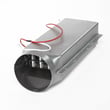
| Runs but no heat | Heating circuit issue | Lg dryer heating element 5301EL1001H, thermostats |
Why it matters
Resetting power is the fastest way to clear a false error state, but dryers also shut down or underperform when airflow is restricted. Keeping the lint screen and exhaust system clean helps prevent overheating, long dry times, and nuisance shutdowns.
For cycle behavior, options, and operating details specific to this model, use the owner's manual.
Last updated: February 2026
How to fix dryer air flow?
Poor airflow on your Kenmore Elite dryer model 79661423410 is almost always caused by a restricted lint filter or exhaust venting. We fix it by cleaning the lint screen correctly, inspecting the vent path for crushing or blockage, and confirming you are using rigid or semi-rigid metal ducting as shown in the 79661423410 owner's manual.
Quick airflow fix checklist
- Unplug the dryer (and shut off gas if you have a gas model) before opening panels or moving it.
- Remove the lint screen and clear lint; if it looks dark or “waxy,” wash it with hot soapy water and a stiff brush, then dry it completely.
- Disconnect the vent from the back of the dryer and check airflow at the outlet while the dryer runs briefly on a heat cycle.
- Inspect the entire duct run to the outside hood; remove lint buildup and straighten any crushed sections.
- Replace any plastic or thin foil vent with rigid or semi-rigid metal duct; avoid long runs and unnecessary elbows.
- Reconnect using duct tape or clamps only; do not use screws that can catch lint.
What “good airflow” looks like
If drying performance has dropped, we treat it as an airflow problem first. The manual notes airflow can be evaluated by static pressure in the exhaust duct.
| Check | What to do | What it tells you |
|---|---|---|
| Lint screen condition | Clean lint; deep-clean if coated | A coated screen restricts airflow and increases dry time |
| Vent off test | Run briefly with vent disconnected | Strong airflow here points to a clogged/long/crushed vent run |
| Duct material | Confirm rigid or semi-rigid metal | Plastic/foil collapses and traps lint |
| Duct routing | Shorten run; reduce elbows | Long/restricted runs reduce airflow |
Parts that commonly affect airflow and drying time
Airflow issues are usually venting related, but these parts can contribute to poor drying when they fail:
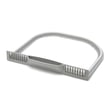
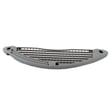
- Dryer lint screen by lg 5231EL1001C (restricted or damaged screen)
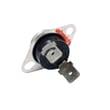
- Dryer thermistor AGM30045804 (temperature sensing problems)
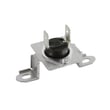
- Dryer blower thermostat 6931EL3002M (air temperature control issues)
Why it matters
Restricted airflow makes the dryer run longer, wastes energy, and can overheat components like thermostats and the heating element. Keeping the lint filter and vent ductwork clean is the fastest way to restore normal drying.
Last updated: February 2026
What is the life expectancy of a Kenmore dryer?
A Kenmore dryer typically lasts 10 to 13 years under normal household use. Your Kenmore Elite 79661423410 can often reach the high end of that range when airflow is kept clear, the lint system is cleaned regularly, and worn drive parts are replaced before they cause bigger failures.
Typical lifespan and what changes it
Most dryer life expectancy comes down to heat stress and friction. These factors have the biggest impact:
- Vent restriction (overheats the heater, thermostats, and motor)
- Lint buildup in the filter housing and exhaust duct
- Worn drum support parts (belt, idler pulley, rollers) that increase load on the motor
- Heavy usage (large families, back-to-back loads)
- Delayed repairs after squealing, thumping, or long dry times
For model-specific maintenance intervals and cleaning steps, follow the owner's manual.
Maintenance checklist that extends dryer life
We recommend these habits for the 79661423410:
- Clean the lint filter every load and keep the filter area clear
- Inspect and clean the exhaust duct regularly to maintain strong airflow
- Stop using the dryer if you smell burning or notice repeated overheating
- Address new noises early (squeal, rumble, thump)
- Avoid overloading; it strains the drum support system and motor
Common wear parts that affect longevity
If your dryer is noisy or the drum struggles to turn, these model-matched parts are common fixes:
| Symptom | Likely wear area | Example part for this model |
|---|---|---|
| Drum not turning, slipping | Belt | Dryer drum belt 4400EL2001F |
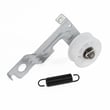
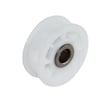
| Squealing, drum hard to turn | Idler pulley | Dryer idler pulley 4560EL3001A |
| Thumping or rumbling | Drum support rollers | Dryer drum support roller 4581EL2002H |
Why it matters
A dryer that runs hot because of poor venting or lint buildup can shorten the life of key heating and safety components. Keeping airflow strong and fixing drum support wear early helps your Kenmore Elite dryer dry faster, run cooler, and last longer.
Last updated: February 2026