Owner’s manual
 Error Codes


Are GE side by side refrigerators good?
GE side-by-side refrigerators, including model PSE26KSEEESS, are a solid choice for everyday reliability and organization. They typically deliver steady temperature control, convenient ice and water dispensing, and practical storage; long-term satisfaction depends most on proper setup, airflow, and routine maintenance.
What “good” usually means for a side-by-side
A good side-by-side refrigerator balances consistent cooling, usable storage, and dependable dispenser performance. GE’s design features commonly focus on airflow and temperature stability.
Common strengths
- Spacious, easy-to-sort fresh food and freezer sections with adjustable shelving
- Strong visibility from interior lighting (many models use LED lighting)
- Convenient in-door ice and water access
- Designed airflow features that help maintain even temperatures
Common tradeoffs
- Ice makers can sound loud during harvest cycles
- Ice production can feel slow if water flow is restricted or the filter is overdue
- Narrower shelf width than some French door layouts (wide platters can be harder to fit)
What to do to keep PSE26KSEEESS performing well
We recommend these habits because they directly affect cooling performance and dispenser/ice maker reliability.
- Keep vents and louvers clear; avoid packing food tightly against the rear airflow tower/tunnel
- Set temperatures to typical targets: 0°F freezer and 37°F fresh food; allow up to 24 hours to stabilize after changes
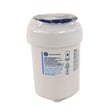
- Replace the water filter on schedule to protect taste, flow, and ice maker fill performance (use GE refrigerator water filter MWFP)
- If you move the refrigerator, pull it straight out and push it straight back to avoid damaging the floor or rolling over the power cord or water line
- For vacations, turn the ice maker off and shut off the water supply; clean the interior and leave doors open (details in the PSE26KSEEESS owner’s manual)
Quick comparison: side-by-side vs. other layouts
| Feature | Side-by-side (like PSE26KSEEESS) | French door | Top freezer |
|---|---|---|---|
| Organization | Strong, lots of bins/shelves | Strong in fresh food | Simple |
| Wide-item storage | Fair | Best | Fair |
| Ice/water access | Often best (in-door) | Common (in-door) | Less common |
| Footprint | Efficient door swing | Wider doors | Compact |
Why it matters
Most “bad refrigerator” complaints trace back to airflow blockage, temperature not being allowed to stabilize, or water system restrictions. Keeping airflow paths open and maintaining the filter helps your GE refrigerator cool evenly and keeps the dispenser and ice maker working as designed.
Last updated: February 2026
Can I replace fridge parts myself?
Yes, for the GE PSE26KSEEESS side-by-side refrigerator, you can replace many non-electrical parts yourself (such as shelves, bins, and handles) and some service parts if you follow safe power-disconnect steps and the procedures in the PSE26KSEEESS owner’s manual.
What you can usually replace yourself
These repairs are typically straightforward and low-risk:
- Shelves and door bins (lift out, swap, and re-seat)
- Handle assemblies (tighten or replace mounting hardware)
- Ice bucket and related dispenser pieces
- Water filter (routine maintenance)
- Light bulbs and light shields (when your model uses bulbs)
If you are doing water-filter maintenance, use the correct filter for this model, such as the GE refrigerator water filter MWFP.
Safety steps we recommend before any DIY repair
The manual emphasizes basic electrical safety; always start here:
- Unplug the refrigerator by gripping the plug (do not pull the cord)
- Use a properly grounded 3-prong outlet (do not use a 2-prong outlet)
- Avoid pinching or rolling over the power cord when moving the unit
- Turn off the household water supply if you are opening any water lines
- Keep screws and small parts organized so reassembly is correct
Quick guide: DIY-friendly vs. technician-level repairs
| Repair type | Typical DIY? | Why |
|---|---|---|
| Shelves, bins, handle | Yes | Mostly mechanical fit and fasteners |
| Water filter swap | Yes | Routine maintenance task |
| Light bulb replacement | Yes | Manual provides steps; power must be unplugged |
| Water valve, control board, sealed system | No (usually) | Higher shock/leak risk; diagnosis required |
Why it matters
DIY replacement can restore performance quickly and save service costs, but refrigerators combine electricity, sharp metal edges, and (often) pressurized water lines. Using the correct procedure helps prevent leaks, nuisance damage, and repeat failures.
Last updated: February 2026
How to order GE appliance parts?
For your GE PSE26KSEEESS refrigerator, order parts using the complete model number and serial number so you get the correct match the first time. Use the parts list and diagrams for GE PSE26KSEEESS to select the exact replacement part by name and part number.
What you need before you order
- Complete model number: PSE26KSEEESS
- Serial number (from the rating label inside the fresh food compartment)
- The part name and, if possible, the GE part number
- A quick description of the symptom (helps confirm you are choosing the right part)
Ordering options
Use the option that fits your situation best:
| Situation | Best option | Why |
|---|---|---|
| You know the exact part you need | Order directly from the parts list for model PSE26KSEEESS | Ensures the part is matched to your exact refrigerator |
| You need help identifying the right part | Use the exploded-view diagrams and part descriptions, then cross-check in the owner's manual | Helps avoid ordering the wrong revision |
| You want help placing an order | Contact Sears PartsDirect support | Helps confirm part selection and order details |
Model-specific tips for this refrigerator
- For water filtration, match the filter part number to your refrigerator’s filter style and housing.
- If you are replacing the filter itself, use the refrigerator water filter MWFP.
- If the filter will not seat, leaks at the head, or the housing is damaged, the refrigerator filter head and tub WR02X45206 is a common related replacement.
Why it matters
Using the exact model number (PSE26KSEEESS) and ordering the correct GE-compatible part helps avoid fit issues, leaks, and repeat repairs, especially for water system and dispenser components.
Last updated: March 2026
How wide is a 25.6 cubic foot refrigerator?
Most 25.6 cu. ft. refrigerators are about 36 inches wide (often 35 3/4 to 36 inches). For your GE PSE26KSEEESS side-by-side, we recommend confirming the exact cabinet width and required clearances in the PSE26KSEEESS owner's manual.
Typical width and what to plan for
Even when two refrigerators share the same capacity, the cabinet width can vary by style (side-by-side vs. French door), door design, and hinge geometry.
Common planning guidelines:
- Typical cabinet width: 35 3/4 to 36 inches
- Door swing space: plan extra room beyond cabinet width
- Installation clearance: allow space for airflow and hookups
- Entryway fit: measure doorways and hallways before delivery
- Leveling space: front may be raised during leveling for proper door closing
Clearances to include (not just cabinet width)
The installation instructions for this GE platform call out clearances for installation and airflow. Use these as a baseline when planning space around the refrigerator.
| Location | Typical minimum clearance to plan for | Why it matters |
|---|---|---|
| Sides | 1/8 inch | Air circulation and easier install |
| Top | 1/8 inch | Prevents rubbing and heat buildup |
| Back | 1 inch | Room for cord, water line, airflow |
Quick measuring checklist
Use this checklist before ordering parts, moving the unit, or planning cabinetry:
- Measure the refrigerator cabinet width (not including removable trim)
- Measure doorway width and tight turns on the path to the kitchen
- Add space for water line if you have an ice maker or dispenser
- Confirm the refrigerator can be leveled so doors close properly
Why it matters
Width alone does not guarantee a refrigerator will fit. Door swing, required airflow space, and water line routing can turn a “36-inch” opening into a tight install, especially for side-by-side models like the GE PSE26KSEEESS.
Last updated: February 2026
Is GE profile considered high end?
Yes. GE Profile is generally considered GE’s higher-end mainstream line; it typically adds more premium features, styling, and performance upgrades than standard GE models, while still sitting below GE’s true luxury lines. For model PSE26KSEEESS, the PSE26KSEEESS owner’s manual also groups GE Profile with other premium GE families for warranty coverage.
What “high end” means for GE Profile refrigerators
GE Profile is positioned as an upgrade tier within GE’s lineup. In practical terms, that usually means:
- More feature-rich controls and convenience options (ice and water dispenser features, alarms, etc.)
- More refined finishes and design details
- More advanced temperature management and sensors
- More emphasis on owner support and documentation (troubleshooting, normal operating sounds)
- Stronger coverage on key sealed-system components on many Profile models
Quick lineup comparison (typical positioning)
| GE family | Typical market position | What you usually get |
|---|---|---|
| Standard GE | Value to mid-range | Core features, fewer upgrades |
| GE Profile | Mid-to-high end | More features, upgraded design, more tech |
| GE Café / Monogram | Premium to luxury | Pro-style design, luxury features, higher price tier |
Why it matters when you’re buying parts or troubleshooting
“High end” often correlates with more electronics and feature systems (dispenser UI, sensors, ice maker components). That means accurate model matching matters more when ordering parts or diagnosing issues.
If you’re maintaining the water system on this refrigerator, using the correct filter and following the manual’s guidance helps protect the dispenser and ice maker performance. For example, the GE refrigerator water filter MWFP is a common maintenance item for this model family.
Helpful tip for owners
- Write down the model and serial number from the label inside the fresh food compartment (top right area)
- Use the manual’s troubleshooting section before replacing parts
- Replace water filters on schedule to reduce flow issues and taste/odor complaints
Last updated: February 2026
What are the most commonly replaced parts in a refrigerator?
In a GE side-by-side refrigerator like model PSE26KSEEESS, the most commonly replaced parts are the ones that control cooling, defrosting, and water or ice dispensing. We see frequent replacements for control boards, defrost components, fans, sensors, and water filtration parts; these directly affect temperature stability and everyday convenience.
Commonly replaced refrigerator parts (and what they do)
- Electronic control board: Manages compressor, fans, defrost timing, and temperature logic.
- Defrost heater and defrost thermostat: Melt frost off the evaporator so air can flow.
- Evaporator fan motor and fan blade: Circulates cold air through the freezer and fresh food sections.
- Temperature sensor (thermistor): Reports temperatures to the control board for accurate cooling.
- Water filter and water inlet valve: Keep water tasting clean and allow water to flow to the dispenser and ice maker.
- Ice dispenser door parts: Help prevent warm air leaks at the dispenser opening.
Parts on PSE26KSEEESS we often see replaced
| Symptom | Likely part category | Example part for this model |
|---|---|---|
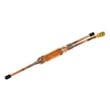
| Warm fridge or freezer, inconsistent temps | Sensor or control | GE profile refrigerator temperature sensor WR55X10025 |
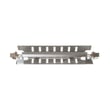
| Frost buildup, weak airflow, warm temps | Defrost system | Refrigerator defrost heater WR51X10055 or refrigerator defrost thermostat WR50X10068 |
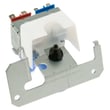
| No water at dispenser or no ice fill | Water supply | Refrigerator water valve WR57X33326 |
| Bad-tasting water, slow flow | Filtration | GE refrigerator water filter MWFP |
Quick checks before you order a part
- Confirm the set temperatures and give the unit 24 hours to stabilize after changes.
- Make sure doors seal fully and vents are not blocked by food.
- If you have water and ice issues, replace the filter first and then purge air from the dispenser.
- Look for frost on the back freezer panel (often points to a defrost problem).
- If lights are out, follow the bulb or LED guidance in the PSE26KSEEESS owner’s manual.
Why it matters
These parts are “high impact” because a single failure can cause warm temperatures, frost buildup, or dispenser problems. Replacing the correct component restores airflow, defrost performance, and water delivery, which helps protect food and reduce strain on the sealed system.
Last updated: February 2026
What is the most common problem with a GE refrigerator?
The most common issue we see with GE refrigerators like model PSE26KSEEESS is inadequate cooling (fresh food too warm, freezer not holding 0°F). The fastest wins are restoring airflow, cleaning heat-exchange areas, and confirming the temperature settings, then moving to fan, defrost, and sensor checks.
Quick checks that fix many “not cold enough” complaints
- Confirm setpoints are at 37°F (refrigerator) and 0°F (freezer); allow up to 24 hours after changes to stabilize (see the PSE26KSEEESS owner’s manual).
- Make sure food packages are not blocking the rear louvers and air channels (airflow restrictions can mimic a cooling failure).
- Keep doors fully closed; a slightly open door can cause warm temps and slow ice production.
- If the unit was recently turned off and back on, wait a full day before judging performance.
- If ice is small or hollow, address water flow and filtration; a clogged filter can reduce water delivery.
Common causes and what they usually look like
| Symptom | Most likely area | Typical next step |
|---|---|---|
| Fresh food warm, freezer OK | Airflow/evaporator fan | Listen for fan; check vents and frost buildup |
| Freezer warm too | Condenser airflow, sealed system, controls | Clean coils/verify fans; then diagnose controls |
| Temps swing up and down | Sensor or control logic | Test/replace sensor such as GE profile refrigerator temperature sensor WR55X10025 |
| Frost on back wall, warming over days | Defrost system | Check heater and thermostat such as refrigerator defrost heater WR51X10055 |
Why it matters
Cooling problems are usually progressive; restricted airflow or a weak defrost system can lead to food spoilage, longer run times, and ice maker issues. Getting temperatures back to 37°F and 0°F protects food quality and helps the refrigerator run efficiently.
When to move from “checks” to “parts diagnosis”
- You have correct setpoints and good airflow, but temps stay high after 24 hours.
- You hear unusual fan noises or the fan is silent when it should be running.
- You see recurring frost buildup that returns soon after defrosting.
Last updated: February 2026