Owner’s manual
 Error Codes


Why is my Kenmore Elite refrigerator leaking water out of the bottom?
Water leaking from the bottom of your Kenmore Elite refrigerator model 79571059014 is usually caused by a clogged defrost drain that overflows into the drain pan area, or a leak in the water supply system for the dispenser or icemaker. We use the troubleshooting and cleaning steps in the 79571059014 owner's manual to pinpoint the source.
Quick checks that solve most bottom leaks
- Look for ice or sludge in the freezer drain area; a blocked defrost drain can force water to spill and run out underneath.
- Check the water line connections behind the refrigerator for slow drips; tighten fittings that seep.
- Inspect the tubing for cracks or kinks where it routes to the inlet valve and up to the dispenser.
- Confirm the icemaker is not overfilling; water can overflow and migrate to the bottom.
- Make sure the refrigerator is level; a tilt can cause water to miss the drain pan.
Where the water is coming from (fast diagnosis)
Dry the floor, then place paper towels under the front edge and recheck after a few hours.
| What you see | Most likely cause | What to do next |
|---|---|---|
| Water appears after a defrost cycle, sometimes with ice buildup | Defrost drain restriction | Clear the drain path and flush with warm water |
| Water appears when dispensing water or making ice | Supply line or fitting leak | Inspect and tighten connections; replace damaged tubing |
| Water is only near the back/bottom | Drain pan overflow or line leak at rear | Check drain pan position and rear connections |
Parts that commonly relate to dispenser or icemaker leaks
If the leak happens during ice or water use, these model-matched parts are common suspects:
- Lg refrigerator water inlet valve 5221JB2010G (seeping valve body or fittings)
- Refrigerator water tubing, 300-mm x 1/4-in MJU62711501 (cracked or loose tubing)
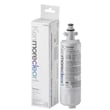
- Refrigerator water filter bypass ABN73019101 (useful for testing if the filter housing area is leaking)
Why it matters
Bottom leaks can damage flooring and also point to airflow or defrost issues that reduce cooling performance. The manual notes that water normally runs into the drain pan during defrost; when the drain path is restricted or a connection drips, that normal water ends up on your floor.
Last updated: January 2026
What are the common problems with Kenmore Elite refrigerators?
Common problems we see on the Kenmore Elite 79571059014 bottom-mount refrigerator include weak cooling (often tied to airflow or dirty condenser coils), ice maker and dispenser issues, water filter or water supply problems, and lights not working. Many symptoms improve with basic cleaning, checks, and correct settings in the 79571059014 owner's manual.
Most common symptoms and what they usually point to
- Not cooling well or running a lot: warm room, frequent door openings, heavy food load, restricted airflow, or dirty condenser coils.
- Ice maker not making ice: ice bin full or uneven, ice compartment door not sealing, ice maker switch set to Off.
- Water dispenser slow or no water: clogged filter, low house water pressure, or a water inlet valve issue.
- Lights do not work: loose bulb, burned-out bulb, or power supply issue.
- Vibration or rattling: unit not level, weak or uneven floor.
Quick checks we recommend first (safe, high-impact)
- Confirm doors close tightly and gaskets seal; warm air leaks cause long run times and frost.
- Clean condenser coils (dust buildup reduces cooling efficiency).
- If ice production is low, level the ice in the bin and keep the ice compartment door closed tightly.
- If the ice maker is Off for more than a few hours, empty the ice bin to prevent melting and leaks.
- For light issues, unplug the refrigerator and reseat or replace the bulb with the same wattage and shape.
Parts that commonly relate to these problems
| Symptom | Common part involved | Example part for model 79571059014 |
|---|---|---|
| Bad taste/slow water flow | Water filter | Genuine Kenmore refrigerator water filter 9690 AGF80300801 |
| No ice or dispenser issues | Ice maker or chute components | Ice maker assembly AEQ73110203 |
| Lights not responding to door | Door switch | Refrigerator door switch 6600JB1010A |
Why it matters
Catching airflow, leveling, and water supply issues early helps prevent temperature swings that spoil food, reduces compressor run time, and keeps the ice maker from stopping due to bin or door-seal problems.
Last updated: January 2026
What does er 1f mean on Kenmore Elite refrigerator?
On Kenmore Elite refrigerator model 79571059014, the ER 1F code points to a problem with the freezer-side fan feedback circuit (commonly the ice room or evaporator fan area). Restoring airflow and checking for ice buildup or a fan wiring issue typically clears the condition after the unit is reset.
What to check first (fast, safe steps)
- Power the refrigerator off at the breaker for 5 minutes, then restore power.
- Make sure freezer vents are not blocked by packages.
- Listen for a fan running when the doors are closed (you may hear it ramp up after a minute).
- Look for frost or ice buildup around the rear freezer panel that could be stopping the fan.
- Confirm the doors fully close; a door left ajar can disrupt cooling and fan operation.
Likely causes and the most common fixes
| What’s happening | What it usually means | Typical fix |
|---|---|---|
| Fan is noisy, intermittent, or silent | Fan motor is failing or obstructed by ice | Defrost obstruction; replace the failed fan assembly if needed |
| Heavy frost on freezer back wall | Defrost system issue causing ice to hit the fan | Check defrost sensor/heater circuit; clear ice buildup |
| Code returns after reset | Electrical feedback issue (fan, wiring, or control) | Inspect connectors and harness; test components |
If you find heavy frost, the defrost sensing circuit is a common place to start. For this model, the Refrigerator defrost sensor assembly 6615JB2005N is one of the components used to monitor defrost conditions.
Why it matters
When the freezer fan cannot move air correctly, temperatures drift and ice production can slow down. Running the refrigerator in this state can lead to warm spots, excess frost, and inconsistent cooling performance.
Model-specific references
- Use the 79571059014 owner's manual for the troubleshooting section and control guidance (including recommended temperature settings and adjustment timing).
- If your display shows additional codes or symptoms, our Kenmore 795 model bottom freezer refrigerator error codes guide helps narrow the failure to the right circuit.
Last updated: January 2026
How do you level a Kenmore Elite refrigerator?
For Kenmore Elite model 79571059014, we level the refrigerator by turning the two front leveling legs until the cabinet is stable and the front is slightly higher than the back. This reduces vibration and helps the fresh food doors close completely (see the 79571059014 owner's manual).
Step-by-step leveling (79571059014)
- Plug the refrigerator into a grounded 3-prong outlet.
- Slide the refrigerator into its final position.
- Open the freezer drawer.
- Remove the base cover (the manual instructs removing screws at the top of the cover).
- Turn the leveling leg clockwise to raise that side; turn counterclockwise to lower it.
- Recheck stability and door closing; adjust both legs in small, even turns as needed.
Tools and adjustment directions
| Tool | What it’s used for |
|---|---|
| 11/16-in (18 mm) wrench | Turning the leveling legs |
| Flat-blade screwdriver | Alternate way to turn the leveling legs |
| Bubble level (optional) | Confirming side-to-side and front-to-back tilt |
Door closing and alignment tips
- If the doors do not close easily, raise the front slightly more by turning both leveling legs clockwise the same amount.
- Having a helper push backward against the top of the refrigerator reduces weight on the legs and makes turning easier.
- If the gap between the two fresh food doors is uneven after leveling, adjust door height at the hinge nut as described in the 79571059014 owner's manual.
Why it matters
Correct leveling prevents cabinet rocking, reduces operating noise, and helps the door gaskets seal consistently so temperatures stay steady.
Last updated: January 2026