Owner’s manual
 Error Codes



What size is Kenmore refrigerator model 79571052013?
Kenmore Elite refrigerator model 79571052013 is a bottom-freezer style unit; most models in this 33-inch-wide class measure about 33 inches wide, 31 to 34 inches deep (depth varies with handles), and 67 to 70 inches high. For the exact dimensions for your configuration, use the 79571052013 owner's manual.
How to get the exact dimensions (fast)
Use the model’s documentation and measure your specific installation so you account for handles, door swing, and leveling.
- Check the “Refrigerator installation” and “Leveling and door alignment” sections in the 79571052013 owner's manual.
- Measure width at the widest point (often the doors, not the cabinet).
- Measure depth two ways: cabinet-only and to the front of the handles.
- Measure height from floor to the top hinge cover area.
- Confirm the refrigerator is level; leveling feet can change height slightly.
Typical size ranges you can plan around
These are practical planning numbers for a Kenmore bottom-freezer refrigerator in this style.
| Measurement | Typical planning range | What changes it most |
|---|---|---|
| Width | ~33 in. | Door design, trim |
| Depth | ~31 to 34 in. | Handles, door curvature |
| Height | ~67 to 70 in. | Leveling feet, hinge cover |
Why it matters
Correct sizing prevents delivery and install problems such as doors not clearing cabinets, drawers not opening fully, or the unit not fitting through doorways. It also helps you leave proper airflow space so the refrigerator cools efficiently.
Last updated: January 2026
What does DH mean on Kenmore Elite refrigerator?
On Kenmore Elite refrigerator model 79571052013, DH commonly points to a defrost heating problem (the refrigerator is not warming the evaporator enough during the defrost cycle). When this happens, frost can build up and airflow drops, so temperatures rise even though the unit seems to be running.
What you’ll usually notice when DH shows up
- Refrigerator section warming up while the freezer still feels cold
- Frost or ice buildup on the rear freezer panel
- Weak airflow from vents (fan noise may change)
- Ice maker performance dropping or stopping
- Water leaking or puddling after a defrost attempt
Quick checks you can do safely
Before any hands-on checks, unplug the refrigerator.
- Confirm doors are closing fully and gaskets are sealing
- Look for heavy frost on the back wall inside the freezer
- Power-cycle the refrigerator (unplug 5 minutes, then plug back in)
- Check for blocked vents from overpacked food
- Review the troubleshooting section in the 79571052013 owner's manual
What typically causes a DH (defrost heat) issue
A DH condition is usually tied to one of these areas in the defrost circuit:
| Likely cause | What it affects | Common symptom |
|---|---|---|
| Defrost heater circuit problem | No heat during defrost | Heavy frost, warm fridge |
| Defrost sensor/thermistor issue | Wrong temperature feedback | Intermittent DH |
| Control board/defrost control issue | Defrost not initiated or not powered | Repeating DH |
| Airflow restriction | Cooling can’t recover | Warm temps, long run time |
Parts that may be involved (when symptoms match)
If you’re also seeing dispenser or ice-related symptoms, these model-matched parts can be relevant:
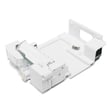
- Ice maker assembly (AEQ73110203) - refrigerator ice making component by lg AEQ73110203 (ice production issues after frost buildup)
- Refrigerator condenser fan motor assembly EAU61723501 (poor heat removal can worsen temperature complaints)
Why it matters
Defrost heat problems let frost build up on the evaporator, which blocks airflow. That makes the refrigerator work longer, temperatures drift upward, and food can spoil faster even though the compressor is running.
Last updated: January 2026
What are the common problems with Kenmore Elite refrigerators?
Common problems on the Kenmore Elite 79571052013 bottom-mount refrigerator include warm temperatures (often airflow or condenser-coil related), ice maker or dispenser issues, water leaks, and lights not working. Many fixes start with cleaning, checking door closure, and following the troubleshooting steps in the 79571052013 owner's manual.
Most common symptoms and what usually causes them
- Not cooling or weak cooling: dirty condenser coils, blocked vents, evaporator fan issues, or a door not sealing well
- Compressor runs a lot: frequent door openings, warm room temperature, or heavy loading (the manual notes modern units can run 40% to 80% of the time at normal room temps)
- Ice maker not making ice: ice bin uneven, ice compartment door not closed tightly, or the ice maker switched off too long
- Water dispenser slow or no water: clogged filter, kinked water line, or inlet valve problems
- Water puddles/leaks: clogged/iced drain system or loose water tubing connections
- Lights do not work: loose bulb, burned-out bulb, or power supply issue
Quick checks we recommend before replacing parts
- Confirm doors close tightly and nothing is holding them open.
- Clean the condenser coils (dust buildup is a top cause of poor cooling).
- Level the refrigerator if you hear vibration or rattling.
- Check the ice bin and ice compartment door; uneven ice can stop production and a door left ajar can cause freezing in the fresh-food section.
- If lights are out, reseat or replace the bulb with the same wattage, size, and shape (unplug first).
Parts that commonly relate to these problems
| Symptom | Part that often relates | Example for this model |
|---|---|---|
| Water tastes bad or flow is weak | Water filter | Genuine Kenmore refrigerator water filter 9690 AGF80300801 |
| No water to dispenser/ice maker | Water inlet valve | Lg refrigerator water inlet valve AJU72992601 |
| Ice maker not producing | Ice maker assembly | Ice maker assembly (AEQ73110203) - refrigerator ice making component by lg AEQ73110203 |
| Lights not responding to door | Door switch | Refrigerator door switch 6600JB1010A |
Why it matters
Catching airflow, door-seal, and water-supply issues early helps protect food temperatures, reduces compressor run time, and prevents leaks that can damage flooring.
Last updated: January 2026
Where is the damper control on a Kenmore Elite refrigerator?
On Kenmore Elite bottom-mount model 79571052013, the damper control is in the fresh-food (refrigerator) section at the air inlet where freezer air is metered into the refrigerator. You access it from inside the refrigerator compartment by removing the interior air duct or diffuser cover shown in the 79571052013 owner’s manual.
How to locate it in a bottom-mount design
On this style of Kenmore Elite refrigerator, the damper is not in the freezer door area; it sits behind the refrigerator-side air outlet assembly.
- Open the refrigerator doors and look along the upper back wall area for the air outlet grille or diffuser
- Listen for clicking or buzzing near that outlet when the compressor is running
- Check for frost around the outlet cover (a common clue the damper is sticking)
- Make sure food packages are not pushed against the air inlet or return vents
- If the noise changes when you open the refrigerator door, the damper is cycling and you are close to it
Why the damper can get noisy
Damper noise is caused by the small motor and door cycling to maintain temperature. In a bottom-mount refrigerator, frequent cycling is common when doors are opened often.
| Noise or symptom | What it usually means | What we do first |
|---|---|---|
| Rapid clicking or chattering | Damper door binding or gears slipping | Clear frost and check for obstructions at the diffuser |
| Buzzing or humming near the vent | Damper motor working hard | Verify vents are clear and temperatures are set correctly |
| Refrigerator too warm, freezer OK | Damper stuck closed or iced up | Inspect the air inlet area for frost buildup |
| Refrigerator too cold or items freezing | Damper stuck open | Confirm control settings and check damper movement |
Safe checks before removing panels
- Unplug the refrigerator before removing any interior covers
- Set temperatures to the recommended 37°F (refrigerator) and 0°F (freezer), then wait 24 hours for stabilization
- Inspect door gaskets for gaps that can drive excess frost and damper noise
Why it matters
A sticking damper causes uneven temperatures, frozen produce, or warm spots in the refrigerator section. Fixing airflow issues early also reduces compressor run time and helps food stay fresh longer.
Last updated: January 2026