Owner’s manual
 Error Codes



Does anyone make a 33 inch wide refrigerator?
Yes. Multiple brands make 33-inch wide refrigerators, including bottom-freezer, top-freezer, side-by-side, and some French door styles. If you are replacing a Kenmore 79578406803 bottom-mount refrigerator, we recommend confirming the exact cabinet width, door swing clearance, and installation clearances in the 79578406803 owner's manual before you buy.
What “33-inch wide” usually means
Most manufacturers list width as the cabinet width (the box), not always the widest point with doors and handles.
- Nominal width: 33 inches (common replacement size)
- Actual width: often about 32 3/4 to 33 inches
- With handles/doors: can be wider, depending on handle style
- Depth and door swing: often the real fit issue in tight kitchens
Fit checklist before you choose a 33-inch model
Use this quick checklist to avoid clearance problems.
- Measure the opening width in three places (top, middle, bottom)
- Measure height to the lowest cabinet/trim above the fridge
- Measure depth to confirm the doors can open without hitting an island or wall
- Confirm hinge-side clearance for full door swing and drawer pull-out
- Plan for airflow space around the cabinet (tight installs can reduce cooling efficiency)
Common 33-inch refrigerator styles (quick comparison)
| Style | Typical benefits | Common fit concern |
|---|---|---|
| Top freezer | Lowest cost, simple layout | Door swing clearance |
| Bottom freezer | Easy fresh-food access | Freezer drawer pull-out space |
| Side-by-side | Narrow door swing, easy freezer access | Less wide-shelf space |
| French door (33-inch class) | Wide fresh-food shelves | Needs more door clearance |
Why it matters
A refrigerator that is “33 inches wide” can still fail to fit if the doors cannot open fully or if the unit cannot breathe. Proper leveling also helps doors close correctly and seal well, which protects temperatures and reduces energy use.
Related help
If you are troubleshooting door closing or sealing issues on your current unit, a worn gasket can contribute to poor sealing and temperature swings; see refrigerator door gasket ADX73350927.
Last updated: January 2026
What does DH mean on Kenmore Elite refrigerator?
On the Kenmore 79578406803 bottom-mount refrigerator, DH indicates a defrost heating problem (the refrigerator is not sensing the expected temperature change during defrost). This typically points to a defrost system issue such as the heater circuit, defrost sensor, wiring, or the main control.
What to check first (safe, quick checks)
- Power reset: Unplug the refrigerator for 5 minutes, then restore power.
- Airflow: Make sure food packages are not blocking interior vents; blocked vents can cause cooling and frost issues.
- Door sealing: Confirm doors close fully and gaskets seal all the way around.
- Heavy frost: Look for frost buildup on the freezer back wall (a common sign of a defrost failure).
- Recent power interruption: If you had an outage, allow several hours for temperatures to stabilize.
Parts commonly involved in a DH (defrost heat) issue
If the DH code returns after a reset, these are the most common components to test/inspect on this model family:
- Defrost sensor: A failed sensor can prevent proper defrost operation or reporting.
- Defrost heater circuit and wiring: Loose connectors or damaged wiring can stop heater operation.
- Control board output: The control must send power to the heater during defrost.
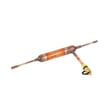
A model-matched starting point is the refrigerator defrost sensor assembly 6615JB2005C.
Basic symptom-to-likely-cause guide
| What you notice | What it usually means | What to do next |
|---|---|---|
| Freezer warms, frost on back wall | Defrost system not clearing frost | Check sensor, heater circuit, airflow |
| Fan noise changes, weak airflow | Frost blocking evaporator area | Defrost system diagnosis, inspect fan |
| Doors not sealing, moisture inside | Warm air intrusion causing excess frost | Inspect/clean gasket, align doors |
Why it matters
When defrost heat is not working correctly, frost can build up around the evaporator and restrict airflow. That leads to warmer refrigerator temperatures, poor ice production, and longer run times.
Where to find model-specific guidance
Use the 79578406803 owner's manual troubleshooting and safety sections for control settings, airflow guidance, and safe service steps (including disconnecting power before accessing panels).
Last updated: January 2026
Why is my Kenmore Elite freezer frosting up?
Frost in the freezer on Kenmore model 79578406803 almost always happens when warm, humid air is getting in (door not sealing or being opened often) or when moisture is not draining and refreezes. Start by checking door closing and airflow, then address drain and defrost-related issues using the 79578406803 owner's manual.
Most common causes (and what to check first)
- Door not closing tightly: look for food packages, bins, or a misaligned drawer preventing a full seal.
- Frequent door openings: each opening brings humid air into the freezer, which turns into frost.
- Dirty or sticky gasket: grime can keep the gasket from sealing; clean the gasket and the cabinet surface it touches.
- Air vents blocked: blocked vents reduce circulation and can increase moisture and frost.
- Drain issue: if meltwater cannot drain away, it can refreeze and build frost.
Quick troubleshooting steps
- Inspect the seal: close the freezer on a sheet of paper; if it slides out easily, the seal is leaking.
- Clean the gasket: wash and dry it, then lightly condition it (the manual recommends wax/polish to reduce sticking).
- Confirm nothing holds the door open: check baskets, the ice bin area, and drawer alignment.
- Check airflow: move packages away from vents so cold air can circulate.
- Defrost and reset: if frost is heavy, unplug and fully defrost, dry the compartment, then restart and monitor.
Parts that can contribute to frosting
If the door is not “telling” the refrigerator it is closed, cooling patterns can get weird and moisture problems can follow.
| Symptom you notice | What it often points to | Example part for this model |
|---|---|---|
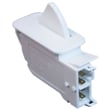
| Light stays on or door-open alarm behavior seems wrong | Door switch issue | Lg refrigerator door switch 6600JB1010A |
| Frost mainly near the door edge | Seal/closure problem | Door gasket (match by location) |
| Water/ice buildup near bottom or after defrost | Drain restriction | Refrigerator drain tube 5251JA3003D |
Why it matters
Frost buildup reduces airflow and insulation efficiency, so temperatures swing and the compressor runs longer. Fixing the air leak or moisture source helps protect food quality and keeps the freezer temperature stable.
Last updated: January 2026
Why is my Kenmore refrigerator leaking underneath?
Water leaking underneath a Kenmore bottom-mount refrigerator like model 79578406803 is usually caused by defrost water missing the drain path (a clogged or frozen defrost drain) or by a water supply connection that is seeping and dripping down to the floor. Use the 79578406803 owner's manual to locate the drain and water line connection points for your exact configuration.
Most common causes (and what to check first)
- Clogged or frozen defrost drain: Meltwater backs up, then runs into the fresh food section or down into the base and onto the floor.
- Cracked or out-of-position drain pan: Defrost water is supposed to collect and evaporate; if the pan is damaged or shifted, it can spill.
- Water line or fitting leak (if you have an icemaker or dispenser): Even a slow drip at the compression nut, ferrule, or shutoff valve can pool underneath.
- Door not sealing: Excess humidity creates heavy frost, which increases defrost water and can overwhelm a partially restricted drain.
Step-by-step troubleshooting
- Unplug the refrigerator and protect the floor with towels.
- Check for a water line leak behind the unit (if connected): look for wet tubing, fittings, or a drip trail down the back.
- Inspect the drain pan at the bottom: confirm it is seated flat and not cracked.
- Check for ice or debris at the defrost drain inside the refrigerator compartment; flush with warm water until it flows freely.
- Confirm doors close tightly and nothing is holding them open.
Quick symptom guide
| What you see | Most likely cause | Best next step |
|---|---|---|
| Clear water puddle every few days | Defrost drain restriction | Clear/flush the drain path |
| Constant puddle, worse after using ice/water | Water line fitting leak | Tighten fittings and recheck |
| Water plus heavy frost inside | Door seal issue causing excess frost | Inspect gasket and door alignment |
Parts that commonly relate to leaks on this model
- If the leak is tied to the icemaker/dispenser water supply, verify the rear cover is installed correctly after inspection; the refrigerator compressor access cover 3551JJ2008B helps protect and route components in the compressor compartment.
- If you find water tracking from the door area, inspect the door seal and contact surfaces; a damaged gasket can contribute to frost and defrost overflow.
Why it matters
Leaks under the refrigerator can damage flooring and also point to airflow or defrost drainage problems that reduce cooling performance over time.
Last updated: January 2026