Owner’s manual
 Error Codes




How to remove the bottom drawer of a GE refrigerator?
On the GE GDSS0KCXCRSS bottom-mount refrigerator, we remove the bottom freezer drawer by pulling it fully open, lifting the freezer basket out, then removing the screws that secure the drawer front to the rails so the drawer front can lift off. Use the steps in the GDSS0KCXCRSS owner's manual for the exact sequence.
- Unplug the refrigerator (or switch off power) for safety.
- Open the freezer drawer until it stops.
- Lift the freezer basket up at the back, then lift the front and remove the basket.
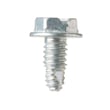
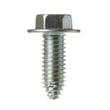
- Remove the screw on each side of the drawer rail (one per side).
- Lift up on both sides of the drawer handle to separate the drawer railings from the rail assemblies.
- Set the drawer front on a non-scratching surface; push the rail assemblies back into the locked position.
| Item | What it does | Why it comes out first |
|---|---|---|
| Freezer basket | Holds frozen food and rides inside the drawer | Clears access to the drawer front screws |
| Drawer front | The outer panel with the handle | Must be separated from the rails to reduce size and weight |
| Rail assemblies | Slides that support the drawer | Need to be pushed back/locked so they do not extend unexpectedly |
- Support both sides evenly when lifting the drawer front off the rails.
- Keep screws together so they go back into the same side.
- Protect the floor and drawer front with a towel or cardboard.
- If the rails feel stuck, check that the drawer is fully open and the screws are fully removed.
Removing the bottom drawer correctly prevents bent rails, stripped screw holes, and misalignment that can cause the freezer drawer to not seal, leading to frost buildup and temperature swings.
Last updated: January 2026
How to remove bottom grille on GE refrigerator?
On the GE GDSS0KCXCRSS bottom-mount refrigerator, we remove the bottom (base) grille by taking out the two Phillips-head screws, then pulling the grille off. This is commonly done to access the leveling legs for leveling, cleaning, or moving the refrigerator.
- Unplug the refrigerator (recommended for safety while working near wiring and moving parts).
- Locate the base grille at the very bottom front of the refrigerator.
- Remove the two Phillips-head screws securing the grille.
- Pull the grille straight off and set it aside.
- Use a #2 Phillips screwdriver so you do not strip the screw heads.
- Keep the screws in a cup so they do not roll under the refrigerator.
- Pull the refrigerator straight out if you need more access; avoid dragging it sideways to help protect flooring.
- Watch the power cord and any icemaker water supply line when moving the unit.
To reinstall, line the grille up at the bottom front, position it flush, then reinstall the two Phillips-head screws.
| Task | What you do | Why you do it |
|---|---|---|
| Remove grille | Take out 2 Phillips screws, pull grille off | Access leveling legs and front base area |
| Level refrigerator | Turn leveling legs clockwise to raise, counterclockwise to lower | Stops wobble and helps doors seal properly |
| Reinstall grille | Align grille, reinstall 2 screws | Restores airflow path and finished look |
The base grille is part of normal service access on the GDSS0KCXCRSS. Removing it lets us reach the leveling legs (which stabilize the refrigerator and help prevent tipping) and makes routine cleaning and positioning easier.
- For the model-specific procedure and leveling-leg details, use the GDSS0KCXCRSS owner's manual.
Last updated: January 2026
What is the most common problem with GE refrigerators?
The most common issue we see with GE refrigerators (including model GDSS0KCXCRSS) is a cooling problem: the fresh food section gets warm, the freezer temperature drifts, or temperatures swing. Many “no-cool” complaints trace back to airflow, defrost, or sealed-system performance.
Cooling issues typically come from a few repeat offenders. Start with the easiest checks first.
- Dirty condenser coils: reduces heat removal and raises cabinet temps.
- Evaporator fan problem: weak airflow causes warm fridge temps and uneven cooling.
- Defrost system trouble: frost buildup blocks airflow over the evaporator.
- Temperature sensing/control issues: bad sensor or control board can misread temps.
- Door not sealing or not closing: warm air leaks in and creates temperature swings.
Use these steps to narrow the cause on a GE bottom-mount refrigerator.
- Confirm the controls are set to normal (not “too cold” or “too warm”).
- Make sure food is not blocking the rear air vents; the manual notes food too close to the back vent can cause freezing or airflow issues.
- Listen for the evaporator fan running when the doors are closed.
- Check for heavy frost on the freezer back panel (a defrost clue).
- Inspect door alignment and closing; leveling legs often need adjustment so doors close by themselves.
If your symptoms match, these are frequent repair parts for GDSS0KCXCRSS:
| Symptom | Likely system | Example part for this model |
|---|---|---|
| Fridge warm, freezer OK | Airflow | Refrigerator evaporator fan motor WR60X10277 |
| Frost buildup, warm temps | Defrost | Refrigerator defrost thermostat WR50X10068 |
| Temps swing or read wrong | Sensing | Refrigerator temperature sensor WR55X10025 |
A refrigerator that is not cooling correctly can spoil food quickly and can also overwork the compressor. Catching airflow, defrost, or door-seal problems early often prevents bigger repairs.
For model-specific operating tips and door/leveling guidance, use the GDSS0KCXCRSS manual.
Last updated: January 2026