Owner’s manual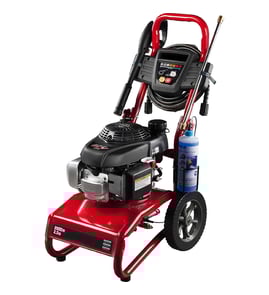




Can you put 87 gas in a pressure washer?
Yes. For the Craftsman pressure washer model 580752212, we use clean, fresh unleaded gasoline with a minimum of 87 octane (87 AKI). Fuel with up to 10% ethanol (gasohol) or up to 15% MTBE is also acceptable; do not use E85. See the 580752212 owner's manual for the exact fuel guidance and safety notes.
Fuel rules we follow for model 580752212
- Use unleaded gasoline, 87 octane minimum.
- Use fresh fuel; old gas is a common cause of hard starting and surging.
- Ethanol blends are OK up to 10% ethanol.
- MTBE blends are OK up to 15% MTBE.
- Do not mix oil into the gasoline.
- Do not use unapproved fuels such as E85.
Quick compatibility table
| Fuel type | OK to use? | Notes |
|---|---|---|
| Unleaded 87 octane (87 AKI) | Yes | Minimum required octane |
| Unleaded 88 to 93 octane | Yes | Fine to run; not required for normal use |
| Up to 10% ethanol (E10) | Yes | Use fresh fuel; consider stabilizer for storage |
| E15 | No | Not listed as acceptable for this engine |
| E85 | No | Specifically called out as unapproved |
Why it matters
Using the correct gasoline helps prevent starting problems, poor performance, and fuel-system gum/varnish buildup. It also protects the engine and helps you get consistent pressure and flow at the spray gun.
Helpful tips if it runs rough after fueling
- Drain and replace with fresh 87+ octane fuel from a different station/brand.
- Purge air from the pump by turning on the water and squeezing the trigger before starting.
- Check for kinked hoses and confirm a steady water supply.
- If you store fuel, add stabilizer as described in the manual.
Last updated: February 2026
Does Craftsman have a lifetime warranty on pressure washers?
No. For the Craftsman pressure washer model 580752212, the warranty is not a lifetime warranty; it covers defects in materials and workmanship and excludes normal wear items and damage from misuse or lack of maintenance. For the exact coverage terms and exclusions, use the 580752212 owner's manual.
What the warranty typically covers (and what it does not)
The manual for this model makes two points very clear: the warranty is limited, and maintenance matters.
- Covers defects in material and workmanship
- Does not cover normal wear items (expendables)
- Does not cover repairs caused by accidents
- Does not cover problems caused by operating or maintaining the unit contrary to instructions
- Does not cover issues tied to improper fuel mixture or contaminated or stale fuel
Common “wear items” that are excluded
These parts can wear out during normal use and are usually not covered under the warranty for this model:
- Spray gun
- High-pressure hose
- Nozzle extensions
- Spray nozzles
- Filters
- Spark plug
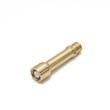
If you are troubleshooting poor spray pattern or low cleaning performance, a worn or clogged nozzle is a common cause; the pressure washer spray nozzle 195983XGS is one of the model-listed nozzle options.
Maintenance requirements that protect your coverage
Following the maintenance schedule helps prevent avoidable failures and supports warranty eligibility.
| Maintenance item | Typical interval (general guidance) | Why it matters |
|---|---|---|
| Check engine oil level | Before each use | Prevents engine damage |
| Check/clean water inlet screen | Regularly | Protects pump from debris |
| Inspect high-pressure hose and gun for leaks | Regularly | Prevents pressure loss and safety issues |
| Replace spark plug and air filter | About once per season | Helps reliable starting and power |
Why it matters
A pressure washer can run for years, but warranty coverage is designed for manufacturing defects, not for clogged nozzles, worn hoses, or fuel-related problems. Keeping up with routine maintenance is the fastest way to avoid downtime and out-of-pocket repairs.
Last updated: February 2026
How to tell if your pressure washer pump is bad?
On a Craftsman pressure washer model 580752212, a bad pump typically shows up as low or surging pressure, leaks, or unusual noises, especially after the unit has been run without enough water flow or exposed to freezing. Before blaming the pump, we rule out simple flow and nozzle issues first using the steps in the 580752212 owner's manual.
Quick signs the pump is failing
- Pressure is weak, pulsates, or will not build even with a steady water supply
- Water leaking from the pump body or fittings (not just a loose hose connection)
- Oil leaking or milky, dirty pump oil (on pumps with serviceable oil)
- Grinding, knocking, or squealing noises from the pump area
- Pressure spikes that feel unsafe or uncontrollable at the spray gun
Fast checks to do before replacing the pump
These checks catch the most common “pump looks bad but isn’t” situations.
- Confirm water supply: Use an unrestricted garden hose and keep inlet water under 100°F.
- Purge air from the system: Turn water ON, then hold the trigger to purge air and impurities before starting.
- Inspect the inlet screen: Clean debris; do not run the washer if the inlet screen is damaged or missing.
- Check hose condition: Look for kinks, cuts, or soft spots in the high-pressure hose.
- Verify the spray tip: A clogged or worn tip can mimic pump failure; try a known-good tip such as the pressure washer spray nozzle 195983XGS.
What the symptoms usually mean
| Symptom | Most common cause | What to check next |
|---|---|---|
| Low pressure | Clogged nozzle, air in pump, restricted inlet | Purge air, clean inlet screen, swap nozzle |
| Pulsing pressure | Air leak on inlet side, debris in pump valves | Tighten inlet fittings, purge air, check screen |
| Water leaking at pump | Worn seals or cracked housing (often freeze damage) | Inspect pump body and fittings for cracks |
| Loud knocking/grinding | Internal wear or bearing damage | Stop using; inspect pump and coupler area |
Why it matters
A failing pump can still trap high pressure in the spray gun and hose even after you stop the engine. Following the shutdown and pressure-relief steps in the manual helps prevent injury and avoids additional pump damage.
Related DIY help
If pressure problems point to regulation issues rather than a failed pump, use how to replace a pressure washer unloader valve to guide diagnosis and repair.
Last updated: February 2026
Is it worth repairing a pressure washer?
Yes, repairing a Craftsman pressure washer model 580752212 is worth it when the problem is a wear item or a simple water-flow issue (clogged inlet screen, leaking hose, worn nozzle) and the engine and pump are still in good shape. If the engine or pump has major internal damage, replacement is usually the better value.
Quick decision checklist
- Repair it when the unit starts and runs normally but performance is poor (low pressure, surging, leaks).
- Repair it when the fix is a maintenance item you can do in under an hour.
- Replace it when the engine has severe mechanical problems (won’t run even after basic tune-up steps).
- Replace it when the pump is cracked or the pressure loss is internal and persistent.
- Repair it when you can restore performance by cleaning, tightening, or replacing small external parts.
What to check first (often low-cost fixes)
Start with the basics from the 580752212 owner's manual. Regular maintenance improves performance and extends the life of the pressure washer, and the pump on this model is designed as a sealed, pre-lubricated unit (no pump oil maintenance).
- Check and clean the water inlet screen (clogged screens cause low pressure).
- Inspect the high-pressure hose for cuts, bulges, or leaks.
- Check the spray gun and wand connections for leaks.
- Purge air from the pump and confirm steady water supply.
- Try a known-good spray tip; a worn or partially clogged tip can mimic pump problems.
Helpful part to consider
If your spray pattern is weak or uneven, replacing the tip is a common win: pressure washer spray nozzle 195983XGS.
Repair vs. replace: simple comparison
| Situation | Typical best choice | Why |
|---|---|---|
| Low pressure but engine runs smoothly | Repair | Often inlet screen, nozzle, hose, or air in pump |
| Leaks at fittings or gun/wand | Repair | Usually seals, connections, or accessory issues |
| Engine won’t stay running | Depends | May be tune-up level, or deeper engine issue |
| Major pump or engine internal failure | Replace | High cost and time, lower return on investment |
Why it matters
A pressure washer that is maintained and used correctly lasts longer and performs better. The manual also stresses safe operation (for example, using proper eye protection and avoiding spraying fragile surfaces like glass with a 0° nozzle), which helps prevent damage to the machine and what you are cleaning.
Last updated: February 2026
What is the PSI of a gas-powered pressure washer?
For the Craftsman pressure washer model 580752212, the maximum rated pressure is 3,000 PSI (max outlet pressure). That is the top cleaning pressure the pump is designed to produce under rated conditions; actual working pressure varies with nozzle choice and water supply.
Confirm the PSI for your exact unit
The model 580752212 is listed as 3000 PSI MAX in the specifications. For the exact rating and operating limits, use the 580752212 owner's manual.
What can change the pressure you see at the wand?
- Spray nozzle/tip selection (different orifices change pressure and flow)
- Water supply (needs adequate flow and at least about 20 PSI at the hose end)
- Air in the pump (purge air by squeezing the trigger with water on)
- Clogged nozzle (reduces flow and can cause poor spray pattern)
- Pump/unloader condition (wear or sticking can cause pressure surging)
Typical PSI ranges (for context)
Most gas-powered pressure washers are commonly in the 2,000 to 4,000 PSI range, with some heavy-duty units higher. Your Craftsman 580752212 sits in the strong mid-range at 3,000 PSI.
| Pressure washer type | Common PSI range | Typical use |
|---|---|---|
| Electric | 1,200 to 2,300 | Patio furniture, cars, light siding |
| Gas (consumer) | 2,000 to 4,000 | Driveways, decks, fences |
| Gas (heavy-duty) | 4,000 to 5,000+ | Commercial cleaning, large concrete areas |
Why it matters
PSI is the “cutting power” that lifts grime; pairing the right PSI with the right nozzle and technique helps you clean faster while reducing the risk of damaging wood, paint, or siding.
Parts that often affect spray performance
If your spray pattern is weak or uneven, a worn or clogged tip is a common cause. For this model, see the pressure washer spray nozzle 195983XGS.
Last updated: February 2026
What is the most common problem with pressure washers?
The most common problem on a gas pressure washer like Craftsman model 580752212 is low or no pressure. In most cases, the cause is simple: a clogged spray tip/nozzle, air trapped in the pump, or a water-supply issue (kinked hose, poor flow, or water that is too hot). See the 580752212 owner's manual for the correct start-up purge steps and safe pressure-relief procedure.
Quick checks that fix most low-pressure complaints
- Turn ON the water first, then squeeze the trigger to purge air and impurities from the pump.
- Confirm steady water supply; use water not to exceed 100°F.
- Inspect the high-pressure hose for kinks, cuts, or damage.
- Clean or replace a clogged spray tip; a blocked tip is a top cause of weak spray.
- Make sure the spray gun is not locked open; keep control of kickback.
Most common causes and what you’ll notice
| Symptom | Most likely cause | What to do first |
|---|---|---|
| Weak spray, surging | Air in pump, restricted inlet | Purge air at the gun; verify water flow |
| Weak spray, steady | Clogged nozzle | Clean or replace the nozzle |
| No pressure, engine runs | Trigger/gun issue or pump issue | Check connections; then inspect pump system |
| Leaks at fittings | Worn O-ring/seal | Replace the O-ring or seal (do not use sealant) |
Parts that commonly affect pressure
If the spray pattern looks uneven or pressure drops suddenly, the nozzle is the first place we look. For this model, a common replacement is the pressure washer spray nozzle 195983XGS.
Why it matters
Running with restricted flow or trapped air makes the pump work harder and can shorten pump life. Following the correct purge and water-supply steps also helps prevent overheating and inconsistent pressure.
Safety notes we follow every time
- Point the spray gun in a safe direction and relieve trapped pressure whenever you stop the engine.
- Never aim the spray at people, animals, plants, or glass (especially with a 0° tip).
- Never repair a high-pressure hose; replace it.
Last updated: February 2026
Where is the model number on a Craftsman pressure washer?
On the Craftsman pressure washer model 580752212, the model and serial number are printed on the identification label near the rear of the base plate (near the back of the lower frame). Use that label information when ordering parts or calling for service; see the 580752212 owner's manual.
What to look for on the label
The identification label typically includes key details you will need for parts lookup and support.
- Model number (for this unit: 580752212)
- Serial number
- PSI and GPM ratings (often listed)
- Engine information (may be listed separately)
- Safety and compliance markings
Quick location checklist
Use this quick checklist to find it fast on a gas pressure washer frame.
- Stand behind the unit and look down at the base plate area
- Check the rear section of the lower frame/base plate
- Look for a rectangular sticker or metal tag labeled “Model” and “Serial”
- Wipe dirt and oil off the frame so the print is readable
Common label locations (comparison)
| Pressure washer style | Most common model label location | What it’s attached to |
|---|---|---|
| Open-frame gas unit (like 580752212) | Near rear of base plate | Lower frame/base plate |
| Compact/vertical unit | Back or side of frame | Upright frame panel |
| Cart-style with large handle | Rear or top of lower frame | Frame crossmember |
Why it matters
We use the exact model number to match the correct pump, hose, spray gun, and nozzle system for your Craftsman pressure washer. Even small model changes can affect fit and pressure ratings.
Last updated: February 2026