Owner’s manual


What is the average life of a Kenmore dryer?
A Kenmore dryer like model 11087511702 typically lasts 10 to 13 years with normal household use. With consistent venting and lint maintenance, it’s common for these dryers to reach the upper end of that range (or longer) before major repairs become frequent.
- Vent restriction (long runs, crushed duct, lint buildup) that overheats the heater and safety thermostats
- Overloading that strains the drive belt, idler pulley, and drum support system
- Skipped lint cleaning that reduces airflow and raises operating temperature
- Moisture sensor wear/contamination that causes longer cycles and extra heat exposure
- Normal wear items (belt, rollers, pulley) that eventually need replacement
Use the care and venting guidance in the 11087511702 use & care manual to keep airflow and temperatures in the safe range.
- Clean the lint screen every load; wash it with mild soap and water if you notice residue
- Inspect and clean the entire vent path periodically (dryer outlet to outside hood)
- Keep the dryer level to reduce vibration and drum wear
- Avoid over-drying; use Auto cycles when possible to reduce heat time
- Listen for early warning noises (squeal, thump, rumble) and address them before they damage other parts
| Usage pattern | Typical lifespan | Notes |
|---|---|---|
| Light (1 to 3 loads/week) | 12 to 15 years | Airflow maintenance matters most |
| Average (4 to 7 loads/week) | 10 to 13 years | Most common household range |
| Heavy (multiple loads/day) | 7 to 10 years | Wear parts and heat system see more stress |
A dryer’s life is usually limited by heat and friction. Good venting reduces overheating (protecting the heating circuit and safety cutoffs), and timely replacement of wear parts prevents secondary damage to the drum, motor, and cabinet.
Last updated: January 2026
How to tell if a dryer heating element is bad?
On the Kenmore 11087511702 electric dryer, a bad heating element is likely when the dryer tumbles normally but produces no heat, takes much longer to dry, or trips a breaker. The most reliable confirmation is a continuity test on the element with the dryer unplugged.
- Dryer runs but clothes stay cool and damp
- Drying times suddenly get much longer
- Burning smell or visible scorching near the heater housing (power off before inspecting)
- Breaker trips when heat should turn on
- No heat even though airflow seems normal
- Unplug the dryer (or shut off the breaker) and let it cool.
- Access the heater terminals using the disassembly guidance in the 11087511702 dryer manual.
- Remove at least one wire from the heating element terminal so you are not reading the whole circuit.
- Set a multimeter to ohms (Ω) and test across the element terminals.
- Also test each terminal to the metal heater housing to check for a short.
| Meter result | What it suggests | Next step |
|---|---|---|
| No continuity (open circuit) | Element coil is broken | Replace the heating element |
| Continuity but terminal-to-housing shows continuity | Element is shorted to ground | Replace the heating element |
| Continuity and no short to housing | Element may be OK | Check thermal fuse, thermostats, airflow |
On this model, a “no heat” complaint is often caused by a safety device opening due to overheating or restricted venting.
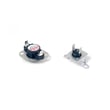
- Dryer thermal fuse WP3392519: If blown, the dryer may run but not heat (or may not run, depending on design)
- Dryer high-limit thermostat WP3391914: Can open if the heater area overheats
- Thermal cut-off components (often replaced as a set) and wiring connections
- Vent restriction (crushed vent, clogged lint screen, blocked hood)
A failed heating element stops heat production, but overheating from poor airflow can also damage the heater and repeatedly blow fuses. Confirming the element with a meter helps you avoid replacing the wrong part and reduces repeat failures.
Last updated: January 2026
Is it worth replacing the heating element in a dryer?
Yes, it’s usually worth replacing the heating element in a Kenmore dryer like model 11087511702 when the dryer otherwise runs normally and you’ve confirmed the heater is open (failed). The most important part is correcting airflow and checking safety cutoffs so the new heater doesn’t fail again.
We can’t identify the exact heating element part number for 11087511702 from the model-specific parts shown here. However, we can confirm this model uses common no-heat safety components such as a thermal cut-off kit and thermal fuse, which should be checked before replacing the heater.
For operating, venting, and safety guidance specific to this dryer, use the 11087511702 dryer manual.
Replacing the heater typically makes sense when:
- The dryer tumbles normally but produces no heat
- You’ve verified proper power supply (electric dryers need full 240V)
- Airflow at the outside vent hood is strong
- The drum, cabinet, and wiring are in good condition
- You plan to clean lint buildup inside the cabinet and venting
A “no heat” complaint is often caused by an overheat safety opening due to restricted venting.
- Clean the lint screen and lint housing
- Inspect and clean the entire vent run to the outside
- Check for crushed, kinked, or foil-style venting
- Test the thermal fuse and thermal cut-off
- Check the high-limit thermostat for an overheat condition
A common related repair part for this model is the dryer thermal cut-off fuse kit 279973.
| What you’re seeing | Best next step | Why it matters |
|---|---|---|
| Dryer runs, no heat | Test heater circuit and safeties | Prevents buying the wrong part |
| Long dry times, very hot cabinet | Fix venting and lint first | Overheating can take out the heater and cutoffs |
| Repeated no-heat failures | Address airflow plus safeties together | Reduces repeat breakdowns |
Heating elements often fail after overheating from restricted venting or heavy lint buildup. Restoring proper airflow helps the dryer heat correctly, dry faster, and protects new heater and safety parts.
Last updated: January 2026