Owner’s manual
 Error Codes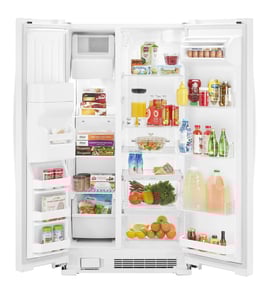



What is the most common problem with a GE refrigerator?
For the GE GSS25GSHKCSS side-by-side refrigerator, the most common issues we see are cooling performance problems (warm fridge or freezer) and ice maker or dispenser complaints. These are often tied to airflow restrictions, dirty condenser areas, or a failing fan, sensor, or defrost component; see the GSS25GSHKCSS owner’s manual for model-specific operating and troubleshooting tips.
Most common symptoms (and what they usually point to)
- Refrigerator section warm, freezer OK: restricted airflow, evaporator fan issue, or frost buildup from a defrost problem
- Both sections warm: condenser airflow problem, dirty condenser area, or a control/starting issue
- Ice maker not making ice or slow: water supply issue, clogged filter, or ice maker component problem
- Water dispenser slow: clogged filter or water inlet valve issue
- Frost buildup in freezer: door not sealing, frequent door openings, or defrost system trouble
Quick checks we recommend first (no parts required)
- Confirm the controls are set correctly and allow 24 hours for temperatures to stabilize after changes.
- Make sure vents inside the compartments are not blocked by food packages.
- Check that doors close and seal fully (a poor seal can cause warm temps and frost).
- If you have a dispenser, flush water after filter changes and verify steady water flow.
- Clean dust from the condenser area (restricted condenser airflow is a top cause of poor cooling).
Common parts involved when the problem is not a simple setting or airflow issue
| Symptom | Likely system | Example compatible part for this model |
|---|---|---|
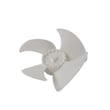
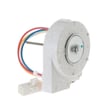
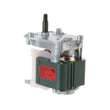
| Warm temps, poor airflow | Evaporator airflow | Refrigerator evaporator fan motor WR60X10307 |
| Frost buildup, warm temps | Defrost system | Refrigerator defrost heater WR51X10055 |
| Ice maker not producing | Ice maker system | GE refrigerator ice maker kit WR30X10093 |
| Slow water/ice fill | Water supply components | Refrigerator water inlet valve WR57X30890 |
Why it matters
Cooling and ice maker problems usually get worse over time. Catching a dirty condenser area, blocked vent, or early defrost issue quickly helps protect food temperatures and reduces strain on the compressor.
Last updated: January 2026
What is the life expectancy of a GE refrigerator?
GE refrigerators like model GSS25GSHKCSS typically last 10 to 16 years with normal household use and basic maintenance. Your actual lifespan depends most on condenser cleanliness, door seal condition, and how hard the compressor has to work day to day; see the care and cleaning guidance in the GSS25GSHKCSS owner’s manual.
Typical lifespan range (what to expect)
Most GE side-by-side refrigerators fall into this range:
| Usage and care level | Typical lifespan | What usually ends it first |
|---|---|---|
| Light use, good maintenance | 14 to 16 years | Wear items (ice maker, fans) |
| Average use, average maintenance | 10 to 14 years | Cooling performance issues |
| Heavy use, poor airflow/dirty coils | 8 to 12 years | Compressor run time and heat stress |
What helps a GE refrigerator last longer
We see the best longevity when you stay ahead of heat, airflow, and sealing issues:
- Keep condenser area airflow clear (don’t pack items tight behind the cabinet)
- Clean spills and odors so door gaskets seal fully
- Keep doors closed as much as practical; frequent openings add run time
- Replace the water filter on schedule if you use the dispenser/ice maker
- Fix small issues early (noisy fan, warm spots, slow ice production)
Parts that commonly affect “how long it lasts”
A refrigerator can run for years, but certain components often drive service calls as it ages:
- Ice maker and dispenser components
- Evaporator fan motor (moves cold air through the compartments)
- Defrost system components
- Temperature sensing components
If your GSS25GSHKCSS starts running warm or temperatures swing, a failed sensor can be a factor; the GE profile refrigerator temperature sensor WR55X10025 is one compatible example for this model.
Why it matters
A refrigerator that’s struggling to cool usually runs longer and hotter, which accelerates wear on the sealed system and can shorten overall life. Simple maintenance and timely part replacement often costs far less than replacing the entire unit.
Last updated: January 2026
How do you reset a GE side by side refrigerator?
To reset the controls on your GE GSS25GSHKCSS side-by-side refrigerator, unplug the refrigerator (or switch off the breaker) for about 30 seconds, then restore power. This power-cycle resets the control board and user interface and often clears minor glitches.
Reset steps for model GSS25GSHKCSS
- Unplug the refrigerator from the wall outlet (preferred), or turn the circuit breaker off.
- Wait 30 seconds.
- Restore power.
- Allow 24 hours for temperatures to stabilize after any reset or temperature change.
- If the dispenser or controls are locked, press and hold Lock Controls for 3 seconds to unlock.
For control-panel features and normal operating behavior on this model family, use the GSS25GSHKCSS owner’s manual.
What a reset does (and does not) fix
A power reset is best for temporary control issues, such as a frozen display or unresponsive buttons. It will not correct a failed cooling component.
| Symptom after reset | What it usually means | What to do next |
|---|---|---|
| Display works and cooling returns | Temporary control glitch | Monitor temps for 24 hours |
| Lights work but unit still warm | Possible airflow, defrost, or sealed-system issue | Check vents, door seal, frost buildup |
| No response at all | Power supply or control problem | Verify outlet/breaker; consider service |
When to check parts (if cooling still isn’t right)
If the refrigerator still is not cooling properly after the reset and a full 24-hour stabilization period, these model-compatible parts are commonly involved in cooling complaints:
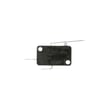
- Refrigerator temperature sensor cover WR02X10647 (protects the sensor area; damage can affect airflow around sensing)
- GE profile refrigerator temperature sensor WR55X10025 (reports temperature to the control board)
- Refrigerator defrost heater WR51X10055 (helps clear frost from the evaporator)
- Refrigerator defrost bi-metal thermostat WR50X10065 (helps regulate defrost operation)
- Refrigerator evaporator fan motor WR60X10307 (moves cold air through the compartments)
Why it matters
A proper reset can quickly clear a control-board hiccup, but if the refrigerator is still warm afterward, acting early helps prevent food spoilage and can narrow the issue to airflow, defrost, or temperature-sensing components.
Last updated: January 2026