 Installation guide
 Owner’s manual
 Error Codes



Can I still use my appliance with an E22 error?
We do not recommend running your Bosch dishwasher model SHE3ARF6UC with an E22 error because it typically points to a drainage restriction (most often a dirty filter area or a drain-path blockage). Clearing the cause first helps prevent poor cleaning, standing water, and repeat shutdowns; see the SHE3ARF6UC manual.
What E22 usually means on a Bosch dishwasher
E22 commonly shows up when the dishwasher senses it cannot drain correctly or the filter area is restricted.
Common causes to check first:
- Filter area is clogged with food debris or labels
- Sump area has standing water and debris around the intake
- Drain hose is kinked, pinched, or partially blocked
- Drain pump is jammed or failing
- Sink drain or garbage disposer connection is blocked
What to do before you run another cycle
- Cancel the cycle and let the unit attempt to drain.
- Remove and clean the filters and the sump area.
- Inspect the drain hose routing for kinks and high-loop/air-gap setup.
- If the unit still will not drain, inspect the pump area for obstructions.
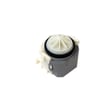
If you suspect a drain pump problem, the model uses a replaceable dishwasher drain pump 00631200.
Quick decision guide
| What you see | Best next step | OK to keep using? |
|---|---|---|
| Water standing in tub | Clean filters and check drain path | No |
| Intermittent E22, drains slowly | Check hose routing and sink/disposer connection | No |
| Loud humming during drain | Check for pump obstruction; consider pump replacement | No |
| E22 returns immediately after cleaning | Diagnose drain pump, hose, or control inputs | No |
Why it matters
A dishwasher that cannot drain recirculates dirty water, leaves residue on dishes, and can strain the drain pump and circulation system. Fixing the restriction first is the fastest way to restore normal wash performance.
Last updated: January 2026
What's the most common problem with a Bosch dishwasher?
The most common Bosch dishwasher problem is poor cleaning caused by restricted water flow (a dirty filter, blocked spray arms, or hard-water buildup). On the Bosch SHE3ARF6UC, the next most common issues are not draining and not filling, which often trace back to a clog or a failing pump or inlet valve.
Most common symptoms and what they usually mean
- Dishes still dirty or gritty: filter needs cleaning, spray arms clogged, or water temperature too low
- Standing water in the tub: drain path restriction or a weak drain pump
- No water entering: supply issue, kinked line, or a failing inlet valve
- Cycle stops with an error: often related to draining, filling, or sensing water conditions
- Detergent door not opening: dispenser issue or loading blocking the door
Quick checks we recommend first (fast, no parts)
- Clean the filter area and remove debris from the sump.
- Spin and rinse spray arms; clear any plugged jets.
- Confirm the sink drain and garbage disposal inlet are clear (new disposals often have a knockout plug).
- Run hot water at the sink before starting the cycle to improve wash performance.
- Use rinse aid and avoid overloading so water can reach all surfaces.
When it’s likely a part problem
If cleaning and loading checks do not help, these parts are common fixes on this model:
| Symptom | Common culprit | Example part for SHE3ARF6UC |
|---|---|---|
| Not draining | Drain pump or drain hose restriction | Dishwasher drain pump 00631200 |
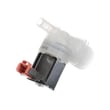
| Not filling | Water inlet valve or supply restriction | Dishwasher water inlet valve 10023853 |
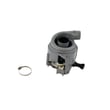
| Poor wash action | Circulation pump issue | Dishwasher circulation pump with heater 12008381 |
| Detergent door issues | Dispenser mechanism | Dishwasher detergent dispenser assembly 12008380 |
Why it matters
Bosch dishwashers are efficient, so small restrictions (filters, spray arm jets, drain path) can cause big performance drops. Fixing the root cause improves cleaning, prevents odors, and helps the dishwasher complete cycles normally.
For model-specific operating and care steps, follow the SHE3ARF6UC manual. For fault codes and what they point to, use Bosch dishwasher error codes.
Last updated: January 2026
How do I find the model number on my SHE3ARF6UC?
Your Bosch dishwasher’s model number is printed on the appliance’s rating label; on most Bosch built-in dishwashers like model SHE3ARF6UC, that label is on the door edge or the inner door frame. Use the full model number from the label when ordering parts or checking diagrams in the owner's manual.
Where to look on the dishwasher
Check these common Bosch label locations (look for a sticker or metal plate with model and FD numbers):
- Along the top edge of the door (visible when you open the door)
- On the left or right side edge of the door
- On the inner door frame around the tub opening
- Near the lower edge of the door, inside the cabinet opening
What to write down (and why)
For accurate part matching, record the full identification details exactly as shown.
- Model number (example: SHE3ARF6UC)
- Index or suffix (often shown after a slash, such as /22)
- FD number (factory date code used by Bosch)
- Serial number (helps confirm production run)
Quick reference
| Label item | What it does | When you need it |
|---|---|---|
| Model number | Identifies the dishwasher platform | Always, especially for parts lookup |
| /Index (such as /22) | Narrows to the exact version | When parts vary by revision |
| FD number | Indicates production date range | When multiple versions exist |
| Serial number | Unique unit identifier | Service history and verification |
Why it matters
Bosch dishwashers often have multiple revisions under the same base model. Using the complete model and index (for example, SHE3ARF6UC/22) prevents ordering a mismatched part like a control board, door seal, or drain pump.
Last updated: March 2026





