Installation guide
 Owner’s manual
 Error Codes


How to identify a Kenmore washer model?
Your Kenmore washer model number is printed on the model and serial number label; for Kenmore model 11027612600, that label is located under the washer lid. Once you have the full model number, we can match the correct Kenmore parts and diagrams for your exact washer. See the 11027612600 owner's manual.
On Kenmore washers, the model tag is usually in one of these spots:
- Top-load washers: under the lid (often along the rim of the opening)
- Front-load washers: inside the door opening (around the door frame)
- Some models: on the back panel near the power cord or control area
Kenmore model numbers commonly start with 110 and then continue with additional digits. Using the complete model number helps us ensure the right fit for parts that can vary by revision.
| What you’re checking | What to do | Why it helps |
|---|---|---|
| Model number | Write it down exactly as shown | Ensures correct part compatibility |
| Serial number | Record it too | Helps identify production range |
| Label location | Confirm it is the factory label | Avoids using a look-alike number from another component |
- Copy the model number character-for-character (no spaces added)
- If the label is worn, use a flashlight and take a photo before cleaning it
- Match parts by model number first, then confirm by part name (for example, washer lid switch assembly WP8318084)
- Keep the model number handy when checking diagrams, symptoms, and repair steps
Kenmore washers can share similar styling across multiple series, but internal components like the lid switch, drain pump, motor coupling, and agitator parts can differ. The model number is the fastest way to get the right replacement part the first time.
Last updated: February 2026
How many cubic feet is the Kenmore 600 series washer?
Kenmore “600 series” washers come in multiple designs and sizes, so cubic-foot capacity depends on the exact model number. For Kenmore washer model 11027612600, the most reliable place to confirm the listed capacity is the 11027612600 owner's manual.
We recommend matching capacity to the exact model tag, not the series name.
- Find the model/serial label under the lid or on the rim of the washer opening
- Confirm the model is 11027612600 (not a similar 110.27xxxxx variant)
- Check the “Specifications” or “Features” section in the manual
- If the manual lists basket dimensions instead of cubic feet, use the listed capacity statement (not a guess)
- If you are comparing washers, use “DOE capacity” or “tub capacity” consistently
“600 series” is a marketing family, not a single capacity. Most Kenmore top-load washers in this style commonly fall into these ranges:
| Washer type (typical) | Common capacity range |
|---|---|
| Standard top-load with agitator | 3.2 to 3.8 cu. ft. |
| High-capacity top-load | 4.0 to 4.8 cu. ft. |
| Compact top-load | 1.5 to 2.8 cu. ft. |
Capacity affects load size, cycle performance, and how easily the load can move during washing. When the tub is overfilled, items cannot circulate properly, which can reduce cleaning and increase wear on fabrics (and can contribute to out-of-balance spinning).
Last updated: February 2026
What is the average lifespan of a Kenmore washer?
A Kenmore washer typically lasts 10 to 15 years with normal household use. For the Kenmore 11027612600, consistent care (balanced loads, no overloading, and routine cleaning) helps you reach the high end of that range; worn drive and drain components are the most common life-shorteners.
Most washers land in the 10 to 15 year window; how you use and maintain the machine matters as much as age.
- Avoid overloading; loads should move freely during washing.
- Keep loads balanced to reduce strain on the drive system.
- Follow fabric care labels to prevent damage and reduce rewash cycles.
- Use bleach correctly (never pour undiluted bleach directly on fabrics).
- Address small issues early (slow drain, no spin, burning smell, loud agitation).
When a top-load washer starts failing, these parts are frequent culprits on this style of Kenmore design.
| Symptom | Commonly involved part | What you may notice |
|---|---|---|
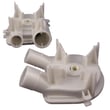
| Won’t drain or drains slowly | Washer drain pump WP3363394 | Water left in tub, humming, intermittent drain |
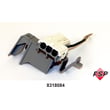
| Won’t spin or stops mid-cycle | Washer lid switch assembly WP8318084 | Fills/agitate OK, then no spin/drain |
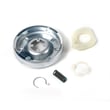
| Agitates poorly or “slips” | Agitator dog 80040 | Weak agitation, clicking, clothes not moving |
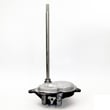
| Loud spin, poor basket movement | Washer drive block WP389140 | Basket wobble, grinding, uneven spin |
Use these habits to extend service life on the Kenmore 11027612600.
- Run periodic cleaning cycles (hot wash with appropriate cleaner).
- Check hoses for bulges, cracking, or seepage; replace before they burst.
- Level the washer to reduce vibration and suspension wear.
- Keep the lid area and rim dry to reduce odor and corrosion.
- If performance changes, use the troubleshooting steps in the 11027612600 owner’s manual.
A washer that is overloaded or consistently out of balance wears the clutch, drive components, and suspension faster. Good loading habits and early part replacement often cost far less than replacing the entire washer.
Last updated: February 2026