Owner’s manual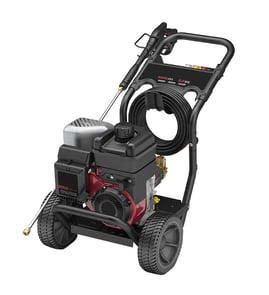

Does Craftsman have a lifetime warranty on pressure washers?
No. For the Craftsman pressure washer model 919762350, the owner’s documentation specifies a limited one-year warranty (90 days if used commercially or as a rental), as long as the unit is maintained and operated as instructed in the 919762350 owner's manual.
What the warranty covers for this model
For 919762350, the manual describes coverage as repair (at no charge) for defects in material and workmanship during the warranty period.
Key points called out in the manual:
- Pressure washer unit: limited 1 year from date of purchase
- Engine: limited 1 year from date of purchase
- Commercial or rental use: warranty period is 90 days
- Warranty service: handled through a Sears service center/department
What is typically not covered
Even during the warranty period, the manual notes common exclusions and situations that can void coverage.
Common examples:
- Normal-wear “expendable” items (for example, spark plugs and air filters)
- Damage from operator abuse or negligence
- Pump damage caused by running without water supply
- Problems caused by skipping routine maintenance (oil changes, air filter service, etc.)
Quick warranty snapshot
| Item | Coverage length (consumer use) | Coverage length (commercial/rental use) |
|---|---|---|
| Pressure washer (unit/frame/pump assembly as described) | 1 year | 90 days |
| Engine | 1 year | 90 days |
Why it matters
Warranty terms are tied directly to proper operation and maintenance. Following the maintenance schedule (engine oil, air cleaner, spark plug, hose checks) helps prevent avoidable failures that are commonly excluded from coverage.
If you are troubleshooting a performance issue that could be maintenance-related, the steps in solving pressure washer problems help you narrow down whether the cause is fuel, spark, water supply, spray tip, or pump-related.
Last updated: February 2026
Where to find model number on Craftsman pressure washer?
On the Craftsman pressure washer model 919762350, the model number is printed on a rating label attached to the frame. In most cases, you will find it on the upper frame (top or back) or on the lower frame near the rear.
Common label locations to check
- Top of the lower frame (often near the back)
- Back side of the lower frame rail
- Top crossbar of the upper frame (near the handle)
- Back of the upper frame (behind the engine area)
- Near the pump mounting area on the frame (close to where the pump bolts on)
What the label looks like and what to write down
The label is usually a small sticker or metal tag. For accurate parts lookup, copy these items exactly:
| Label item | Why we need it |
|---|---|
| Model number (example: 919762350) | Matches the correct parts diagrams and lists |
| Type or revision (if shown) | Helps avoid mismatched pump or engine parts |
| Engine model (if listed) | Needed for Briggs engine tune-up and carburetor parts |
Tips if the label is hard to read
- Wipe dirt and oil off the frame with a rag and mild cleaner
- Use a flashlight and take a close-up photo, then zoom in
- If the sticker is scratched, look for the same label on another frame rail
Why it matters
Craftsman pressure washers often share similar frames, but pumps and engines can differ. Using the exact model number (and any type/revision) helps us match the correct pump breakdown and engine parts for 919762350.
For diagrams and identification details, use the 919762350 owner's manual.
Last updated: February 2026
What size deck is a Craftsman 919762350?
The Craftsman 919762350 is a pressure washer, not a riding mower, so it does not have a mower deck size. For this model, the key “size” specs are its 2350 PSI pressure rating and the pump and engine configuration shown in the 919762350 owner's manual.
What to use instead of “deck size”
When you are matching accessories or troubleshooting performance on a pressure washer, these are the specs that matter most:
- PSI rating (this model is listed as 2350 PSI)
- Pump model (manual shows pump breakdown for MODEL PK16482)
- Engine model (manual lists Briggs engine model 121602-0206-E1)
- Hose and fitting sizes (garden hose inlet adapter and high-pressure coupling are called out in the parts list)
- Spray tip selection (controls fan pattern and cleaning force)
Quick reference: mower vs pressure washer terms
| If you meant... | The “size” is usually... | Example |
|---|---|---|
| Riding mower | Deck width (inches) | 42 in., 46 in., 54 in. |
| Pressure washer | PSI and GPM (flow) | 2350 PSI (GPM varies by model) |
Why it matters
Using mower specs (like deck width) to shop for pressure washer parts can lead to the wrong items. For the Craftsman 919762350, matching the pump (PK16482), engine family, and hose/fitting type is what keeps repairs and accessory purchases accurate.
Helpful next steps
- Confirm you are working with model 919762350 on the data plate
- Use the exploded views and parts lists in the 919762350 owner's manual to identify the correct assembly
- If your real issue is performance (low pressure, surging, leaks), start with solving pressure washer problems
Last updated: February 2026
What is the life expectancy of a pressure washer?
Most residential gas pressure washers last about 5 to 7 years with normal use; with consistent maintenance and proper storage, many reach 500 to 2,000+ operating hours. For your Craftsman 919762350, following the maintenance and storage steps in the 919762350 owner's manual is the most reliable way to maximize pump and engine life.
Typical lifespan ranges (what we see most often)
- Entry-level residential units: 1 to 3 years (light-duty components, minimal maintenance)
- Mid-grade residential gas units (like many Craftsman models): 5 to 7 years
- Well-maintained, higher-quality units: 10+ years
- Electric pressure washers: typically 3 to 5 years (lighter duty cycles)
What shortens life fastest on the 919762350
The manual highlights several habits that directly affect longevity.
- Running without water flow: never run the pump with the water supply shut off
- Letting the pump recirculate hot water: do not let it run more than about 2 minutes without pulling the trigger to bring in cool water
- Freezing storage: storing below 32°F can cause extensive pump damage
- Skipping seasonal tune-ups: dirty air filter or worn spark plug makes the engine work harder
- Ignoring leaks and worn seals: worn O-rings and loose fittings lead to pressure loss and extra pump wear
Maintenance schedule that supports a long service life
| Task | How often | Why it matters |
|---|---|---|
| Check/replace air filter | At least seasonally | Protects engine from dirt, improves power |
| Check/replace spark plug | About once per year | Helps reliable starting and efficient running |
| Inspect hose, gun, wand, fittings | Every use | Prevents leaks and unsafe high-pressure failures |
| Fuel stabilizer and storage prep | If storing 30+ days | Prevents carburetor and fuel system issues |
Why it matters
Pressure washer life is usually limited by pump overheating/freezing damage or engine wear from poor tune-up. Keeping water flowing, storing it correctly, and doing basic seasonal service protects the most expensive assemblies.
Related help: steps for winterizing and storing a pressure washer
Last updated: February 2026
Is it worth repairing a pressure washer?
Yes, repairing a pressure washer is worth it when the fix is a normal wear item (nozzle, hose, O-rings, inlet screen, spark plug, air filter) and the unit otherwise runs well. For a Craftsman pressure washer model 919762350, repairs are most cost-effective when they restore pressure or starting without replacing the pump or engine; use the 919762350 owner's manual to match the troubleshooting steps and maintenance schedule.
Quick decision checklist
- Repair if the problem is a clog, leak at a fitting, worn O-ring, or a maintenance item.
- Repair if the engine runs smoothly and the spray is only pulsing or weak (often nozzle restriction).
- Repair if the issue is isolated and you have not had repeated breakdowns.
- Replace if the pump or engine has major internal damage (typically the highest-cost repairs).
- Replace if the unit has been run without water and the pump is damaged (a common failure cause).
What we know from the 919762350 manual (and why it matters)
The manual calls out several low-cost, high-impact maintenance items: cleaning the inlet screen, inspecting the high-pressure hose for cuts/bulges/leaks, and routine engine maintenance (spark plug and air filter). It also notes the pump is sealed (no pump oil changes) and that nozzle restrictions can cause pressure pulsation, which is often fixable without major parts.
Common “worth repairing” fixes vs. “big ticket” repairs
| Symptom | Most common cause | Typical effort | Usually worth it? |
|---|---|---|---|
| Pressure pulses | Clogged/restricted nozzle | Low | Yes |
| Leaks at gun/wand | Worn O-rings | Low | Yes |
| Low pressure | Clogged inlet screen, nozzle issue | Low | Yes |
| Won’t start / runs rough | Spark plug, air filter, fuel issues | Low to medium | Often |
| No pressure and loud pump noise | Pump damage (often from no water) | High | Often no |
Smart next steps before spending money
- Clean the spray tip/nozzle and test again.
- Check and clean the pump inlet screen.
- Inspect the high-pressure hose and couplers for leaks or bulging.
- Replace the spark plug and air filter on schedule (at least seasonally).
- Confirm you always have full water flow before starting the engine.
Helpful DIY guidance
If pressure problems point to regulation or backflow issues, our step-by-step guide on how to replace a pressure washer unloader valve is a good next reference.
Why it matters
Small restrictions and seal leaks can mimic “pump failure.” Fixing those first restores performance at low cost and helps protect the sealed pump and engine from unnecessary strain.
Last updated: February 2026