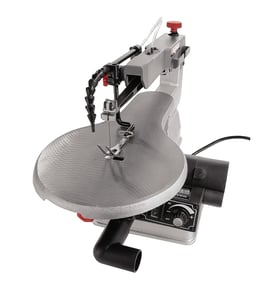

Can you make straight cuts with a scroll saw?
Yes, we can make straight cuts with a scroll saw, including the Craftsman 315172090, but it takes more technique than a table saw because the thin blade can drift and flex. For short straight cuts and trimming, it works well; for long, perfectly straight rips, it is not the best tool.
How to get straighter cuts on a scroll saw
- Use a sharp blade matched to the material thickness (dull blades wander).
- Increase blade tension to reduce flex (do not overtighten).
- Feed the work slowly and steadily; forcing the cut increases drift.
- Keep the workpiece flat on the table and maintain even pressure.
- Let the blade do the work; steer the wood gently to stay on your line.
- Use a straightedge fence or a clamped guide for repeatable straight cuts.
Common causes of blade drift (and what to do)
| What you notice | Likely cause | What we recommend |
|---|---|---|
| Cut angles left or right | Blade not square, uneven tooth set, or flex | Retension blade, slow feed, switch to a new blade |
| Cut starts straight then wanders | Dull blade or pushing too fast | Replace blade, reduce feed pressure |
| Burn marks on wood | Too slow feed with dull blade, or wrong blade | Use a sharper blade, adjust feed rate |
| Rough edge | Blade too coarse for the material | Use a finer-tooth blade |
Why it matters
Straight cuts depend on controlling blade deflection. A scroll saw is designed for tight curves and intricate work, so the blade is narrow and more prone to wandering than wider blades used on table saws or band saws.
Safety and setup tips
- Unplug the saw before changing blades or adjusting tension.
- Verify the blade is installed correctly (teeth oriented for the intended cut direction).
- Test on scrap wood first to dial in feed rate and tension.
For basic electrical troubleshooting if the saw will not run consistently, we use the same approach as other power tools: check the cord, switch, and connections with a meter; see how to use a multimeter to test electrical parts video.
Last updated: February 2026
What size blade for 16 scroll saw?
For a 16-inch scroll saw like the Craftsman 315172090, the blade size you choose is usually based on the blade end style (pinned vs. pinless) and the thickness of the material, not the throat size alone. Most 15-inch to 16-inch saws that use pinned blades take 5-inch pin-end scroll saw blades.
How to pick the right blade for your project
Use these quick guidelines to match blade type to what you are cutting:
- Pinned (pin-end) blades (typically 5-inch): common on many 15-inch to 16-inch scroll saws; fast to change, good for general cutting.
- Pinless (plain-end) blades: better for tight inside cuts and finer detail; requires blade clamps designed for plain-end blades.
- Thicker wood (hardwood, 3/4 inch): use a larger, coarser blade (fewer teeth per inch).
- Thin wood (1/8 inch to 1/4 inch): use a finer blade (more teeth per inch) to reduce tear-out.
- Plastics and non-ferrous metals: use blades labeled for those materials and cut at a slower speed.
Pinned vs. pinless: what “size” really means
Most scroll saw blades are about 5 inches long, but the mounting style changes what fits.
| What you see at the blade ends | Common name | Typical fit/use |
|---|---|---|
| Small cross pins at both ends | Pinned (pin-end) | Common on many 15-inch to 16-inch saws; general work |
| Flat ends with no pins | Pinless (plain-end) | Finer detail, tighter turns, inside cuts |
Quick checks to confirm what your saw accepts
Before ordering blades for the Craftsman 315172090, we use these checks:
- Look at the blade holders/clamps: pins require slotted holders; plain-end uses clamp jaws.
- Check whether your saw supports inside cuts (threading blade through a drilled hole); pinless is usually easier.
- Measure the blade you have now (if available): most pinned blades are about 5 inches overall.
- Inspect the blade change area for clearance; pinned blades need room for the pin ends.
Why it matters
Using the wrong blade style can prevent proper clamping, cause blade slippage, and lead to rough cuts or broken blades. Matching the blade type and tooth pattern to your material improves cut quality and control.
For help locating the correct replacement parts and diagrams for this saw, use the model number 315172090 on Sears PartsDirect.
Last updated: February 2026
How do you put a pinless blade on a scroll saw?
To install a pinless blade on your Craftsman 315172090 scroll saw, we release blade tension, clamp the blade end in the lower holder first, then clamp the upper end, and re-tension until the blade runs straight with the teeth facing down toward the table.
Safety and setup
- Unplug the saw before touching the blade clamps.
- Wear eye protection; scroll saw blades can snap during tensioning.
- Raise the hold-down foot or guard (if equipped) for access, then reset it.
- Confirm blade direction: teeth point down and forward.
Pinless blade install steps
- Release tension: Flip the tension lever (if equipped) or loosen the tension knob until the blade is slack.
- Open the lower clamp: From under the table, loosen the lower clamp screw.
- Seat the blade in the lower clamp: Insert the blade end fully into the clamp jaws; keep it vertical (no twist).
- Tighten the lower clamp: Snug firmly so the blade cannot pull out.
- Open the upper clamp: Loosen the upper clamp screw.
- Seat and tighten the upper clamp: Insert the top end fully, then tighten.
- Re-tension: Tighten until the blade gives a clear “ping” when plucked and only deflects slightly with light pressure.
Quick checks (prevents breakage)
- Blade stays vertical front-to-back.
- Tension is firm, not extreme.
- Clamp faces are clean (dust can cause slipping).
- Feed pressure is light; let the teeth cut.
Troubleshooting
| Problem | Likely cause | Fix |
|---|---|---|
| Blade slips | Clamp not tight, dirty jaws | Clean jaws, re-seat fully, tighten |
| Blade breaks fast | Over-tension, forcing cut | Reduce tension, slow feed |
| Wandering cut | Under-tension, dull blade | Increase tension, change blade |
Why it matters
Pinless blades rely entirely on clamp grip and correct tension. Proper seating and tensioning improves cut accuracy and reduces blade breakage.
For general DIY safety practices that apply to tool repairs, use are diy appliance repairs safe.
Last updated: February 2026
How thick of wood can you cut on a scroll saw?
Most scroll saws, including Craftsman models like 315172090, are used for clean, controlled cuts in thinner stock; 1/4 to 1 inch is the sweet spot for detailed work. You can cut thicker pieces (often up to about 2 inches) with the right blade and a slow feed rate, but accuracy drops as thickness increases.
Practical thickness guidelines
- 1/8 to 1/2 inch: best for tight curves, fretwork, and clean edges
- 1/2 to 1 inch: very manageable for most patterns and hardwoods
- 1 to 1-1/2 inches: doable; use a more aggressive blade and slow down
- 1-1/2 to ~2 inches: possible; expect more blade deflection and slower progress
- Over ~2 inches: typically inefficient on a scroll saw; a different saw type is usually a better choice
What determines the real limit?
- Blade selection: larger, more aggressive tooth patterns clear sawdust better in thick stock
- Wood density: pine and poplar cut easier than maple or oak
- Feed rate: steady, slow pressure reduces burning and blade wander
- Blade tension and condition: dull or under-tensioned blades drift and break more
- Cut complexity: tight-radius curves in thick wood are harder than gentle curves or straight cuts
Quick reference chart
| Thickness | Best use case | Setup focus |
|---|---|---|
| 1/8 to 1/2 inch | Intricate scrolling | Fine blade, higher control |
| 1/2 to 1 inch | General scroll work | Match blade to wood hardness |
| 1 to ~2 inches | Occasional thick cuts | Aggressive blade, very slow feed |
Why it matters
As thickness increases, the blade has more surface area rubbing in the kerf; that creates heat and flex. Staying in the common scroll-saw range improves cut accuracy, reduces burning, and prevents broken blades.
Helpful DIY reference
If the saw bogs down, won’t start, or you suspect an electrical issue, use how to use a multimeter to test electrical parts video.
Last updated: February 2026
Should I get pinless or pinned scroll saw blades?
For the Craftsman 315172090 scroll saw, use pinned (pin-end) 5-inch scroll saw blades. This model’s blade holders are designed for pin-end blades, so pinless (plain-end) blades will not mount correctly and will not tension safely.
What to buy for model 315172090
- Choose 5-inch pin-end blades (often labeled “pin-end” or “pinned”).
- Match blade size to material thickness; finer teeth for thin stock, coarser teeth for thicker stock.
- Keep a few tooth styles on hand (skip-tooth, double-tooth) for different cut quality needs.
- Replace blades when cuts start to burn, wander, or require extra feed pressure.
Pin-end vs plain-end (why pinless is not the right choice here)
| Blade type | Fits Craftsman 315172090? | Typical use | Notes |
|---|---|---|---|
| Pinned (pin-end) | Yes | General scrolling, curves, basic fretwork | Designed to seat in pin recesses and tension correctly |
| Pinless (plain-end) | No | Detailed fretwork on saws with plain-end clamps | Requires clamp-style holders, not pin recesses |
Tips to get cleaner cuts with pinned blades
- Use light, steady feed pressure; forcing the cut increases drift and breakage.
- Set proper blade tension; too loose causes wandering, too tight snaps blades.
- Support the work flat on the table and let the blade do the work.
- For inside cuts, drill an entry hole sized for your blade; pinned blades usually need a larger hole than pinless setups.
Why it matters
Using the correct blade end type is a safety and performance issue. A pin-end blade locks into the 315172090 holders and tensions properly, which keeps the blade tracking straight and reduces slipping, breakage, and rough cuts.
For general DIY safety practices before any repair or adjustment, see are diy appliance repairs safe.
Last updated: February 2026