Owner’s manual
 View engine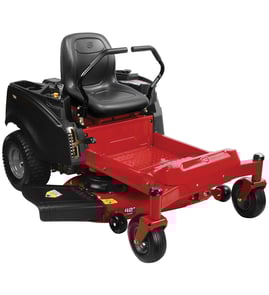





How to identify a lawn mower engine?
On the Craftsman 107287860 rear-engine riding mower, we identify the engine by locating the engine’s model/type code and serial number on the engine itself (not on the mower frame). The ID is typically stamped into metal or printed on a label near the muffler, blower housing, or air cleaner; confirm the exact location using the 107287860 owner's manual.
Check these common engine ID locations first (clean the area so the stamp or label is readable):
- Stamped into sheet metal near or above the muffler
- On the blower housing (recoil starter shroud) area
- On the front or side of the engine near the air cleaner
- On a label near the valve cover or spark plug wire routing
- Near the fuel tank or carburetor mounting area
We recommend recording all engine identification fields before ordering parts:
- Engine brand (often Briggs and Stratton on many Craftsman riders)
- Model or type code (sometimes shown as “Model”, “Type”, “Code”)
- Serial number
- Any spec number or trim code (if shown)
If the stamp or label is hard to find or read, these steps usually solve it:
- Let the engine cool completely, then wipe off oil and grass buildup
- Use a flashlight at a low angle to highlight stamped numbers
- Lightly brush rust with a nylon brush (avoid removing the stamp)
- Take a close-up photo and zoom in to confirm characters
The mower model number (107287860) identifies the tractor, but the engine ID identifies the exact engine build. That engine ID is what ensures you get the correct tune-up parts (filters, belts, ignition parts) and internal components.
| ID you have | What it identifies | Best use |
|---|---|---|
| Mower model number: 107287860 | The Craftsman rider | Deck, chassis, steering, electrical parts |
| Engine model/type/code | The engine build | Engine parts and service specs |
Last updated: January 2026
How to read Craftsman serial number?
On the Craftsman rear-engine riding mower model 107287860, the serial number is used to identify your exact unit for parts and service. We recommend recording the model and serial information from the identification tag under the seat, then using the manual’s “Identification Numbers” section to match the correct format for your mower.
The identification tag is located on the underside of the seat. Tilt the seat forward to access it (this is the tag you will use for the unit serial number and other ID numbers).
- Park on a level surface, set the parking brake, and remove the key
- Tilt the seat forward and locate the identification tag
- Write down the model number, unit serial number, and engine code/serial number
- Keep the numbers with your paperwork for future parts lookups
For the exact label location and the fields to record, use the 107287860 operator’s manual.
Craftsman serial number formats vary by product line and manufacturer, so the safest approach is to match your tag to the format shown in your manual. Many Craftsman mower serial numbers are a date-style code (often read as month, day, year), but not every tag uses that exact pattern.
| What you see on the tag | What it usually means | What to do next |
|---|---|---|
| All numbers in a 6-digit block | Often a date-style code | Compare to the serial format notes in the manual |
| Letters plus numbers | Manufacturer-specific build code | Use the manual and keep the full string exactly as printed |
| Separate “unit serial” and “engine code/serial” | Two different identifiers | Record both; engine parts often use the engine number |
Reading the serial number correctly helps us match the right diagrams and parts for your exact build, especially for items that can vary by production run (like switches, wiring, and drive components).
Last updated: January 2026
Is it worth replacing a lawn mower engine?
Yes. Replacing the engine on your Craftsman 107287860 rear-engine riding mower is worth it when the deck, transaxle, and safety interlock system are in good shape and the total swap cost is under about 50% of a comparable replacement mower. If multiple major systems are failing, replacement is the better value.
We recommend inspecting these items first so you do not replace an engine when the real problem is elsewhere:
- Verify the safety interlocks work and the mower only starts in the correct control positions
- Confirm the blades and deck belt stop within about 5 seconds after switching the blades OFF
- Inspect the deck shell for cracks and rust-through
- Check the transaxle for slipping, loud whining, or recurring leaks
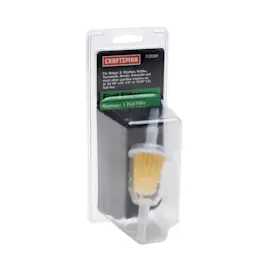
- Rule out fuel issues (old or stale fuel, water in fuel, ethanol problems)
| Condition on the mower | Best move | Why it matters |
|---|---|---|
| Deck and drive are solid; engine is worn out | Replace engine | Extends mower life at the lowest total cost |
| Engine plus transaxle or deck needs major work | Replace mower | Two big repairs quickly exceed mower value |
| No-crank or intermittent crank | Diagnose electrical first | Often a switch, wiring, or solenoid issue |
A no-start complaint is often electrical or control related, not internal engine failure:
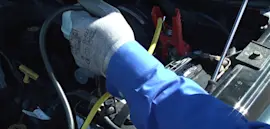
- Battery terminals and cables (clean and tighten)
- Safety switches and ignition switch
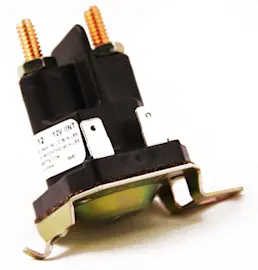
- Starter solenoid (clicking, intermittent crank)
If your symptoms match a solenoid problem, use the model-listed solenoid tw 1755382YP.
An engine swap is a major repair. The Craftsman 107287860 owner's manual emphasizes keeping safety devices working properly and never making adjustments or repairs with the engine running; those checks protect you and prevent wasted repair costs.
Last updated: January 2026